Creative Biolabs is offering the most comprehensive services for antibody development projects. With strict regulation and effective execution, we are dedicated to providing the most valuable solutions to complete your projects.
HighlightsCreative Biolabs is offering the most comprehensive services for antibody development projects. With strict regulation and effective execution, we are dedicated to providing the most valuable solutions to complete your projects.
HighlightsCreative Biolabs has established a broad range of platforms for developing novel antibodies or equivalents. These cutting-edge technologies enable our scientists to meet your demands from different aspects and tailor the most appropriate solution that contributes to the success of your projects.
HighlightsWith deep understanding in antibody-related realms and extensive project experience, Creative Biolabs offers a variety of references to help you learn more about our capacities and achievements, including infographic, flyer, case study, peer-reviewed publications, and all kinds of knowledge that can assist your projects. You are also welcome to contact us directly for more specific solutions.
HighlightsGet a real taste of Creative Biolabs, one of the most professional custom service providers in the world. We are committed to providing highly customized comprehensive solutions with the best quality to advance your projects.
HighlightsPhage display technology, allowing the construction of libraries in which various peptides and proteins are displayed on the phage, has widespread applications.
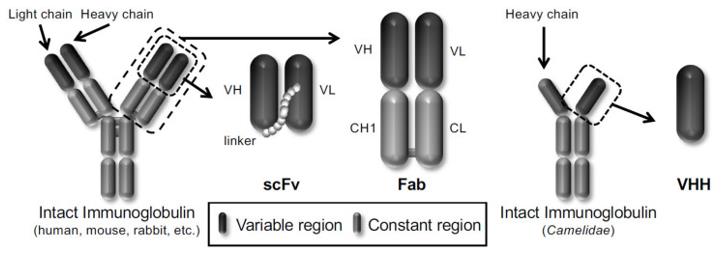 Fig 1. Schematic representation of different types of antibody formats displayed on the phages. (Kazuya, et al. 2021)
The use of hybridomas to manufacture monoclonal antibodies was invented in 1975. Because of their great specificity and affinity for the target molecule, monoclonal antibodies have been considered a possible "panacea," but clinical studies have proven disappointing. There are several causes of failure, many of which can be addressed.
Gene libraries, constructed using mutations in antigen-binding regions such as VL and VH, are displayed on phage, and antibodies with high affinity for the antigen are then isolated by biopanning.
Methods for constructing gene libraries with mutations:
Despite their distinct and superior properties, antibody drugs' targets are dwindling. As a result, identifying prospective targets for antibody drugs is critical. The use of phages to identify possible therapeutic targets is an efficient method.
Autoantibodies to autoantigens can be employed as biomarkers in autoimmune disorders. The search for antigens that bind to autoantibodies in autoimmune diseases is a potential strategy for elucidating molecular pathophysiology and target discovery, and phage display techniques can be useful in studying autoimmune-specific autoantigens.
Antibody proteomics technology isolates monoclonal antibodies to candidate proteins using phage antibody libraries and TMA analysis to find potential biomarkers and therapeutic targets.
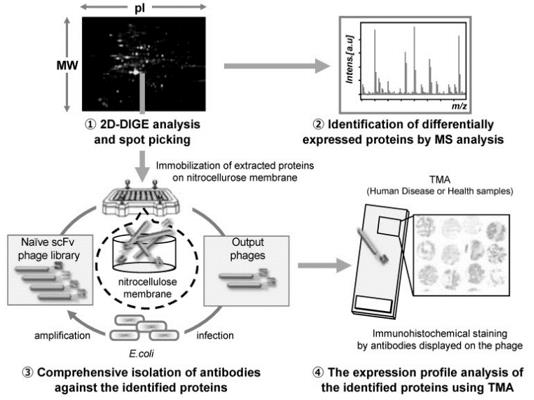 Fig 2. Schematic illustration of the antibody proteomics system. (Kazuya, et al. 2021)
Reference
All listed services and products are For Research Use Only. Do Not use in any diagnostic or therapeutic applications.