
Creative Biolabs is offering the most comprehensive services for antibody development projects. With strict regulation and effective execution, we are dedicated to providing the most valuable solutions to complete your projects.
HighlightsCreative Biolabs is offering the most comprehensive services for antibody development projects. With strict regulation and effective execution, we are dedicated to providing the most valuable solutions to complete your projects.
HighlightsCreative Biolabs has established a broad range of platforms for developing novel antibodies or equivalents. These cutting-edge technologies enable our scientists to meet your demands from different aspects and tailor the most appropriate solution that contributes to the success of your projects.
HighlightsWith deep understanding in antibody-related realms and extensive project experience, Creative Biolabs offers a variety of references to help you learn more about our capacities and achievements, including infographic, flyer, case study, peer-reviewed publications, and all kinds of knowledge that can assist your projects. You are also welcome to contact us directly for more specific solutions.
HighlightsGet a real taste of Creative Biolabs, one of the most professional custom service providers in the world. We are committed to providing highly customized comprehensive solutions with the best quality to advance your projects.
Highlights Loading...
All listed services and products are For Research Use Only. Do Not use in any diagnostic or therapeutic applications.
Atypical chemokine receptor 1 (ACKR1, also known as Duffy antigen) is a seven-transmembrane atypical chemokine receptor encoded by the ACKR1 gene. It is widely expressed on mature erythrocyte membranes and venous endothelial cells. Unlike canonical GPCR chemokine receptors that trigger downstream signaling cascades, ACKR1 lacks typical intracellular G-protein coupling activity and does not initiate conventional G-protein-mediated signaling, but may bind and handle multiple CXC and CC inflammatory chemokines under physiological conditions. Chemokine molecules generated from local tissue compartments require regulated distribution and presentation, and the existence of ACKR1 provides an important pathway to modulate local chemokine availability across different tissue microenvironments. Different tissue areas produce distinct combinations of chemokine ligands, which requires diversified binding and transport mechanisms to maintain appropriate chemokine distribution within the circulatory system. Circulating erythrocyte ACKR1 may bind chemokines and function as a circulating buffer or reservoir, whereas endothelial ACKR1 may participate in chemokine transport and presentation to facilitate leukocyte recruitment. ACKR1 may also take part in surface interactions with Plasmodium-derived molecules; altered ACKR1 gene sequences may change pathogen binding capacity and shift susceptibility to related infection. Other atypical chemokine receptors may not fully reproduce the combined capacity of chemokine binding, presentation, and pathogen interaction carried by ACKR1. Variable ACKR1 expression levels may correlate with systemic immune status and pathogen susceptibility, rendering it a valuable research target for blood group immunity, chemokine regulation, and host-pathogen interaction exploration.
ACKR1 may anchor on erythrocyte lipid bilayers to bind inflammatory chemokines without activating intracellular GPCR signaling cascades. Its distinct structural layout separates it from conventional chemokine receptors, carrying dual potential roles in immune balance regulation and pathogen interaction. ACKR1-associated chemokine binding processes may modulate circulatory inflammatory signals and endothelial immune activity. Reduced functional ACKR1 expression may raise free chemokine levels and alter pathogen binding efficiency. Therefore, ACKR1 may serve as a meaningful research object for atypical chemokine receptor related basic studies.
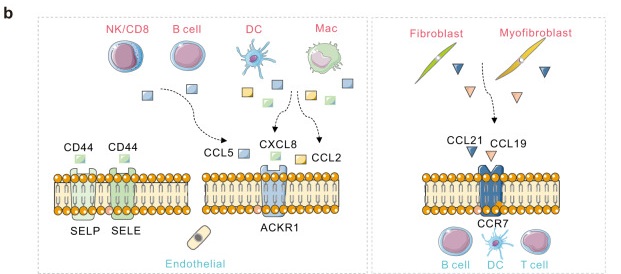 Fig. 1 Schematic illustrating the endothelial ACKR1 chemokine axis that mediates immune cell recruitment.1
The biological functions of seven-transmembrane Duffy ACKR1 decoy receptor are focused on silent chemokine capture and plasmodium-derived molecule interaction:
Creative Biolabs offers purified ACKR1 membrane samples via standardized preparation workflows, including full-length ACKR1 constructs and isolated extracellular structural variants. Isolated extracellular fragments may not support complete ligand binding related behaviors, while full-length constructs may be suited for chemokine and pathogen interaction related research. All samples receive routine quality screening, and functional relevant observation may only be carried out with full-length samples under simulated membrane environments. All sample batches follow unified processing standards to maintain consistent structural features for comparative laboratory analysis across separate test groups.
Not finding the membrane protein product you need? Contact us to start your one-stop custom service!
Creative Biolabs provides adjustable ACKR1 expression cell models with varied expression levels, applicable to atypical receptor structural characteristic observation and host-pathogen molecular binding related research. Sample evaluation includes sustained target expression detection and preliminary ligand interaction associated observation, which can support comparative analysis of receptor binding behaviors under different expression statuses. These cell systems can be matched with diverse laboratory analysis schemes to observe changes of ligand binding efficiency under different target expression abundances.
Not finding the stable cell line product you need? Contact us to start your one-stop custom service!
Not finding the recombinant antibody product you need? Contact us to start your one-stop custom service!
Beyond catalog products, Creative Biolabs offers specialized custom services for ACKR1 research:
ACKR1 may function as a chemokine binding receptor and participate in surface interaction between plasmodium-derived molecules and host cells.
ACKR1 expression status may affect circulating chemokine levels and host pathogen binding capacity, serving as a major regulatory mediator of blood immune and host-pathogen related biological processes.
No, all ACKR1 related products and services are strictly for research use only, not intended for clinical related operations. All material designs and functional tests are only optimized for basic laboratory research scenarios, without matching clinical application standards.
Offerings include full-length ACKR1 membrane protein, target specific recombinant antibodies and adjustable expression cell research models, supporting chemokine homeostasis and host-pathogen interaction research.
Laboratory observation schemes may include chemokine and pathogen molecule binding related tests to analyze receptor associated behaviors under simulated cellular environments.








