
Creative Biolabs is offering the most comprehensive services for antibody development projects. With strict regulation and effective execution, we are dedicated to providing the most valuable solutions to complete your projects.
HighlightsCreative Biolabs is offering the most comprehensive services for antibody development projects. With strict regulation and effective execution, we are dedicated to providing the most valuable solutions to complete your projects.
HighlightsCreative Biolabs has established a broad range of platforms for developing novel antibodies or equivalents. These cutting-edge technologies enable our scientists to meet your demands from different aspects and tailor the most appropriate solution that contributes to the success of your projects.
HighlightsWith deep understanding in antibody-related realms and extensive project experience, Creative Biolabs offers a variety of references to help you learn more about our capacities and achievements, including infographic, flyer, case study, peer-reviewed publications, and all kinds of knowledge that can assist your projects. You are also welcome to contact us directly for more specific solutions.
HighlightsGet a real taste of Creative Biolabs, one of the most professional custom service providers in the world. We are committed to providing highly customized comprehensive solutions with the best quality to advance your projects.
Highlights Loading...
All listed services and products are For Research Use Only. Do Not use in any diagnostic or therapeutic applications.
Acyl-CoA synthetase long-chain family member 1 (ACSL1) is a membrane-bound enzyme that catalyzes the ATP-dependent ligation of long-chain fatty acids with coenzyme A, generating fatty acyl-CoA esters–the essential activated intermediates and entry-point substrates for virtually all downstream fatty acid utilization pathways. ACSL1 catalysis occurs through a two-step bi-bi mechanism: first, the carboxyl group of the fatty acid attacks the α-phosphate of ATP to generate a fat acyl-adenosine monophosphate (acyl-AMP) intermediate with concurrent release of pyrophosphate; second, coenzyme A thiol nucleophilically attacks an acyl-AMP intermediate which displaces AMP, generating the final product fatty acyl-CoA. The aforementioned activation step is the first conversion, and thus plays a central role in providing appropriate intracellular acyl-CoAs to serve as metabolic intermediates that enable fatty acid metabolism, including mitochondrial β-oxidation pathway, triglyceride synthesis, phospholipid biosynthesis, cholesterol esterification, protein acylation and fatty-acid dependent transcriptional regulation. Details: ACSL1 is highly expressed in metabolically active tissues such as liver, adipose tissue and heart, while it accounts for about 80% of total ACSL enzymatic activity to be found in the adipose tissue. It is targeted to the outer mitochondrial membrane, endoplasmic reticulum and plasma membrane by an N-terminal transmembrane helix that securely anchors it in cellular membranes and helps determine the metabolic fate of activated fatty acids.
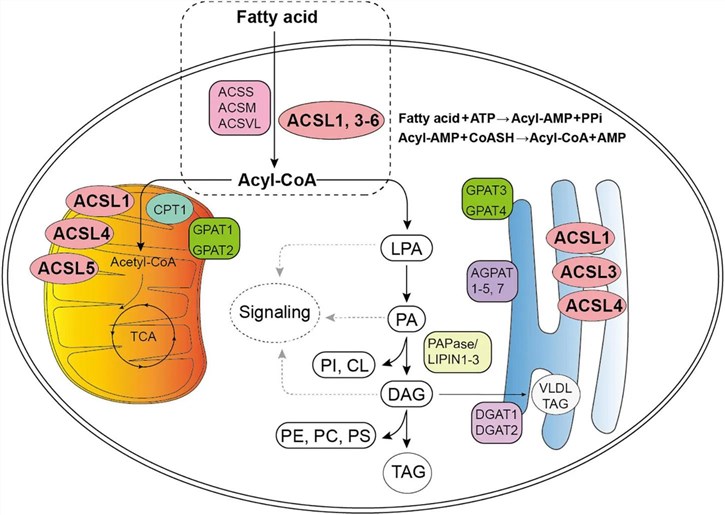 Fig.1 Diagram for fatty acid (FA) metabolism.1
Functional repertoire with respect to ACSL1 shows that its roles span lipid metabolism-energy homeostasis-disease pathogenesis triad dimensions:
ACSL1 membrane protein products are provided in our selection of quality ACSL1 membrane proteins for structural and functional studies of this fatty acid-activating enzyme. Our recombinant membrane protein technology supports the production of ACSL1 in formats suitable for a range of research applications. As a membrane-associated enzyme, ACSL1 may require appropriate protein topology and membrane-associated conditions for certain functional studies, so our portfolio includes constructs designed for different experimental needs. Available products may include purified or membrane-associated formats suitable for biochemical, structural, binding, and functional analyses. Wild-type and other research-use ACSL1 constructs may also be available depending on the specific product.
Not finding the membrane protein product you need? Contact us to start your one-stop custom service!
Although relevant cellular models are essential to basic research on ACSL1, the multifaceted function of this metabolic enzyme in fatty acid metabolism and pathway regulation underscores the need for reliable cellular research tools. We offer custom-engineered ACSL1 stable cell lines designed to provide consistent target expression for a range of research applications. Depending on experimental requirements, cell lines with different ACSL1 expression formats may be available for studies of fatty acid metabolism, lipid accumulation, pathway regulation, and compound screening. Our stable cell line development platform supports customized cell models with appropriate expression strategies and quality assessment to meet specific research needs.
Not finding the stable cell line product you need? Contact us to start your one-stop custom service!
We offer a wide range of high-affinity recombinant antibodies against ACSL1 for diverse research applications. Recombinant production can provide consistent antibody performance and lot-to-lot reproducibility for routine research use. Depending on the specific product, ACSL1 recombinant antibodies may be suitable or available for selected applications such as Western Blotting (WB), Immunohistochemistry (IHC), Immunofluorescence (IF), Flow Cytometry (FCM), and other antibody-based assays. These antibodies can support the detection and analysis of ACSL1 expression, localization, and related biological processes in appropriate research samples and model systems.
Not finding the recombinant antibody product you need? Contact us to start your one-stop custom service!
In addition to product catalog, we also provide specialized custom services in the membrane protein and antibody discovery & development area. Based on our decade of expertise and sophisticated platforms we can assist you with:
Yes, some clones have been validated on lightly fixed hepatocyte-lineage cultures and tissue cryosections with perinuclear and endoplasmic reticulum staining that becomes stronger with oleate exposure and co-localizes to lipid droplet stains upon confocal microscopy. In muscle fragments, the staining changes from diffuse cytoplasmic in basal states to membrane-associated punctate after fatty acid loading.
No, all reagents and services provided are designated solely for research purposes and cannot be used for diagnostic testing or therapeutic purposes.
Yes, we have made stable lines for those and these are under the control of a doxycycline-operated promoter in A2780 cells. This allows for timed expression initiation at defined intervals and subsequent measurement of palmitate tracing, triacylglycerol accumulation, and mitochondrial β-oxidation flux with a temporal resolution all in the absence of metabolic adaptation artifacts that characterize traditional constitutive overexpression systems.
Yes, we provide recombinant proteins and stable cell lines for some characterized variants where active site residues that contribute to AMP-formation or acyl-chain selectivity determinants are disrupted. These materials are important specificity control reagents for deciphering the relative contributions of adenylation chemistry vs. thioesterification efficiency, and chain-length preference vs. membrane affinity to cellular partitioning of fatty acids and energy homeostasis.








