Creative Biolabs is offering the most comprehensive services for antibody development projects. With strict regulation and effective execution, we are dedicated to providing the most valuable solutions to complete your projects.
HighlightsCreative Biolabs is offering the most comprehensive services for antibody development projects. With strict regulation and effective execution, we are dedicated to providing the most valuable solutions to complete your projects.
HighlightsCreative Biolabs has established a broad range of platforms for developing novel antibodies or equivalents. These cutting-edge technologies enable our scientists to meet your demands from different aspects and tailor the most appropriate solution that contributes to the success of your projects.
HighlightsWith deep understanding in antibody-related realms and extensive project experience, Creative Biolabs offers a variety of references to help you learn more about our capacities and achievements, including infographic, flyer, case study, peer-reviewed publications, and all kinds of knowledge that can assist your projects. You are also welcome to contact us directly for more specific solutions.
HighlightsGet a real taste of Creative Biolabs, one of the most professional custom service providers in the world. We are committed to providing highly customized comprehensive solutions with the best quality to advance your projects.
Highlights Loading...
All listed services and products are For Research Use Only. Do Not use in any diagnostic or therapeutic applications.
The adenosine A2B receptor (ADORA2B), also known as A2BAR, is encoded by the ADORA2B gene on the 17p12 chromosome. This gene spans about 31kb and contains two encoded exons separated by introns. ADORA2B encodes a 332-amino acid protein belonging to the class A (rhodopsin-like) G protein-coupled receptor (GPCR) family, one of the four subtypes of adenosine receptors (A1, A2A, A2B, and A3). Its structure follows typical GPCR folding: 7 transmembrane α-helixes, 1 extracellular N-terminal, and 1 intracellular C-terminal. ADORA2B binds to adenosine with lower affinity compared to A2A receptors and requires higher adenosine concentrations to be activated. Its promoter contains the binding sites of Hypoxia-inducible factors 1-α (HIF-1α) and HIF-2α, allowing induction of transcription under hypoxia-inducible conditions. It is widely expressed, with highest expression in the skin, esophagus, vagina, colon, and anterior cingulate cortex.
Upon adenosine binding, ADORA2B binds to Gs, stimulates adenylyl cyclase and elevates intracellular cAMP. It can also couple to Gq, leading to phospholipase C activation and downstream signaling. In hypoxia or inflammation, extracellular adenosine rises to levels that activate ADORA2B, setting up an endogenous feedback loop that limits hypoxia-associated inflammation. In models of acute lung injury, myocardial ischemia, and intestinal inflammation, ADORA2B has been reported to exert tissue-protective effects. Netrin-1-dependent ADORA2B activation has been proposed in selected models, with reported anti-inflammatory effects that depend on the experimental and tissue context. The receptor also interacts with extracellular matrix components and modulates cell adhesion, migration, and cytokine production.
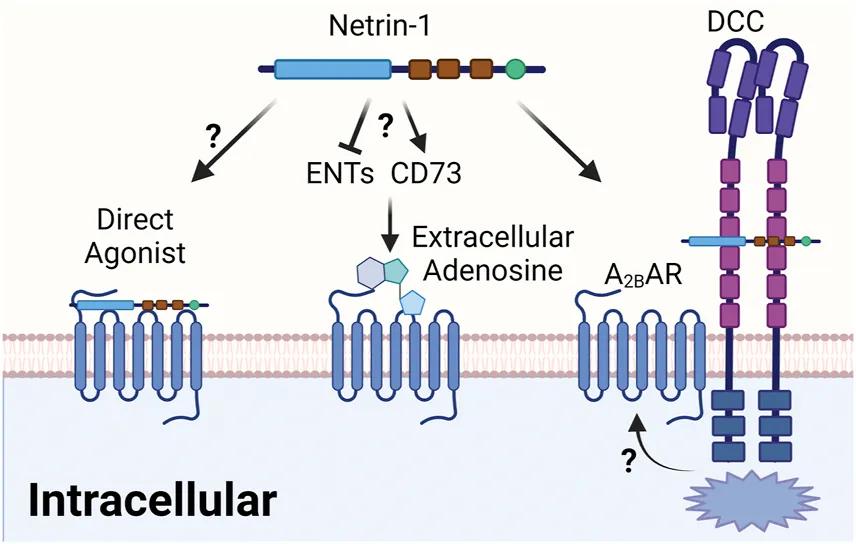 Fig. 1 Proposed mechanism of the netrin-1/Adora2b linkage.1
ADORA2B, encoded by the ADORA2B gene, functions as a low-affinity adenosine receptor that mediates hypoxia-adaptive signaling and immune regulation:
Creative Biolabs provides ADORA2B membrane protein products produced using optimized expression systems. These include full-length multi-pass transmembrane protein that retains the native seven-transmembrane architecture and ligand-binding pocket, as well as isolated receptor domain variants. The transmembrane binding pocket recognizes adenosine, whereas intracellular receptor surfaces participate in Gs/Gq protein coupling, making these proteins suitable for studies of adenosine receptor pharmacology, GPCR signaling, and ligand-receptor interaction characterization. All ADORA2B proteins undergo strict quality control to support consistent performance across applicable research platforms.
Not finding the protein product you need? Contact us to start your one-stop custom service!
Creative Biolabs provides custom-engineered ADORA2B stable cell lines, including overexpression and knockdown models. These cell lines are optimized for studies of adenosine signaling, hypoxia-adaptive responses, cAMP modulation, and ADORA2B-mediated inflammatory regulation. Each cell line undergoes stringent validation to ensure stable expression profiles and consistent functional performance in diverse experimental contexts.
Not finding the stable cell line product you need? Contact us to start your one-stop custom service!
High-specificity recombinant antibodies targeting ADORA2B are developed using antibody engineering techniques for research applications involving ADORA2B expression and localization. These antibodies can be used in studies of ADORA2B distribution in hypoxic and inflamed tissues and may also support characterization of ADORA2B-containing receptor complexes in combination with appropriate detection reagents.
Not finding the recombinant antibody product you need? Contact us to start your one-stop custom service!
Beyond catalog products, Creative Biolabs offers specialized custom services for ADORA2B research:
ADORA2B is a low-affinity adenosine receptor that couples to Gs and Gq proteins, elevating cAMP and activating downstream signaling in response to elevated adenosine levels during hypoxia or inflammation.
ADORA2B functions as an endogenous feedback loop that dampens hypoxia-associated inflammation and mediates tissue-protective signaling in multiple acute disease models, making it important for studies of adenosine biology and hypoxia-adaptive responses.
No, all ADORA2B products and services are strictly for research use only, not intended for clinical diagnosis or treatment.
Offerings include full-length ADORA2B membrane proteins, receptor domain variants, specific detection antibodies, and custom stable cell lines for adenosine signaling and hypoxia research.
ADORA2B proteins may support research on ligand binding and cAMP accumulation, depending on protein format and experimental context.