Creative Biolabs is offering the most comprehensive services for antibody development projects. With strict regulation and effective execution, we are dedicated to providing the most valuable solutions to complete your projects.
HighlightsCreative Biolabs is offering the most comprehensive services for antibody development projects. With strict regulation and effective execution, we are dedicated to providing the most valuable solutions to complete your projects.
HighlightsCreative Biolabs has established a broad range of platforms for developing novel antibodies or equivalents. These cutting-edge technologies enable our scientists to meet your demands from different aspects and tailor the most appropriate solution that contributes to the success of your projects.
HighlightsWith deep understanding in antibody-related realms and extensive project experience, Creative Biolabs offers a variety of references to help you learn more about our capacities and achievements, including infographic, flyer, case study, peer-reviewed publications, and all kinds of knowledge that can assist your projects. You are also welcome to contact us directly for more specific solutions.
HighlightsGet a real taste of Creative Biolabs, one of the most professional custom service providers in the world. We are committed to providing highly customized comprehensive solutions with the best quality to advance your projects.
Highlights Loading...
All listed services and products are For Research Use Only. Do Not use in any diagnostic or therapeutic applications.
The B2M gene at 15q21.1 encodes beta-2-microglobulin, a 119-amino-acid protein of approximately 12 kDa belonging to the immunoglobulin superfamily. B2M contains a single immunoglobulin-like C1-type domain and lacks a transmembrane region, existing as a soluble protein that non-covalently associates with the heavy chain of MHC class I molecules. B2M is ubiquitously expressed on all nucleated cells and is essential for the stable cell surface expression of MHC class I complexes, which present endogenous peptide antigens to CD8+ T lymphocytes. B2M also serves as the light chain for several MHC class I-related molecules including the neonatal Fc receptor (FcRn), the CD1 family of lipid antigen-presenting molecules, and the iron metabolism regulator HFE. B2M is constitutively secreted and filtered by the renal glomeruli, with serum levels primarily reflecting kidney function and serving as a clinical biomarker for renal disease. Elevated B2M levels are associated with dialysis-related amyloidosis, in which B2M forms amyloid fibrils depositing in joints and bones. B2M also accumulates in the serum of patients with chronic inflammation, autoimmune diseases, and certain hematologic malignancies including multiple myeloma, where it serves as a prognostic marker. B2M-deficient mice show impaired MHC class I surface expression, defective CD8+ T cell development, and resistance to certain autoimmune conditions. B2M is therefore an important target for studying antigen presentation, immune surveillance, and amyloidogenesis, providing tools for understanding MHC class I biology and immune-mediated disease.
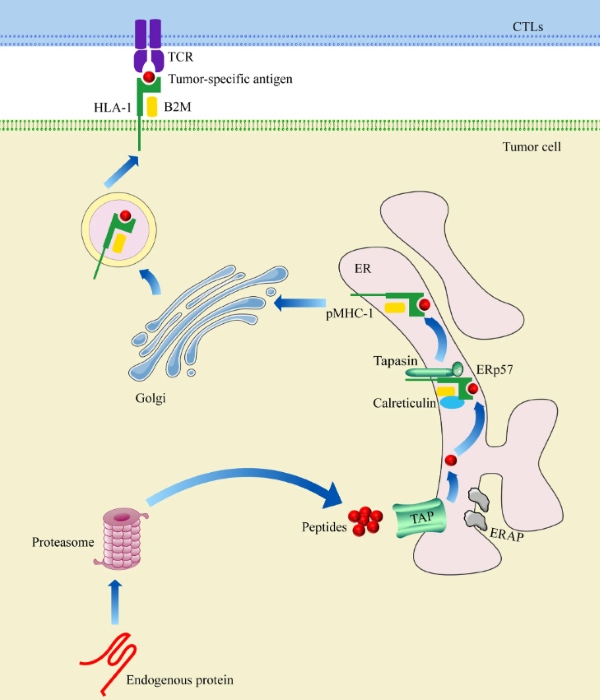 Fig. 1 Schematic Illustration of B2M participating in MHC-I restricted tumor antigen presentation.1
The functional spectrum of B2M spans MHC class I biology and immune regulation:
Creative Biolabs offers a series of high-quality B2M protein products, suitable for structural and functional studies of MHC class I antigen presentation and immune recognition. Built on the independently developed recombinant protein technology platform, B2M proteins can be generated through various expression systems, including in vitro prokaryotic expression systems and refolding with MHC class I heavy chains. These thoroughly characterized protein products, such as recombinant human B2M protein and B2M-MHC class I peptide complexes from diverse expression systems, can be used in ELISA, antibody screening, T cell activation assays, and functional investigations, providing reliable tools for analyzing the MHC class I assembly mechanism and immune recognition functions of B2M.
Not finding the protein product you need? Contact us to start your one-stop custom service!
Constructing a robust cell model is essential for investigating B2M function in MHC class I antigen presentation and immune surveillance. As the essential light chain that stabilizes MHC class I surface expression and enables CD8+ T cell recognition, B2M expression level directly influences the quantity and stability of peptide-MHC complexes on the cell surface. Loss of B2M expression is a common mechanism of immune evasion in cancer. Creative Biolabs offers customized B2M stable transfection cell models, encompassing wild-type and selected variant forms for B2M expression studies. These models express the target protein at appropriate levels and are suitable for studies on MHC class I surface expression, peptide loading analysis, CD8+ T cell activation assays, and evaluation of tumor immune evasion mechanisms, providing a reliable platform for exploring B2M-MHC class I biology, the role of antigen presentation in immune responses, and cancer immunology research. Our technology supports consistent protein expression, facilitating your research.
Not finding the stable cell line product you need? Contact us to start your one-stop custom service!
Creative Biolabs offers highly specific recombinant antibodies targeting B2M, manufactured using advanced recombinant antibody technology. Compared to traditional antibodies, these recombinant antibodies deliver improved performance in specificity, sensitivity, and batch-to-batch consistency. They also support various modifications and labeling strategies. Our B2M recombinant antibodies are suitable for a broad range of applications, including Western Blot, ELISA, flow cytometry, immunofluorescence, immunocytochemistry, immunohistochemistry, and immunoprecipitation, and can be used to examine B2M expression levels in tissues, serum, and cell culture supernatants, analyze MHC class I surface expression, and conduct related investigations such as immune recognition studies and biomarker analysis. These antibodies provide dependable detection reagents for the structural characterization, functional investigation of B2M, and the analysis of its role in antigen presentation and immune regulation.
Not finding the recombinant antibody product you need? Contact us to start your one-stop custom service!
In addition to the standard products, Creative Biolabs also offers professional customized services for B2M. B2M has variants with functional differences, including polymorphisms affecting MHC class I binding and altered expression in cancer and amyloidosis. These variants present specific requirements in protein expression, MHC interaction analysis, and functional characterization. Leveraging our technology platform, we can assist you in completing the following customized projects:
B2M encodes beta-2-microglobulin, the invariant light chain of MHC class I molecules that is essential for their stable cell surface expression and antigen presentation to CD8+ T cells. B2M also serves as the light chain for MHC class I-related molecules including FcRn, CD1, and HFE. Serum B2M is a clinical biomarker for renal function and tumor burden in hematologic malignancies.
B2M is fundamental to adaptive immunity through its role in MHC class I antigen presentation and CD8+ T cell development. Loss of B2M is a key mechanism of tumor immune evasion and influences response to checkpoint immunotherapy. B2M forms amyloid fibrils in dialysis-related amyloidosis. As a clinical biomarker, B2M is used for prognosis in multiple myeloma and lymphoma. B2M is therefore important across immunology, oncology, nephrology, and amyloid disease research.
Not applicable. All B2M products and services provided by Creative Biolabs are for research purposes only and cannot be used for any clinical diagnosis, prevention, treatment or cure of any disease.
We offer a variety of product types, including recombinant B2M proteins, MHC class I peptide-B2M complexes, stable cell models expressing B2M, high-quality recombinant B2M antibodies, as well as comprehensive customized services.