Creative Biolabs is offering the most comprehensive services for antibody development projects. With strict regulation and effective execution, we are dedicated to providing the most valuable solutions to complete your projects.
HighlightsCreative Biolabs is offering the most comprehensive services for antibody development projects. With strict regulation and effective execution, we are dedicated to providing the most valuable solutions to complete your projects.
HighlightsCreative Biolabs has established a broad range of platforms for developing novel antibodies or equivalents. These cutting-edge technologies enable our scientists to meet your demands from different aspects and tailor the most appropriate solution that contributes to the success of your projects.
HighlightsWith deep understanding in antibody-related realms and extensive project experience, Creative Biolabs offers a variety of references to help you learn more about our capacities and achievements, including infographic, flyer, case study, peer-reviewed publications, and all kinds of knowledge that can assist your projects. You are also welcome to contact us directly for more specific solutions.
HighlightsGet a real taste of Creative Biolabs, one of the most professional custom service providers in the world. We are committed to providing highly customized comprehensive solutions with the best quality to advance your projects.
Highlights Loading...
All listed services and products are For Research Use Only. Do Not use in any diagnostic or therapeutic applications.
Monocyte chemoattractant protein-2 (MCP-2), C-C motif chemokine ligand 8, a small secreted che-mokines characterized by their mature molecular mass of about 11 kDa. CCL8 is a member of the CC chemokine subfamily and is synthesized as a 109-amino-acid precursor, which produced after cleavage during its secretion from the signal peptide to generate an active form. This protein is produced by mononuclear phagocytes, fibroblasts, endothelial cells and several epithelial cell types in response to inflammatory cytokines as well as microbial pattern recognition signals or hypoxic stress. Biological effects of CCL8 are mediated through promiscuous binding to several G protein-coupled receptors; predominantly CCR1, CCR2,CCR3 and/or CCR5 resulting in directional migration of monocytes,memory T cells,natural killer (NK) cells,eosinophilsandbasophils. Under homeostatic conditions, CCL8 forms chemotactic gradients that direct immune surveillance at mucosal and cutaneous borders to promote rapid leukocyte deployment upon pathogen encounter. However, in pathological contexts, aberrant CCL8 signaling mediates chronic inflammation within rheumatoid synovium [118], supports infiltrating of leukocytes into demyelinated lesions within the central nervous system, and contributes to accelerating interstitial fibrosis via myofibroblast recruiting. In the tumor microenvironment, CCL8 is context-dependent: it enhances anti-tumor immunity via recruitment of cytotoxic effectors but chronic production paradoxically induces accumulation of suppressive myeloid cells and formation of metastatic niches in breast- and gastric cancers. CCL8 represents a highly attractive target for neutralizing biologics, small-molecule receptor antagonists and companion diagnostic stratification tools owing to its complex duality.
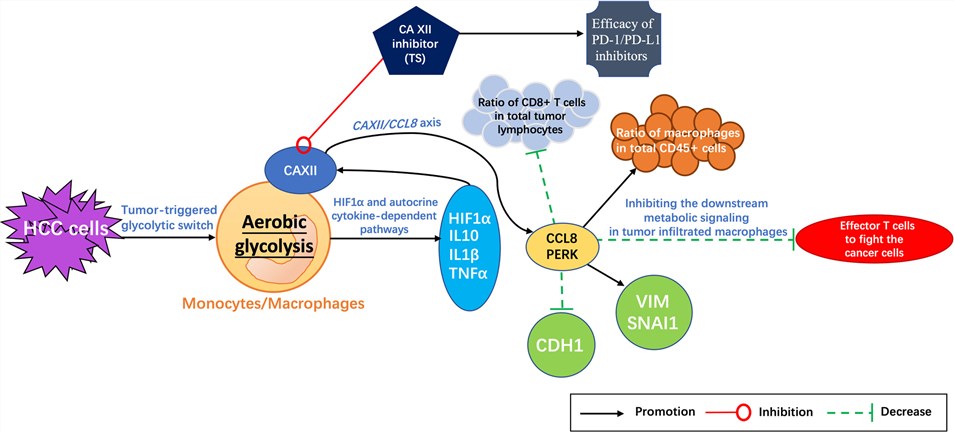 Fig.1 Potential mechanism of tiliroside (TS) enhancing the therapeutic effect of PD-1/PD-L1 inhibitors.1
CCL8 orchestrates a wide spectrum of immunological programs that scaffold beyond its classical definition as a monocyte-recruiting factor:
We have developed a set of exquisitely validated bioactive, correctly folded CCL8 proteins to meet the stringent demands in chemokine biology research. N-terminal processing by the native cleavage site, precise disulfide bond pairing and proper dimeric quaternary structure are essential for high-affinity CCR rendering our expression platforms focused on mammalian suspension cultures that can facilitate faithful signal peptide cleavage and strong secretory trafficking of leukocyte chemotactic activity. For structural biology applications or for non-glycosylated variants, we also offer optimized bacterial periplasmic expression systems with engineered oxidative environments that facilitate proper cysteine connectivity. The catalog lists the wild- type human and murine CCL8, N -terminally truncated variants mimicking physiological proteolytic processing as well as cysteine-to-serine mutants developed to assess dimerization needs. All preparations are prepared in endotoxin-free buffers within strict thresholds for in vivo administration. This may include: reversed-phase HPLC for purity quantitation, size-exclusion chromatography for oligomeric state analysis; intact mass spectrometry to determine molecular weight and functional bioactivity validation using transwell chemotaxis assays with primary monocytes or CCR+ reporter cell lines.
Not finding the protein product you need? Contact us to start your one-stop custom service!
Deriving cellular systems that faithfully mimic the dynamics of CCL8 secretion and receptor-mediated signaling is important for understanding its role in chronic inflammation, as well as expediting discovery efforts of anti-inflammatory therapies. Using a combination of lentiviral transduction and transposon-based genomic integration, we generated a rich suite of stable CCL8 cell lines with in vivo-like expression levels, true-to-life secretory kinetics and functional reactivity to inflammatory cues. Your collection spans from wild-type constitutive expression to tetracycline-regulated systems that provide temporal control of chemokine release, naturally occurring coding variants associated with risk for autoimmune disease and platforms where CCL8 is co-expressed together with its cognate receptors CCR1, CCR2, or CCR5 in a common cellular background. In order to enable mechanistic dissection of CCL8-triggered signaling, we developed reporter-coupled lines containing luciferase cassettes under control of either NF-κB-, AP-1 or calcium-responsive promoter elements, enabling real-time detection of pathway activation following CCL8 stimulation and antibody neutralization. Complementary anti-oncogenic models —through shRNA-mediated knockdown or dominant-negative receptor expression—allow rescue experiments and synthetic lethality screening. All cell lines are thoroughly authenticated by genomic integration mapping, secretion rate profiling using ELISA and functional validation in the Boyden chamber chemotaxis as well as receptor internalization assays. These scalable cellular substrates provide crucial solutions for therapeutic antibody screening, studies of mechanisms behind inflammation, and preclinical rational optimization of biologics targeting the CCL8 axis.
Not finding the stable cell line product you need? Contact us to start your one-stop custom service!
Advance your CCL8 research projects with our portfolio of sequence-defined recombinant monoclonal antibodies designed to support the detection and analysis of this chemokine in research applications. Depending on the specific product and supporting datasheet, CCL8 antibodies may be suitable or available for selected applications such as Western Blotting, ELISA, Flow Cytometry, Immunofluorescence, and other antibody-based assays. These reagents can support studies of CCL8 expression, localization, and related chemokine biology in appropriate research samples and model systems. Product-specific specificity, species reactivity, assay compatibility, and performance should be determined according to the corresponding antibody data. For research requiring specialized recognition properties or application formats, customized antibody development and suitability assessment can be discussed based on the intended experimental design.
Not finding the recombinant antibody product you need? Contact us to start your one-stop custom service!
Far exceeding the footprint of our traditional catalog, we provide customizable discovery and manufacturing solutions finely-honed to meet the complex need for CCL8-targeted research development:
Yes. The mammalian expression systems also guarantee that the signal peptide is cleaved appropriately and conserved disulfide bonds necessary for chemokine folding are faithfully formed. N-terminal integrity (Edman degradation or intact mass spectrometry), covalent dimer assessment (non-reducing SDS-PAGE) and bioactivity quantification via primary monocyte chemotaxis or CCR2 reporter cell assay to capture receptor engagement potency are all independently verified on a batch-by-batch basis prior to release.
Certainly. These routinely include N-terminally truncated variants that model physiological proteolytic processing by metalloproteinases, cysteine-to-serine substitutions to disrupt dimerization and receptor-binding deficient mutants designed to assess the specificity of CCR1 versus CCR2 engagement. Such custom-designed constructs are provided as pure recombinant proteins or genetically stable cell lines, along with complete sequence confirmation and identity by mass spectrometry (MS) data and functional characterization via chemotaxis assays characterized for receptor-binding activity.
Absolutely. The epitope specificities of our monoclonal antibodies were against unique regions within the CCL8 N-terminal region and 40s loop that are poorly conserved with any corresponding sequences in CCL2, CCL7, CCL11, other than mouse or human counterparts for which mono- especially as compared to those derived from humans. Western blot, ELISA and cell-based neutralization confirm exquisite specificity following extensive cross-reactivity testing enabeling their application in the quantification of complex biological matrices (e.g. synovial fluid or tumor lysates) for diagnostic purposes.
Yes. Novel bicistronic and dual-promoter expression systems have been developed, which allow for the concurrent production of CCL8 along with CCR1, CCR2 or CCR5 using a single stable cell line. These platforms are functionally validated for ligand-dependent calcium mobilization, receptor internalisation and antibody neutralisation thus providing useful cellular substrates predictive of therapeutic utility or enabling mechanistic studies into chemokine receptor crosstalk.