
Creative Biolabs is offering the most comprehensive services for antibody development projects. With strict regulation and effective execution, we are dedicated to providing the most valuable solutions to complete your projects.
HighlightsCreative Biolabs is offering the most comprehensive services for antibody development projects. With strict regulation and effective execution, we are dedicated to providing the most valuable solutions to complete your projects.
HighlightsCreative Biolabs has established a broad range of platforms for developing novel antibodies or equivalents. These cutting-edge technologies enable our scientists to meet your demands from different aspects and tailor the most appropriate solution that contributes to the success of your projects.
HighlightsWith deep understanding in antibody-related realms and extensive project experience, Creative Biolabs offers a variety of references to help you learn more about our capacities and achievements, including infographic, flyer, case study, peer-reviewed publications, and all kinds of knowledge that can assist your projects. You are also welcome to contact us directly for more specific solutions.
HighlightsGet a real taste of Creative Biolabs, one of the most professional custom service providers in the world. We are committed to providing highly customized comprehensive solutions with the best quality to advance your projects.
Highlights Loading...
All listed services and products are For Research Use Only. Do Not use in any diagnostic or therapeutic applications.
C-C motif chemokine receptor 9 (CCR9) is a seven-transmembrane G protein-coupled receptor, exclusively responsible for guiding lymphocytes to migrate to the gut, and serves as a dedicated homing receptor for lymphocytes. Its only matching ligand is CCL25—a chemokine continuously secreted by intestinal epithelial cells. The binding of the two forms a highly selective navigation system: circulating lymphocytes in the body that carry CCR9 will migrate along the concentration gradient formed by CCL25, step by step entering gut-associated tissues to settle, monitor the gut's health status on a daily basis, fend off external risks, and protect the intestinal barrier. This receptor acts like a zip code at the molecular level, capable of screening out immune cells eligible to enter the gut—the gut is one of the regions with the most intensive immune activity in the human body, and cannot allow random immune cells to enter haphazardly. This precise mechanism is necessary to send the right cells to the right place. The physiological functions of CCR9 extend far beyond guiding cell homing. It also plays more critical roles in the human body's immune development and daily immune regulation. Within the thymus, the CCL25-CCR9 pathway guides developing T cells to complete their maturation process step by step, and regulates the migration routes of immature T cell precursors in the thymic microenvironment, helping the immune system build a functional lineage of immune cells that do not attack the body's own tissues. In peripheral tissues outside the thymus, this pathway also shapes the population of lymphocytes that reside in tissues, regulates the local immune state on mucosal surfaces, and ensures that this fragile barrier, which has the most contact with the outside world, can not only respond to invading pathogens in a timely manner, but also avoid damaging the body's own normal tissues due to an overly intense immune response.
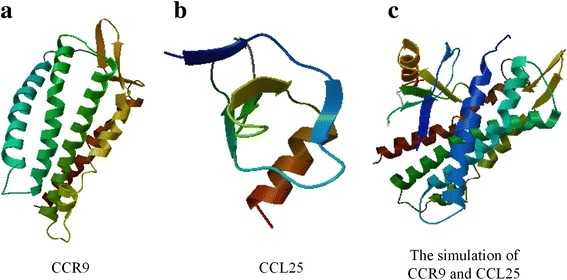 Fig.1 The structures of CCR9 and CCL25.1
Research on CCR9 continues to unfold across several interconnected domains:
Our complete suite of CCR9 membrane protein research reagents adheres to one core principle from start to finish: to conduct reliable research on proteins such as GPCR, their original cell membrane environment and activation state must be fully preserved. After all, for proteins like GPCR that rely on the cell membrane environment to function, once they are separated from their native context or their activation state is disrupted, all subsequent research data obtained cannot guarantee to reflect their true state in vivo, and the credibility of the research becomes impossible to establish. We use an optimized eukaryotic expression system to produce and purified full-length CCR9 products. This system is purpose-built to preserve the protein’s authentic post-translational modification characteristics — that is, the various natural markers added to the protein after synthesis in vivo that support its function — while also enabling the protein to fold into the correct, functional three-dimensional structure, rather than misfolding into a disordered mass that loses activity. Every batch of products produced undergoes rigorous verification across multiple quality dimensions before leaving the factory, ensuring that no substandard product is delivered to researchers.
Not finding the membrane protein product you need? Contact us to start your one-stop custom service!
The cell platform required for CCR9 research must simultaneously meet three requirements: it must be able to regulate receptor density, accurately restore the presentation state of the protein on the cell membrane, and preserve complete signal transduction function. The reason for such strict requirements is that the core research value of chemokine receptors lies in their ability to respond to concentration gradients, not merely the quantity of protein present on the cell surface. No matter how much CCR9 accumulates on a cell’s surface, if the receptors cannot sense changes in the concentration of surrounding chemokines or respond to concentration gradients, these receptors are nothing more than a pile of useless proteins that cannot support effective functional research. In response to this demand, we provide custom-engineered stable cell lines that efficiently express CCR9. These cell lines are constructed using sequence-optimized stable integration technology, which stably inserts the CCR9 gene into the cell’s own genome. This ensures that in a reproducible cellular background, CCR9 presentation on the surface of all cells is consistent and stable, eliminating issues such as varying receptor counts between batches, or uneven receptor presence within a single batch of cells. Our cell line bank includes cell strains that stably express wild-type CCR9 — that is, cells carrying CCR9 in its natural state, without any artificial modifications — as well as cell strains carrying artificially engineered mutations to support various types of research on the receptor’s function. Whether you aim to study the basic function of native CCR9 or test the impact of specific mutations on the receptor, you can find the matching cellular tool. Each cell line must undergo comprehensive phenotypic verification before it is released: we calibrate and quantify cell surface receptor density using fluorescence standards to ensure the receptor count of every cell line meets preset specifications; we confirm via imaging that CCR9 localizes to the cell membrane, rather than mislocalizing to other internal cellular structures where it cannot function normally; we also verify that it can produce a stable chemotactic response, confirming it can genuinely react to chemokine concentration gradients. Only after meeting all standards is the cell line released for shipment.
Not finding the stable cell line product you need? Contact us to start your one-stop custom service!
In addition to protein products and cell lines, you can advance your CCR9 research project using our recombinant antibody panel. These antibodies are developed for CCR9 recognition and may support selected experimental applications based on the validation data available for individual clones. High-affinity monoclonal and recombinant antibodies are designed to recognize defined antigenic sites on CCR9, and their specificity and cross-reactivity should be assessed according to available counter-screening data and the intended experimental conditions. Every antibody clone undergoes sequence verification and is produced as a defined recombinant construct, which supports lot-to-lot consistency and reproducibility. Application suitability varies among individual clones and should be determined from the corresponding validation records. Where validated, available applications may include Western blotting, immunostaining, or flow cytometry. Researchers should select antibody clones according to the relevant application, sample type, and available specificity data.
Not finding the recombinant antibody product you need? Contact us to start your one-stop custom service!
In addition to our catalog products, Creative Biolabs specializes in custom services for membrane protein and antibody discovery & development. Using our deep knowledge and sophisticated platforms we can support you with:
Yes. Clones are screened for selective CCR9 recognition and counter-screened against family members using recombinant protein panels.
Both constitutive and inducible formats are available. Each clone ships with measured surface-density data, so receptor expression tier can be matched precisely to your experimental design.
We do. Custom constructs carrying substitutions can be produced and purified under the same quality framework as wild-type material.
All CCR9 products and services are provided strictly for preclinical research. They are not designed, validated, or authorized for any use involving human subjects.









