Creative Biolabs is offering the most comprehensive services for antibody development projects. With strict regulation and effective execution, we are dedicated to providing the most valuable solutions to complete your projects.
HighlightsCreative Biolabs is offering the most comprehensive services for antibody development projects. With strict regulation and effective execution, we are dedicated to providing the most valuable solutions to complete your projects.
HighlightsCreative Biolabs has established a broad range of platforms for developing novel antibodies or equivalents. These cutting-edge technologies enable our scientists to meet your demands from different aspects and tailor the most appropriate solution that contributes to the success of your projects.
HighlightsWith deep understanding in antibody-related realms and extensive project experience, Creative Biolabs offers a variety of references to help you learn more about our capacities and achievements, including infographic, flyer, case study, peer-reviewed publications, and all kinds of knowledge that can assist your projects. You are also welcome to contact us directly for more specific solutions.
HighlightsGet a real taste of Creative Biolabs, one of the most professional custom service providers in the world. We are committed to providing highly customized comprehensive solutions with the best quality to advance your projects.
Highlights Loading...
All listed services and products are For Research Use Only. Do Not use in any diagnostic or therapeutic applications.
CD1C is a type I transmembrane glycoprotein with a weight of 43 kDa, belonging to the CD1 family of molecules. All molecules in this family have similar structures to non-classical MHC class I molecules. Structurally, it carries a heavy chain divided into three extracellular α-domains, namely α-1, α-2, and α-3. The α1 and α2 domains form a deep hydrophobic antigen-binding groove, while the α3 domain supports association with β2-microglobulin. The water-repellent property of this groove is perfectly suited to accommodate lipid and glycolipid molecular fragments, which are also non-hydrophilic. This heavy chain does not exist alone; it binds to β2-microglobulin via non-covalent bonds to form a stable heterodimer complex, and eventually this complete complex is presented on the cell surface to await subsequent functions. CD1C is not produced by just any cell; it is almost exclusively expressed on professional antigen-presenting cells, specifically including some subsets of dendritic cells and specific B lymphocytes. In these cells, its function is critical — it is responsible for screening three types of lipid antigens derived from host tissues, commensal flora, and pathogenic organisms respectively. It marks these lipid antigens that are originally hidden inside cells, and delivers them for recognition by subsequent immune cells. Lipids presented by CD1c may originate from host or microbial membranes and can be loaded during intracellular trafficking with the assistance of lipid-transfer proteins. Diverse CD1c-restricted αβ T-cell populations can recognize CD1c–lipid complexes, whereas invariant NKT cells classically recognize lipids presented by CD1d.
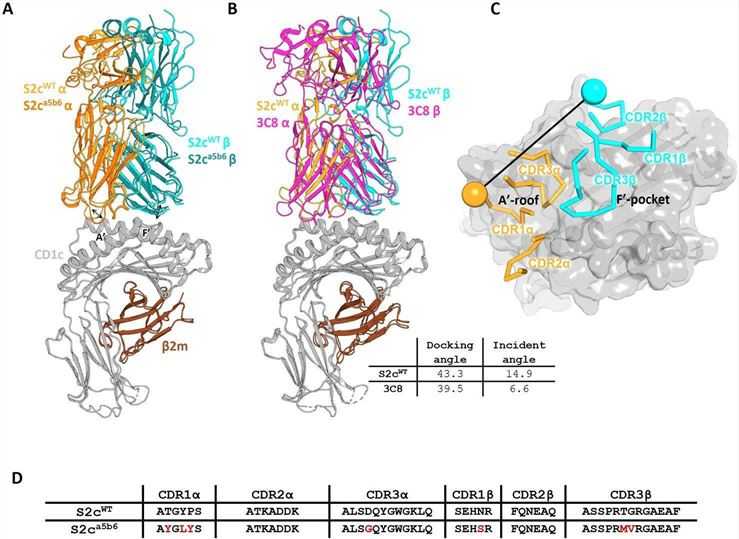 Fig.1 Crystal structures of CD1c-S2c TCR complexes.1
CD1C can coordinate a variety of different immune processes, and its function is far beyond that of a simple antigen-presenting scaffold that only performs structural-level functions:
We have developed a high-performance full-length CD1C membrane protein whose conformation fully matches the natural state. The original intention of developing this protein is to solve the long-standing research bottleneck in the field of lipid-presenting molecule biochemistry. Our production process integrates cutting-edge membrane protein expression technologies, supporting in-depth molecular research under various experimental frameworks. Each batch of products has undergone rigorous quality inspection, fully matching the research indicators of your laboratory.
Not finding the membrane protein product you need? Contact us to start your one-stop custom service!
To conduct relevant research, reliable experimental tools must first be available. Among these, establishing a cell platform that can accurately restore the natural lipid presentation function of CD1C is crucial for immunological research and the early-stage evaluation of candidate compounds. Leveraging advanced technologies, we have launched cell lines that stably express CD1C, covering all mainstream variant types, to help you deeply dissect the CD1C-mediated presentation mechanism. Each cell line has passed the dual strict tests of integration verification and surface expression profile analysis, ensuring it is ready to use upon receipt. These expandable cell resources are essential experimental tools for studying lipid immune mechanisms and developing research reagents targeting the CD1C pathway.
Not finding the stable cell line product you need? Contact us to start your one-stop custom service!
In addition to proteins and cell lines, we have also carefully developed a comprehensively validated series of monoclonal antibodies to help you advance your CD1C research projects. These antibodies have clear sequences and high affinity, and are specifically designed for the complex structure of this lipid-presenting molecule. All reagents have completed a full set of pre-validation tests, including: quantitative western blot analysis under reducing and non-reducing conditions, direct and sandwich ELISA experiments, flow cytometry analysis, high-resolution immunofluorescence detection, and confocal microscopy observation. The verification results covering such a wide range of scenarios allow researchers to reliably analyze the expression characteristics of CD1C in various biological environments.
Not finding the recombinant antibody product you need? Contact us to start your one-stop custom service!
Extending well beyond our standard catalog, we deliver fully customizable discovery and manufacturing solutions meticulously tailored to the sophisticated demands of CD1C-targeted research and precompound development:
No. The full suite of CD1C-directed proteins, stable expression systems, and affinity reagents is intended solely for preclinical investigation.
Yes. Our engineered cellular models have the heavy chain exteriorized alongside its partner, forming surface complexes with confirmed capacity for engaging lipid-based ligands.
Dendritic-cell biology, lipid antigen presentation, infection research, CD1-family mechanism, and immune-surveillance programs are the standing territories of use.
All CD1C products and services are provided strictly for preclinical research. They are not designed, validated, or authorized for any use involving human subjects.