
Creative Biolabs is offering the most comprehensive services for antibody development projects. With strict regulation and effective execution, we are dedicated to providing the most valuable solutions to complete your projects.
HighlightsCreative Biolabs is offering the most comprehensive services for antibody development projects. With strict regulation and effective execution, we are dedicated to providing the most valuable solutions to complete your projects.
HighlightsCreative Biolabs has established a broad range of platforms for developing novel antibodies or equivalents. These cutting-edge technologies enable our scientists to meet your demands from different aspects and tailor the most appropriate solution that contributes to the success of your projects.
HighlightsWith deep understanding in antibody-related realms and extensive project experience, Creative Biolabs offers a variety of references to help you learn more about our capacities and achievements, including infographic, flyer, case study, peer-reviewed publications, and all kinds of knowledge that can assist your projects. You are also welcome to contact us directly for more specific solutions.
HighlightsGet a real taste of Creative Biolabs, one of the most professional custom service providers in the world. We are committed to providing highly customized comprehensive solutions with the best quality to advance your projects.
Highlights Loading...
All listed services and products are For Research Use Only. Do Not use in any diagnostic or therapeutic applications.
The CD27 gene is located in the 12p13.31 region of the human chromosome and encodes the CD27 molecule (CD27), which belongs to the tumor necrosis factor receptor superfamily (TNFRSF7). CD27 is a type I transmembrane glycoprotein, with its extracellular domain containing three TNFR-cysteine-rich repeats and its cytoplasmic tail containing a TRAF2/TRAF5-binding motif exposed to the cytosol. It exists as a disulfide-linked homodimer of approximately 110–120 kDa on the plasma membrane, with each monomer migrating at approximately 55 kDa, and it is specifically expressed on lymphoid lineage cells including T cells, a subset of B cells, and NK cells. As a lymphocyte-specific co-stimulatory receptor, CD27 binds to its ligand CD70, which is expressed on activated B cells and dendritic cells, thereby recruiting TRAF2 and TRAF5 adaptor proteins to activate NF-κB and MAPK8/JNK signaling pathways. This co-stimulatory signal promotes the priming, accumulation, survival, and expansion of antigen-specific T cells, supports Th1 polarization in CD4+ T cells, and enhances effector and memory CD8+ T cell responses. In B cells, CD27 is a well-established marker for memory B cells and its engagement promotes immunoglobulin production, plasma cell differentiation, and survival. This gene has multiple pathogenic variants associated with CD27 deficiency, an autosomal recessive primary immunodeficiency characterized by severe susceptibility to EBV-driven lymphoproliferative disorders, hypogammaglobulinemia, and hemophagocytic lymphohistiocytosis. Additionally, a soluble form of CD27 (sCD27) is shed from the plasma membrane upon lymphocyte activation and serves as a clinically relevant biomarker of immune activation in solid tumors, hematologic malignancies, autoimmune diseases, and neuroinflammatory conditions. Therefore, CD27 is regarded as an important molecular target for studying lymphocyte co-stimulation, immune regulation, and the balance between adaptive immunity and immune evasion. Its functional analysis provides valuable tools for understanding the molecular basis of T cell and B cell biology and developing immunotherapeutic strategies.
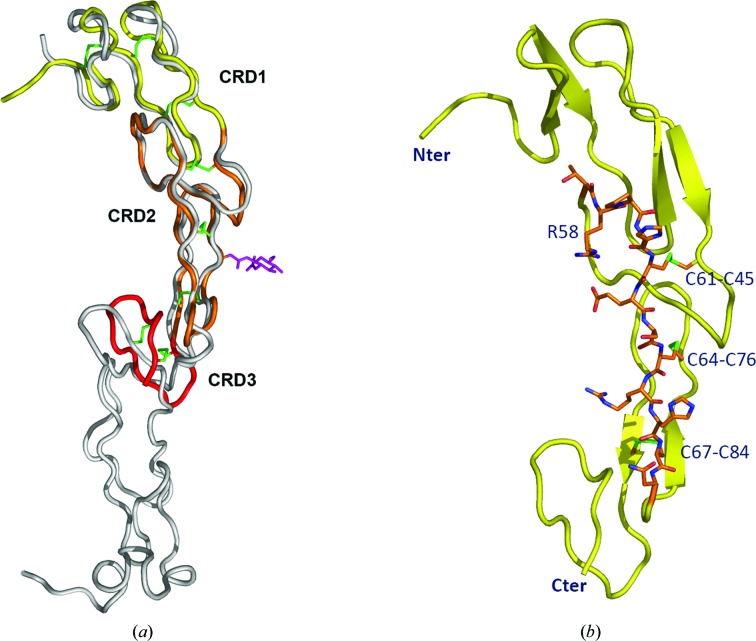 Fig. 1 CD27 structure: CRD organization, glycosylation, and putative CD70 epitope.1
The functional spectrum of CD27 is extensive and is continuously expanding:
Creative Biolabs offers a series of high-quality CD27 membrane protein products, suitable for structural and functional research. Relying on the independently developed MemDX™ recombinant membrane protein technology platform, CD27 proteins can be prepared through various expression systems, including virus-like particles (VLP) and in vitro prokaryotic expression systems. These rigorously validated protein products, such as MemDX™ recombinant human CD27 membrane protein as virus-like particles and human CD27 proteins from various expression systems, can be used in ELISA, antibody screening and identification, binding experiments, and functional research, providing reliable tools for researchers to analyze the interactions and signaling mechanisms of CD27.
Not finding the membrane protein product you need? Contact us to start your one-stop custom service!
Constructing a robust cell model is crucial for the study of CD27-mediated immune co-stimulation. As a TNF receptor superfamily member that regulates T cell and B cell adaptive immune responses, the expression level and signaling activity of CD27 directly affect the threshold for lymphocyte activation and the quality of memory immune responses. Different immune contexts, ligand availability, or changes in expression levels may lead to significant differences in co-stimulatory signaling output and lymphocyte differentiation fate. Creative Biolabs offers customized CD27 membrane protein stable transfection cell models, covering wild-type and various functionally characterized forms. These models stably express the target protein on the plasma membrane, and are suitable for studies on ligand-receptor binding kinetics, co-stimulatory signaling pathway analysis, T cell activation and differentiation assays, and assessment of CD27-mediated NF-κB signaling, providing a reliable and reproducible platform for exploring the co-stimulatory mechanism, structure-function relationship, and immune regulatory network of CD27. Our technology ensures plasma membrane integrity and correct protein localization, facilitating your research.
Not finding the stable cell line product you need? Contact us to start your one-stop custom service!
Creative Biolabs offers highly specific recombinant antibodies targeting CD27, produced using advanced recombinant antibody technology. Compared to traditional antibodies, these recombinant antibodies demonstrate superior performance in terms of specificity, sensitivity, and batch-to-batch consistency. They can also be modified and labeled in various ways. Our CD27 recombinant antibodies support a wide range of applications, including Western Blot, ELISA, flow cytometry, immunofluorescence, immunocytochemistry, immunohistochemistry, and immunoprecipitation, and can be used to detect differences in CD27 expression levels in various immune cell subsets, analyze its cell surface localization on lymphocytes, and conduct related research such as receptor-ligand interaction and co-stimulatory signaling analysis. These antibodies provide reliable detection tools for the structural analysis, functional study of CD27, and the investigation of its regulation in the adaptive immune signaling network.
Not finding the recombinant antibody product you need? Contact us to start your one-stop custom service!
In addition to the standard products, Creative Biolabs also offers professional customized services for CD27. CD27 has multiple functionally significant isoforms and post-translational modifications with differences in ligand-binding capacity and signaling activity. These molecular characteristics have specific requirements in aspects such as protein expression, antigen design, and functional verification. Leveraging our technology platform, we can assist you in completing the following customized projects:
CD27 primarily functions as a lymphocyte-specific co-stimulatory immune receptor on the plasma membrane, binding its ligand CD70 to recruit TRAF2 and TRAF5 adaptor proteins, thereby activating NF-κB and MAPK8/JNK signaling pathways. This co-stimulatory signal promotes T cell priming, survival, and expansion, supports Th1 polarization, enhances effector and memory CD8+ T cell responses, and promotes B cell immunoglobulin production and plasma cell differentiation. A soluble form (sCD27) is shed upon lymphocyte activation and serves as a biomarker of immune activation in various diseases. It is an important model for studying the relationship between immune receptor structure and function as well as the regulatory mechanisms of adaptive immunity.
CD27 is a critical regulator of adaptive immune responses and is implicated in a wide range of immunological conditions. Biallelic loss-of-function mutations cause a severe primary immunodeficiency with EBV-driven lymphoproliferative disorders. Soluble CD27 levels are elevated in multiple autoimmune diseases and correlate with disease activity, and the CD27-CD70 axis is being explored as both a therapeutic target and a biomarker in cancer immunotherapy. Studying the regulation and function of CD27 is helpful for a deeper understanding of lymphocyte co-stimulation biology, the molecular mechanisms of immune evasion in cancer, and the identification of immunotherapeutic strategies.
Not applicable. All CD27 products and services provided by Creative Biolabs are for research purposes only and cannot be used for any clinical diagnosis, prevention, treatment or cure of any disease.
We offer a variety of product types, including recombinant CD27 membrane proteins, stable cell models expressing CD27, high-quality recombinant CD27 antibodies, as well as comprehensive customized services.









