
Creative Biolabs is offering the most comprehensive services for antibody development projects. With strict regulation and effective execution, we are dedicated to providing the most valuable solutions to complete your projects.
HighlightsCreative Biolabs is offering the most comprehensive services for antibody development projects. With strict regulation and effective execution, we are dedicated to providing the most valuable solutions to complete your projects.
HighlightsCreative Biolabs has established a broad range of platforms for developing novel antibodies or equivalents. These cutting-edge technologies enable our scientists to meet your demands from different aspects and tailor the most appropriate solution that contributes to the success of your projects.
HighlightsWith deep understanding in antibody-related realms and extensive project experience, Creative Biolabs offers a variety of references to help you learn more about our capacities and achievements, including infographic, flyer, case study, peer-reviewed publications, and all kinds of knowledge that can assist your projects. You are also welcome to contact us directly for more specific solutions.
HighlightsGet a real taste of Creative Biolabs, one of the most professional custom service providers in the world. We are committed to providing highly customized comprehensive solutions with the best quality to advance your projects.
Highlights Loading...
All listed services and products are For Research Use Only. Do Not use in any diagnostic or therapeutic applications.
CD93 is a type I transmembrane glycoprotein and a member of the C-type lectin-like group 14 family, encoded by the CD93 gene on human chromosome 20p11. The mature protein contains an N-terminal signal peptide, a C-type lectin-like domain (CTLD), a sushi-like domain, five tandem epidermal growth factor (EGF)-like repeats, followed by a mucin-like region, a single transmembrane helix, and a cytoplasmic tail that can interact with the cytoskeletal adaptor moesin. Extensive O-glycosylation within the mucin-like region contributes to proper cell-surface expression and ligand accessibility. The expression pattern of CD93 is highly dynamic and context dependent. It is expressed by endothelial cells and can be upregulated during angiogenic activation, including in sprouting vasculature, while expression is generally lower in quiescent endothelium. This expression pattern makes CD93 a useful marker for studying activated and angiogenic endothelial states. In addition to endothelial cells, CD93 is expressed on several myeloid and hematopoietic cell populations, including monocytes, neutrophils, platelets, microglia, and hematopoietic stem/progenitor cells, where it has been implicated in processes such as cell clearance, adhesion, and innate immune regulation. Soluble CD93 (sCD93) can be generated by ectodomain shedding in response to inflammatory stimuli, and altered circulating sCD93 levels have been reported in association with several inflammatory and vascular disease states.
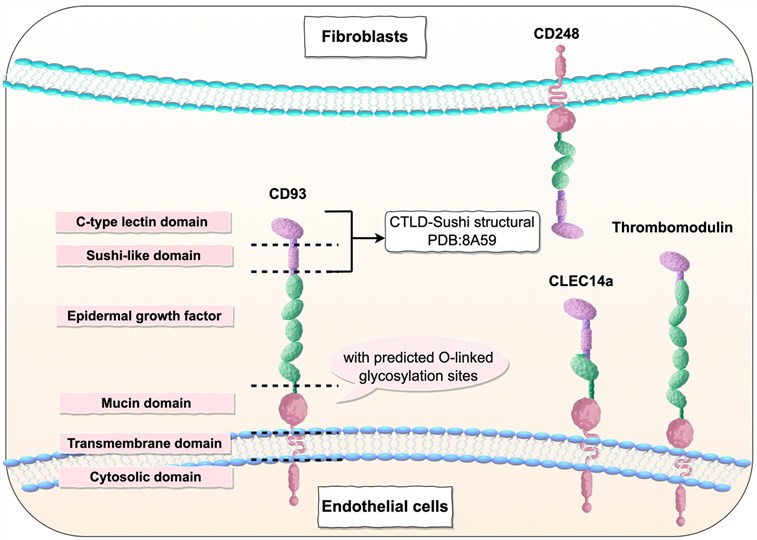 Fig.1 Structural representation of group XIV C-type lectin domain proteins.1
The functional repertoire of CD93 ranges across multiple inter-related biological domains:
Our library of high-quality recombinant CD93 proteins can help support vascular biology and immuno-oncology research. The multi-domain extracellular architecture and extensive O-glycosylation of CD93 can present distinct production challenges. To address different experimental needs, CD93 proteins may be available in formats such as full-length membrane-associated constructs and soluble extracellular-domain fragments containing relevant functional regions. These products can support structural studies, ligand-binding assays, antibody screening, and other biochemical or functional research applications. Appropriate quality assessment is performed according to the specific product format and intended research use.
Not finding the membrane protein product you need? Contact us to start your one-stop custom service!
Reliable cellular models that can be utilized reproducibly are critical to delineate CD93 biology and test therapeutic candidates. We generate stable cell lines expressing wild-type or engineered human, mouse and rat CD93 as well as those engineered to lower the endogenous expression for loss-of-function studies. Optimized tube formation assays with high-throughput throughput, as well as quantifying endothelial migration studies and β1 integrin activation, were performed on these platforms along with sizable-scale leukemia stem cell sphere formation assays, providing the experimental reproducibility necessary for multiple phases of research projects.
Not finding the stable cell line product you need? Contact us to start your one-stop custom service!
We offer a high affinity of recombinant antibodies against CD93 to fulfill the requirements from all research applications. Advancements in production techniques of these antibodies, specifically recombinant technologies have yielded monoclonal antibodies with high specificity/sensitivity and batch-to-batch consistency compared to traditional polyclonal antibodies. Our collection of CD93 recombinant antibodies are validated in WB, ELISA, FCM (Flow Cytometry), IF (Immunofluorescence), ICC (Immunocytochemistry), IHC and IP assays to allow robust detection and quantification of target protein including: endothelial cell lysates, leukemia stem cells preparations, human tumor tissue sections, plasma.
Not finding the recombinant antibody product you need? Contact us to start your one-stop custom service!
In addition to out catalog products, we also provide focused custom services for membrane protein and antibody discovery and development. Based on our knowledge of vascular biology, angiogenesis and leukemia stem cell research are able to help you with:
Yes, a number of clones have been confirmed on archival specimens using standard antigen retrieval methods that correlate with the known membranous staining patterns in endothelium and stroma cell types. Validation (peptide competition and recombinant antigen controls) provides evidence of epitope specificity across multiple tissue contexts with heterogeneous backgrounds.
Yes, the immunogen is from a region very conserved across mammalian species and allows detection in human/ mouse or rat endothelial & tissue preparations without multiple species specific reagents.
We have developed dual-stable lines with plasmids producing both a constitutive expression of full-length CD93 as well as the complement component C1q from independent loci. The system can be used for persistent studies of ongoing foe-dependent vascular remodeling, opsonization kinetics and enothelial barrier modulatuion without the need for repeated transient transfectio or exogenous serum supplementation.
Absolutely. Our cell engineering team routinely constructs tetracycline-inducible systems and lines co-expressing CD93 with MMRN2, IGFBP7 or β1 integrin reporter vectors for detailed angiogenesis and adhesion studies. Detailed discussions around your expression architecture and phenotypic needs are welcome.








