Creative Biolabs is offering the most comprehensive services for antibody development projects. With strict regulation and effective execution, we are dedicated to providing the most valuable solutions to complete your projects.
HighlightsCreative Biolabs is offering the most comprehensive services for antibody development projects. With strict regulation and effective execution, we are dedicated to providing the most valuable solutions to complete your projects.
HighlightsCreative Biolabs has established a broad range of platforms for developing novel antibodies or equivalents. These cutting-edge technologies enable our scientists to meet your demands from different aspects and tailor the most appropriate solution that contributes to the success of your projects.
HighlightsWith deep understanding in antibody-related realms and extensive project experience, Creative Biolabs offers a variety of references to help you learn more about our capacities and achievements, including infographic, flyer, case study, peer-reviewed publications, and all kinds of knowledge that can assist your projects. You are also welcome to contact us directly for more specific solutions.
HighlightsGet a real taste of Creative Biolabs, one of the most professional custom service providers in the world. We are committed to providing highly customized comprehensive solutions with the best quality to advance your projects.
Highlights Loading...
All listed services and products are For Research Use Only. Do Not use in any diagnostic or therapeutic applications.
CSF3R is an 813-amino acid type I transmembrane glycoprotein of the hematopoietin/cytokine receptor superfamily with an estimated molecular weight from 90–130 kDa based on glycosylation state. The human G-CSF/CSF3R complex recently solved by crystallography at 2.8 Å has a distinct 2:2 stoichiometry and cross-over interactions between the Ig-like domains, but such signalling architecture resembles that of the IL-6/gp130 signaling complex more than it does with similarity to murine complexes. Such a structural understanding has important ramifications in the design of therapeutic G-CSF and development of drug(s) targeting the receptor. CSF3R signaling is required for basal neutrophil production under homeostatic conditions and also essential for emergency granulopoiesis during infection, inflammation and stress. The receptor regulates myeloid progenitor proliferation, differentiation, survival and systemic provision to the peripheral blood. In addition to its canonical hematopoietic functions, CSF3R mediates neuroprotection and tissue repair and is associated with tumor biology since aberrant G-CSF/CSF3R signaling has been shown for instance in solid tumors such as ovarian cancer, bladder cancer and squamous cell carcinoma.
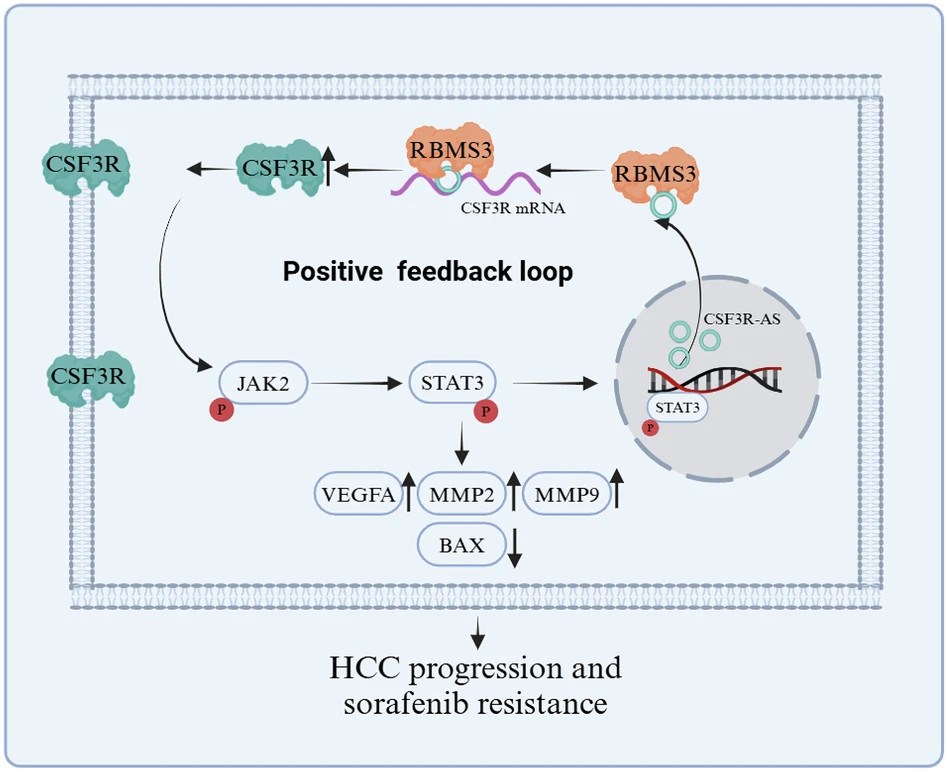 Fig.1 Schematic representation of the model.1
This emphasizes the requirement for CSF3R in myeloid cell biology, with functional contributions that span hematopoietic development, innate immunity and oncogenic transformation:
Creative Biolabs provides a variety of high-performance CSF3R membrane protein for research applications, critical to gain structural and functional insights into this indispensable hematopoietic cytokine receptor. CSF3R is expressed in multiple expression systems (Virus-Like Particles (VLPs), detergent-solubilized formats, and HEK293-derived mammalian cell membranes) using our proprietary Membrane Protein technology. These proteins have been extensively verified and include Membrane Protein in Virus-Like Particles (MP-VLPs), human/mouse/rat CSF3R expressed in HEK293 or admixtures of specialized hematopoietic-compatible systems for applications such as ELISA, monoclonal & polyclonal antibody generation and characterization, G-CSF binding studies; JAK2 recruitment experiments; and functional myeloid signaling assays. These establish dependable instruments for researchers to investigate CSF3R associations with G-CSF, JAK2, STAT3/5 and downstream signaling effector. Our CSF3R preparations faithfully preserve Ig-fold and CRH domain structure, the integrity of the WSXWS motif and tyrosine phosphorylation sites in a mammalian system sophisticated enough to rationalize whether properties important for therapeutic antibodies or mechanistic leukemia studies need physiological relevance.
Not finding the membrane protein product you need? Contact us to start your one-stop custom service!
Creative Biolabs offers customized CSF3R stable cell lines designed to provide consistent target expression for a range of research applications. These stable cell models can support G-CSF binding studies, CSF3R signaling research, myeloid differentiation studies, compound screening, and other investigations of CSF3R biology and pharmacology. Depending on specific experimental requirements, CSF3R-overexpressing or knockdown cell models may be developed to support gain- or loss-of-function studies. Appropriate expression and functional characterization strategies can be selected according to the intended research application.
Not finding the stable cell line product you need? Contact us to start your one-stop custom service!
We offer a robust portfolio of recombinant antibodies against CSF3R, designed for all your research needs. these monoclonal antibodies are produced by rationally designed recombinant methods and have advantages in specificity, sensitivity and batch-to-batch reproducibility over traditional polyclonal-based antibodies. We validate CSF3R recombinant antibodies for use in WB, ELISA, FCM, IF, ICC, IHC and IP across a variety of samples including bone marrow aspirates; peripheral blood mononuclear cells isolated from the peripheral blood mononuclear cells of leukemia patients and healthy subjects; leukemia cell lysates; formalin-fixed paraffin-embedded (FFPE) tissue sections These include antibodies against different CSF3R specific epitopes: extracellular Ig-like domain, CRH domain and membrane-proximal region for G-CSF competition studies, ligand binding assays, T618I mutation detection; cytoplasmic tail for measuring phosphorylation state—all allowing ample profiling of CSF3R in samples from health versus disease and before vs. after therapeutic intervention.
Not finding the recombinant antibody product you need? Contact us to start your one-stop custom service!
In addition to our catalog offers, Creative Biolabs provides customized membrane protein & antibody discovery & development service. Utilizing our deep expertise and advanced platforms we can help you with:
No, all Creative Biolabs CSF3R products and services are strictly for research purposes only and not intended for clinical diagnosis, prevention, treatment or cure of any disease These reagents are for research use only, not for use in diagnostic procedures or preclinical studies. Researchers must comply with all institutional and regulatory guidelines for the protection of human subjects.
Yes, we offer confirmation-selective antibodies that react with a conformation in which the epitope is present within the membrane-proximal extracellular domain rendered accessible via receptor reorientation induced by G-CSF but sterically occluded in the basal, and preformed oligomeric structure. The reagents enable flow cytometry or immunofluorescence multiplexing to distinguish among ligand-occupied and free receptor populations on whole-cell membranes — a native measure of the dynamics of activation-state distribution without needing to maintain phospho-STAT3 after receptor engagement, nor relying on downstream readouts such as gene expression assays.
Yes, select clones have been validated on archival hematopoietic samples after antigen retrieval and provide specific membranous staining patterns characteristic of myeloblasts, promyelocytes or mature segmented neutrophil distribution. In peripheral blood samples already mobilized by G-CSF, the intensity of staining reflects the time of exposure to G-CSF. Validation consists of peptide competition and G-CSF blocking absorption controls confirming epitope specificity.
Yes, the immunogen is derived from a highly conserved region present in mammals that allows for species independent and ample detection of human, mouse, and rat hematopoietic preparations and corresponding bone marrow sections without needing to have multiple species specific reagents.