
Creative Biolabs is offering the most comprehensive services for antibody development projects. With strict regulation and effective execution, we are dedicated to providing the most valuable solutions to complete your projects.
HighlightsCreative Biolabs is offering the most comprehensive services for antibody development projects. With strict regulation and effective execution, we are dedicated to providing the most valuable solutions to complete your projects.
HighlightsCreative Biolabs has established a broad range of platforms for developing novel antibodies or equivalents. These cutting-edge technologies enable our scientists to meet your demands from different aspects and tailor the most appropriate solution that contributes to the success of your projects.
HighlightsWith deep understanding in antibody-related realms and extensive project experience, Creative Biolabs offers a variety of references to help you learn more about our capacities and achievements, including infographic, flyer, case study, peer-reviewed publications, and all kinds of knowledge that can assist your projects. You are also welcome to contact us directly for more specific solutions.
HighlightsGet a real taste of Creative Biolabs, one of the most professional custom service providers in the world. We are committed to providing highly customized comprehensive solutions with the best quality to advance your projects.
Highlights Loading...
All listed services and products are For Research Use Only. Do Not use in any diagnostic or therapeutic applications.
Delta-like ligand 4 (DLL4), encoded by the DLL4 gene located on chromosome 15q15.1, is a member of the Delta/Serrate/Lag-2 (DSL) family of canonical Notch ligands. The delta gene family encodes Notch ligands that are characterized by a DSL domain, epidermal growth factor (EGF)-like repeats, and a single-pass transmembrane domain. The crystal structure of human DLL4 has revealed that the DSL domain and the N-terminal MNNL (module at the N-terminus of Notch ligands) domain mediate binding to Notch receptors. Specifically, Notch1 EGF-like repeats 11 and 12 interact with the DLL4 DSL domain and MNNL domain, respectively. DLL4 is prominently expressed in arterial endothelial cells during development, and its expression is induced by vascular endothelial growth factor (VEGF). DLL4 has also been detected in immune cell populations including macrophages and dendritic cells.
DLL4 functions as a membrane-bound ligand that activates Notch signaling through direct cell-cell interactions. DLL4 activates downstream Notch signaling primarily through Notch1 and Notch4 receptors, with in vitro binding affinity assays showing that DLL4 has at least a 10-fold higher binding affinity to Notch1 than DLL1. Ligand binding to the extracellular domain of Notch triggers proteolytic activation of the receptor, generating the Notch intracellular domain (NICD), which translocates to the nucleus and induces expression of target genes such as Hes and Hey. Through this signaling mechanism, DLL4 plays an essential role in vascular development—haploinsufficiency of DLL4 is embryonically lethal in mice, underscoring its dosage-sensitive requirement. DLL4 functions as a key regulator of sprouting angiogenesis, where it is highly expressed in endothelial tip cells and acts as a negative regulator of angiogenic sprouting by limiting endothelial cell proliferation and promoting vessel maturation and stabilization. DLL4-Notch signaling also couples sprouting angiogenesis with artery formation. Beyond the vasculature, DLL4-Notch signaling has been reported to promote proinflammatory activation of macrophages. These properties position DLL4 as an important research target for studies of Notch signaling, vascular development, angiogenesis regulation, and immune cell signaling.
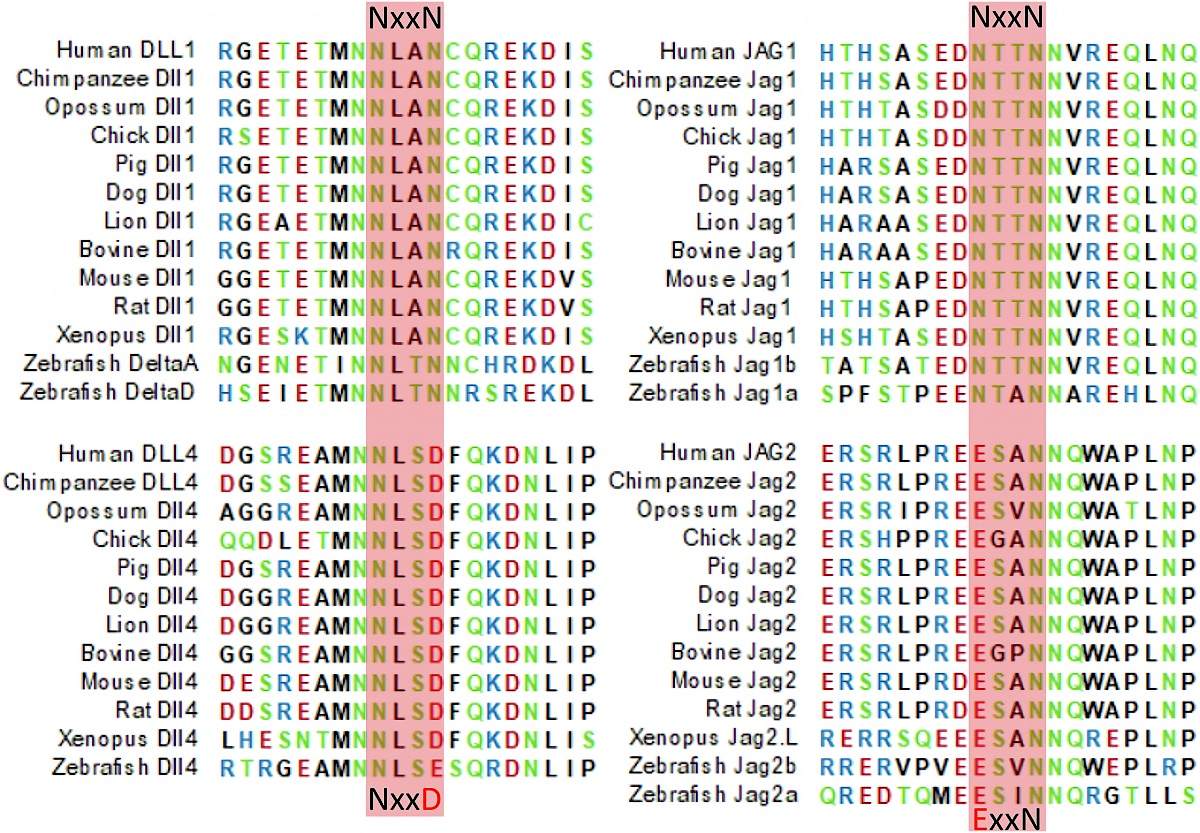 Fig. 1 Partial sequence comparison of Notch ligands.1
DLL4, encoded by the DLL4 gene, functions as a membrane-bound Notch ligand that activates downstream signaling through receptor binding:
Creative Biolabs offers high-quality DLL4 membrane protein products produced using optimized expression systems. These include full-length type I transmembrane protein that retains the native membrane-spanning domain, as well as isolated extracellular domain variants containing the DSL domain and EGF-like repeats. The extracellular domains mediate Notch receptor binding and activation, making these proteins suitable for studies of Notch ligand-receptor interactions, receptor activation mechanisms, and angiogenesis regulation. All DLL4 proteins undergo strict quality control to support consistent performance across applicable research platforms.
Not finding the protein product you need? Contact us to start your one-stop custom service!
Creative Biolabs provides custom-engineered DLL4 stable cell lines, including overexpression and knockdown models. These cell lines are optimized for studies of Notch signaling pathway activation, angiogenesis regulation, arterial specification, and vascular development research. Each cell line undergoes stringent validation to ensure stable expression profiles and consistent functional performance in diverse experimental contexts.
Not finding the stable cell line product you need? Contact us to start your one-stop custom service!
High-specificity recombinant antibodies targeting DLL4 are developed using antibody engineering technologies for research applications involving DLL4 expression and localization. These antibodies can be used in studies of DLL4 distribution in endothelial cells and other relevant cell populations and may also support characterization of DLL4-Notch receptor interactions in combination with appropriate detection reagents.
Not finding the recombinant antibody product you need? Contact us to start your one-stop custom service!
Beyond catalog products, Creative Biolabs offers specialized custom services for DLL4 research:








