Creative Biolabs is offering the most comprehensive services for antibody development projects. With strict regulation and effective execution, we are dedicated to providing the most valuable solutions to complete your projects.
HighlightsCreative Biolabs is offering the most comprehensive services for antibody development projects. With strict regulation and effective execution, we are dedicated to providing the most valuable solutions to complete your projects.
HighlightsCreative Biolabs has established a broad range of platforms for developing novel antibodies or equivalents. These cutting-edge technologies enable our scientists to meet your demands from different aspects and tailor the most appropriate solution that contributes to the success of your projects.
HighlightsWith deep understanding in antibody-related realms and extensive project experience, Creative Biolabs offers a variety of references to help you learn more about our capacities and achievements, including infographic, flyer, case study, peer-reviewed publications, and all kinds of knowledge that can assist your projects. You are also welcome to contact us directly for more specific solutions.
HighlightsGet a real taste of Creative Biolabs, one of the most professional custom service providers in the world. We are committed to providing highly customized comprehensive solutions with the best quality to advance your projects.
Highlights Loading...
All listed services and products are For Research Use Only. Do Not use in any diagnostic or therapeutic applications.
The FLT3 gene is located in the 13q12.2 region of human chromosome 13 and encodes the FMS-like tyrosine kinase 3 (FLT3), which belongs to the class III receptor tyrosine kinase family. FLT3 is a type I transmembrane glycoprotein, with five immunoglobulin-like domains in its extracellular region, a single transmembrane domain, and an intracellular region containing a juxtamembrane domain and two tyrosine kinase domains. Its molecular weight is approximately 160 kDa for the mature glycosylated form and it is predominantly expressed on the surface of hematopoietic progenitor cells in the bone marrow, thymus, and lymph nodes. As a key regulator of hematopoiesis, FLT3 serves as the cell-surface receptor for the FLT3 ligand, and upon ligand binding it dimerizes and undergoes autophosphorylation, activating downstream signaling pathways including PI3K/Akt, Ras/MAPK, and STAT5 that promote the survival, proliferation, and differentiation of hematopoietic progenitor cells and dendritic cells. This gene is subject to frequent activating mutations in acute myeloid leukemia, most notably internal tandem duplications in the juxtamembrane domain and point mutations in the tyrosine kinase activation loop, which drive constitutive kinase activity and leukemic cell proliferation. FLT3-ITD mutations are associated with a poor prognosis in acute myeloid leukemia and represent a major therapeutic target. Germline inactivation of FLT3 in mice is compatible with viability but impairs B lymphocyte development and reduces dendritic cell numbers, indicating that FLT3 is important but not strictly essential for hematopoiesis under basal conditions. Therefore, FLT3 is regarded as an important molecular target for studying receptor tyrosine kinase signaling, hematopoietic stem cell biology, and the molecular pathogenesis of acute myeloid leukemia. Its functional analysis provides valuable tools for understanding the molecular basis of hematopoietic regulation and leukemogenesis.
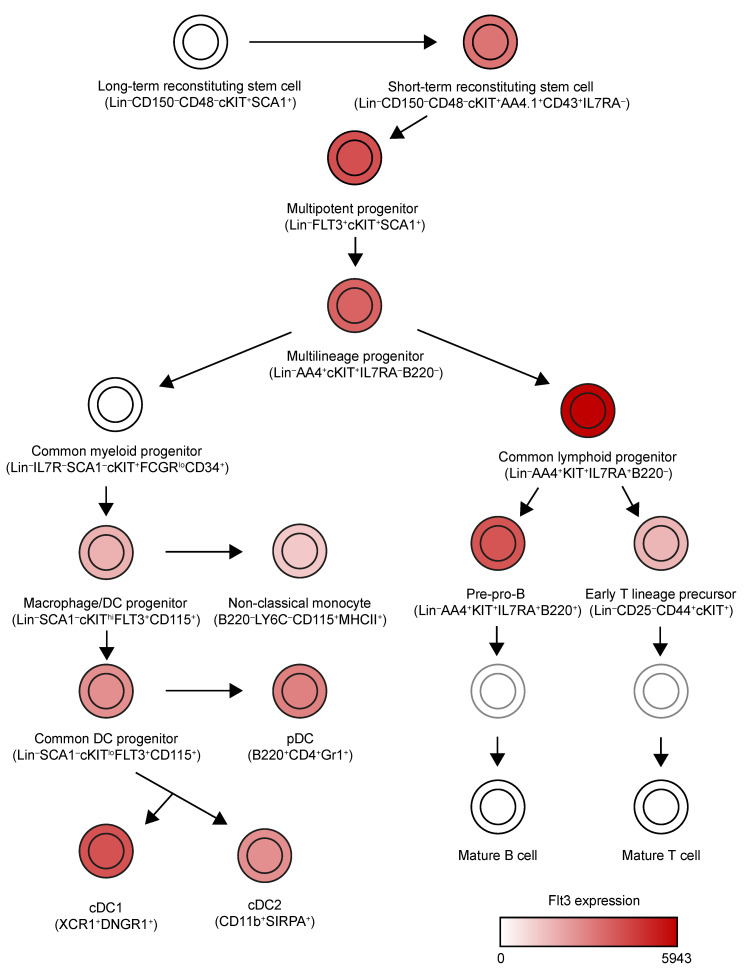 Fig. 1 Mutation selectivity of type I/II FLT3 inhibitors.1
The functional spectrum of FLT3 is extensive and is continuously expanding:
Creative Biolabs offers a series of high-quality FLT3 membrane protein products, suitable for structural and functional research. Relying on the independently developed MemDX™ recombinant membrane protein technology platform, FLT3 proteins can be prepared through various expression systems, including virus-like particles (VLP) and in vitro prokaryotic expression systems. These rigorously validated protein products, such as MemDX™ recombinant human FLT3 membrane protein as virus-like particles and human FLT3 proteins from various expression systems, can be used in ELISA, antibody screening and identification, binding experiments, and functional research, providing reliable tools for researchers to analyze the interactions and kinase signaling mechanisms of FLT3.
Not finding the membrane protein product you need? Contact us to start your one-stop custom service!
Constructing a robust cell model is crucial for the study of FLT3-mediated hematopoietic signaling. As a class III receptor tyrosine kinase that regulates hematopoietic progenitor survival and differentiation, the expression level and activation state of FLT3 directly influence downstream signaling output and cellular responses to growth factors. Different genetic backgrounds, activating mutations, or changes in expression levels may lead to significant differences in kinase activity and downstream pathway activation. Creative Biolabs offers customized FLT3 membrane protein stable transfection cell models, covering wild-type and various disease-relevant mutant forms. These models stably express the target protein on the plasma membrane, and are suitable for studies on kinase activity, phosphorylation analysis, downstream signaling pathway assessment, and evaluation of FLT3 inhibitor responses, providing a reliable and reproducible platform for exploring the signaling mechanism, structure-function relationship, and regulatory network of FLT3. Our technology ensures plasma membrane integrity and correct protein localization, facilitating your research.
Not finding the stable cell line product you need? Contact us to start your one-stop custom service!
Creative Biolabs offers highly specific recombinant antibodies targeting FLT3, produced using advanced recombinant antibody technology. Compared to traditional antibodies, these recombinant antibodies demonstrate superior performance in terms of specificity, sensitivity, and batch-to-batch consistency. They can also be modified and labeled in various ways. Our FLT3 recombinant antibodies support a wide range of applications, including Western Blot, ELISA, flow cytometry, immunofluorescence, immunocytochemistry, immunohistochemistry, and immunoprecipitation, and can be used to detect differences in FLT3 expression levels in various hematopoietic cell populations or tissue sources, analyze its plasma membrane localization, and conduct related research such as protein-protein interaction and kinase signaling pathway analysis. These antibodies provide reliable detection tools for the structural analysis, functional study of FLT3, and the analysis of its regulation in hematopoietic signaling networks.
Not finding the recombinant antibody product you need? Contact us to start your one-stop custom service!
In addition to the standard products, Creative Biolabs also offers professional customized services for FLT3. FLT3 has multiple oncogenic mutant forms, including internal tandem duplications and kinase domain point mutations, with distinct signaling and functional properties. These variants present specific requirements in areas such as recombinant protein production, antigen design, and functional characterization. Leveraging our technology platform, we can assist you in completing the following customized projects:
FLT3 is a class III receptor tyrosine kinase expressed on hematopoietic progenitor cells, where it binds the FLT3 ligand to activate PI3K/Akt, Ras/MAPK, and STAT5 signaling pathways that promote cell survival, proliferation, and differentiation. It is essential for normal dendritic cell and B lymphocyte development, and its signaling is tightly regulated by ligand-induced dimerization and autophosphorylation.
FLT3 is the most frequently mutated gene in acute myeloid leukemia, with activating internal tandem duplications and kinase domain point mutations driving constitutive signaling and poor prognosis. Its expression is largely restricted to hematopoietic progenitor cells, and it is dispensable for normal hematopoietic stem cells but required for leukemic stem cells harboring internal tandem duplication mutations, providing a rationale for selective therapeutic targeting.
They are not. All FLT3 products and services provided by Creative Biolabs are exclusively for research applications and may not be employed for any diagnostic, prophylactic, or therapeutic purpose in humans.
Multiple product formats are available, encompassing recombinant FLT3 membrane proteins, stable cell models expressing FLT3, high-quality recombinant anti-FLT3 antibodies, as well as comprehensive customized research services.