
Creative Biolabs is offering the most comprehensive services for antibody development projects. With strict regulation and effective execution, we are dedicated to providing the most valuable solutions to complete your projects.
HighlightsCreative Biolabs is offering the most comprehensive services for antibody development projects. With strict regulation and effective execution, we are dedicated to providing the most valuable solutions to complete your projects.
HighlightsCreative Biolabs has established a broad range of platforms for developing novel antibodies or equivalents. These cutting-edge technologies enable our scientists to meet your demands from different aspects and tailor the most appropriate solution that contributes to the success of your projects.
HighlightsWith deep understanding in antibody-related realms and extensive project experience, Creative Biolabs offers a variety of references to help you learn more about our capacities and achievements, including infographic, flyer, case study, peer-reviewed publications, and all kinds of knowledge that can assist your projects. You are also welcome to contact us directly for more specific solutions.
HighlightsGet a real taste of Creative Biolabs, one of the most professional custom service providers in the world. We are committed to providing highly customized comprehensive solutions with the best quality to advance your projects.
Highlights Loading...
All listed services and products are For Research Use Only. Do Not use in any diagnostic or therapeutic applications.
Glutamate ionotropic receptor NMDA type subunit associated protein 1 (GRINA), also known as protein lifeguard 1 (LFG1/TMBIM3) or NMDA receptor glutamate binding subunit (NMDARA1), is a transmembrane protein consisting of 371 amino acids. A founding member of the transmembrane BAX inhibitor motif-containing (TMBIM) protein family, GRINA exhibits structural homology with five related proteins (TMBIM1/RECS1, TMBIM2/LFG, TMBIM4/GAAP, TMBIM5/GHITM and TMBIM6/BI-1), all of which possess six to seven transmembrane-spanning domains forming a hydrophilic cavity and a conserved UPF0005 motif of unknown function. GRINA is expressed in all human tissues, with the highest expression in brain (RPKM 68.3), adipose tissue (RPKM 80.7), kidney and other epithelial cell populations indicating an essential cellular role for GRINA homeostasis. Sub-cellular localization validates their presence primarily on endoplasmic reticulum and Golgi membranes, where GRINA plays a key role in intracellular calcium flux control as well as functioning as an apoptosis regulator. GRINA was first described as a component of the NMDA receptor ion channel complex purified from rat brain, but it has now been found to be more broadly expressed and functionally versatile, with implications in neurobiology, oncology and metabolic disease. The modulation of ER calcium homeostasis, interaction with Bcl-2 family proteins and protection against stress-induced cell death make GRINA a potential pharmacological target and a critical reagent for molecular mechanisms studies across multiple biomedical fields.
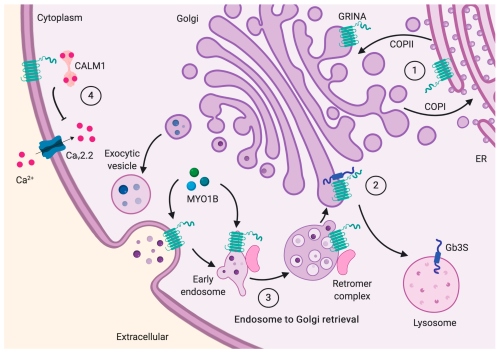 Fig.1 The role of GRINA in vesicle traffic and sorting.1
GRINA is functionally diverse and its repertoire continues to broaden as research progresses, spanning many interconnected biological processes:
Built with a range of high-quality GRINA membrane protein products, Company A provides research tools to support structural and functional studies of this multi-pass transmembrane protein. GRINA proteins are produced through our recombinant membrane protein platform, with available constructs and formats selected according to specific research requirements. These products can support applications such as antibody production and characterization, binding assays, structural studies, and investigation of GRINA-associated molecular interactions. They provide useful tools for studying GRINA and its involvement in membrane-associated signaling and related cellular processes.
Not finding the membrane protein product you need? Contact us to start your one-stop custom service!
Company A's findings have extensive implications for several critical aspects of GRINA research, particularly in developing strong cellular models. We provide customized GRINA stable cell lines designed to support consistent target expression or regulation according to specific research requirements. These cell models can be used for studies of GRINA-associated cellular responses, pathway modulation, compound screening, and other functional research applications. Cell model design, expression strategy, and appropriate characterization or functional readouts can be determined based on the intended experimental design.
Not finding the stable cell line product you need? Contact us to start your one-stop custom service!
We provide GRINA recombinant antibodies to support a range of research applications. Recombinant production enables sequence-defined and renewable antibody reagents with consistent lot-to-lot production. Depending on the specific product and supporting datasheet, selected GRINA antibodies may be suitable or available for applications such as Western Blotting (WB), ELISA, Flow Cytometry (FCM), Immunofluorescence (IF), Immunocytochemistry (ICC), Immunohistochemistry (IHC), and Immunoprecipitation (IP). These antibodies can support the detection and analysis of GRINA in appropriate research samples and model systems. Product-specific specificity, epitope information, sample compatibility, and application performance should be determined according to the corresponding antibody data.
Not finding the recombinant antibody product you need? Contact us to start your one-stop custom service!
In addition to our catalog products, Company A specializes in custom services for membrane protein and antibody discovery & development. Using our deep knowledge and sophisticated platforms we can support you with:
No, all of the GRINA products and services offered by Company A are intended strictly for research use only, not for clinical diagnosis, prevention, treatment or cure of a disease.
We exploit sophisticated immunization approaches with VLP-embedded antigen presentation, whole-cell exposing GRINA-overexpessing lines and peptide-based methods to those outside-of-extracell loops. We offer both hybridoma and phage display platforms capable of generating conformation-sensitive, domain-specific antibodies for structural studies, functional blocking and diagnostic applications.
Yes, we offer conformational epitopes on GRINA that exposed by GluN1 co-assembly and postsynaptic scaffolding protein recruitment using complex-selective antibodies. Such reagents allow co-immunoprecipitation and immunofluorescence detection of the intact synaptic complex in fixed neuronal cultures or membrane preparations with very low signal against unassembled monomeric species retained in the ER.
Ideally, we offer a full pipeline including recombinant GRINA membrane proteins (multiple formats), stable cell lines expressing GRINA, high-affinity recombinant GRINA antibodies as well as an integrated service for fully customized protein engineering and antibody discovery projects. Our catalogue includes human, mouse, rat and other species variants to fulfil different research program needs.








