
Creative Biolabs is offering the most comprehensive services for antibody development projects. With strict regulation and effective execution, we are dedicated to providing the most valuable solutions to complete your projects.
HighlightsCreative Biolabs is offering the most comprehensive services for antibody development projects. With strict regulation and effective execution, we are dedicated to providing the most valuable solutions to complete your projects.
HighlightsCreative Biolabs has established a broad range of platforms for developing novel antibodies or equivalents. These cutting-edge technologies enable our scientists to meet your demands from different aspects and tailor the most appropriate solution that contributes to the success of your projects.
HighlightsWith deep understanding in antibody-related realms and extensive project experience, Creative Biolabs offers a variety of references to help you learn more about our capacities and achievements, including infographic, flyer, case study, peer-reviewed publications, and all kinds of knowledge that can assist your projects. You are also welcome to contact us directly for more specific solutions.
HighlightsGet a real taste of Creative Biolabs, one of the most professional custom service providers in the world. We are committed to providing highly customized comprehensive solutions with the best quality to advance your projects.
Highlights Loading...
All listed services and products are For Research Use Only. Do Not use in any diagnostic or therapeutic applications.
HSD17B13 is a putative member of short-chain dehydrogenase/reductasse SDR superfamily, consisting of 300 amino acids and with the predicted molecular weight near to 33 kDa. HSD17B13 is primarily expressed in hepatocytes, and it also has lower expression levels detectable in skin and adipose tissue localizes to lipid droplets as well as within the cytosolic compartment catalyzes oxidation and reduction of a variety of lipid mediators, steroid hormones, systemic fatty acid derivatives. The enzyme is aligned with a typical Rossmann fold structurally that binds NAD+ and its reduction product, NADH in precisely oriented catalytic cleft, enacting the possibility of interconversion between 17-keto and 17-hydroxy steroids as well larger lipid substrates. Originally characterized as a steroid-metabolizing enzyme, current research has definitively identified HSD17B13 as an integral regulator of hepatic lipid homeostasis and inflammatory injury responses. Genome-wide association studies have implicated a splice-variant truncating mutation (rs72613567:TA) that predisposes carriers to low levels of HSD17B13 expression with strong protection against progression of nonalcoholic fatty liver disease, alcohol-related liver disease, and hepatocellular carcinoma. Mechanistically, loss of HSD17B13 function alleviates hepatic steatosis and inflammation driven by lipotoxicity and reduces fibrogenic activation of hepatic stellate cells.
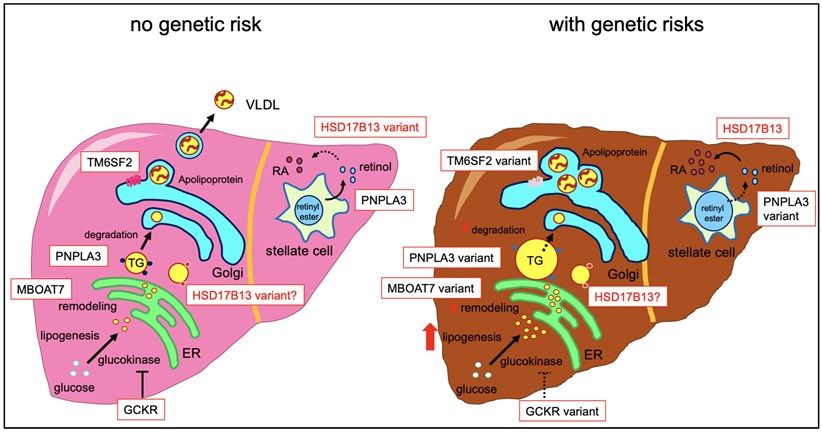 Fig.1 Molecular mechanism of genetic variants in FLD.1
HSD17B13 coordinates various physiological programs that go far beyond its nominal function as a steroid-converting enzyme:
We provide a well-characterized library of full-length HSD17B13 proteins produced to support research in metabolism, enzymology, structure-guided drug design, and screening applications. For specialized research requirements, mammalian, insect, or other suitable expression formats may be considered. Our catalogue may include wild-type human HSD17B13, the naturally occurring loss-of-function truncated variant associated with rs72613567, active-site mutants for mechanistic studies, as well as species orthologs for comparative research. Available preparations are subject to appropriate quality assessment according to the specific product format and intended application. Where applicable, enzymatic activity can be characterized using defined in vitro lipid substrates, rather than assuming that these substrates represent established physiological substrates of HSD17B13.
Not finding the membrane protein product you need? Contact us to start your one-stop custom service!
Creating cellular platforms that accurately recreate HSD17B13 expression profiles and metabolic actions will underpin the characterization of its role in hepatic steatosis, as well as enable rapid drug discovery. Here, we describe the construction of a broad array of stable cell lines expressing HSD17B13 proteins modified by lentiviral transduction with integration through native sequence-based pharmacokinetics, resulting in physiologically relevant expression patterns and authentic lipid droplet localization together with functional response to fatty acid and inflammatory stimuli. That was our expansion not only to include wild-type constitutive expression, but tetracycline-inducible systems for precise temporal modulation of actual enzyme levels and the rs72613567 truncating variant (for protective loss-of-function modeling) as well as co-expression platforms with HSD17B13 in a shared cellular context either under other lipid droplet coat proteins or fibrogenic markers.
Not finding the stable cell line product you need? Contact us to start your one-stop custom service!
Take your HSD17B13 research to conduct with our meticulously curated panel of sequence-defined, high-affinity monoclonal antibodies that are designed specifically to address the structural characteristics and metabolic biology of this hepatic oxidoreductase. Our antibodies are specific for native, correctly folded HSD17B13 with little or no cross-reactivity against other closely related members of the HSD17B family. They should recognize both the full-length wild-type enzyme and the naturally occurring truncated version, discriminate human HSD17B13 from murine or rat orthologs, and provide conformational/pathway-associated targeting to lipid droplet for sub-cellular localization studies. These reagents are pre-validated for: quantitative Western blotting with reducing and non-reducing conditions, sensitive detection of HSD17B13 abundance in tissues lysates or biological fluids using direct ELISA, flow cytometry on permeabilized hepatocyte and hepatic stellate cell populations to support functional characterization, high-resolution immunofluorescence imaging/confocal microscopy measurements of lipid droplet co-localization studies between fat bodies within cells/tissues, formalin-fixed paraffin embedded liver biopsy sections through normal versus steatotic versus cirrhotic tissues assessed by immunohistochemistry workflows along the associated literature/validating data based upon functionality neutralizing properties.
Not finding the recombinant antibody product you need? Contact us to start your one-stop custom service!
Far exceeding the scope of our typical catalog, we provide complete turnkey discovery and manufacturing solutions designed for optimizing your HSD17B13-targeted therapeutic and diagnostic development portfolio:
Certainly. We now routinely generate the naturally occurring rs72613567 variant that models protective loss-of-function, equivalent active-site histidine-to-alanine substitutions conferring an enzymatically passive state and cofactor-binding deficient mutants designed to interrogate NAD⁺ coordination. The custom constructs cerated for these two monooxygenases are provided either as purified recombinant proteins or genetically stable cell lines, with complete sequence confirmation by DNA sequencing and identity verification confirmed using mass spectrometry followed by extensive enzyme kinetic characterization in combination with lipid droplet interaction studies.
Yes. Our bacterial expression systems, combined with proprietary refolding protocols, providing for the correct formation of the alpha/beta Rossmann fold and appropriate orientation of catalytic triad necessary for oxidoreductase activity. For release, each batch is subjected to analytical verification by circular dichroism spectroscopy, cofactor-binding titration and bioactivity quantification using conventional steroid or lipid substrate conversion assays for functional integrity.
Absolutely. Our monoclonal antibodies have been raised against unique epitopes within the HSD17B13's C-terminal region and substrate-binding pocket that exhibit minimal sequence homology.
Yes. We have developed robust tetracycline-inducible and cumate-inducible expression systems that enable precise, titratable control of HSD17B13 expression levels.








