Creative Biolabs is offering the most comprehensive services for antibody development projects. With strict regulation and effective execution, we are dedicated to providing the most valuable solutions to complete your projects.
HighlightsCreative Biolabs is offering the most comprehensive services for antibody development projects. With strict regulation and effective execution, we are dedicated to providing the most valuable solutions to complete your projects.
HighlightsCreative Biolabs has established a broad range of platforms for developing novel antibodies or equivalents. These cutting-edge technologies enable our scientists to meet your demands from different aspects and tailor the most appropriate solution that contributes to the success of your projects.
HighlightsWith deep understanding in antibody-related realms and extensive project experience, Creative Biolabs offers a variety of references to help you learn more about our capacities and achievements, including infographic, flyer, case study, peer-reviewed publications, and all kinds of knowledge that can assist your projects. You are also welcome to contact us directly for more specific solutions.
HighlightsGet a real taste of Creative Biolabs, one of the most professional custom service providers in the world. We are committed to providing highly customized comprehensive solutions with the best quality to advance your projects.
Highlights Loading...
All listed services and products are For Research Use Only. Do Not use in any diagnostic or therapeutic applications.
Interleukin-1 receptor type 1 (IL1R1) is a core signaling receptor through which IL-1α and IL-1β initiate cellular inflammatory signaling. These cytokines bind IL1R1 and recruit the accessory protein IL1RAP to form a signaling complex; other IL-1-family cytokines use distinct receptor complexes. On its extracellular side, that is, the portion exposed on the cell surface that can come into contact with external substances, there are three regions with structures similar to immunoglobulins. These regions assemble to form an elaborate ligand-capturing structure, intricately designed to precisely bind its target molecule: the outermost domain first hooks onto the open end of the cytokine, and the adjacent domains then fold inward to completely enclose the cytokine. Only when both binding interfaces are firmly secured will the receptor lock onto the ligand, achieving a binding affinity at the nanomolar level—meaning it holds on extremely tightly and does not release easily. IL1R1 was the first member of this receptor superfamily to be cloned and remains a reference model for studying IL-1 receptor signaling. Signaling initiated through IL1R1 is a major component of IL-1α/IL-1β-driven inflammatory responses. IL1R1 acts upstream of multiple downstream inflammatory signaling pathways, and its activation state helps determine the magnitude of IL-1α/IL-1β-driven responses. Precisely because of this critical position, the body regulates it with exceptional precision and complexity, establishing multiple lines of defense to control it and prevent unregulated activation. One homologous decoy receptor subtype preemptively intercepts ligands intended to bind IL1R1, preventing them from reaching the cell membrane surface receptors capable of transmitting signals, and this interception does not trigger any inflammatory signaling. Another endogenous receptor antagonist protein first occupies the binding site on IL1R1, blocking the position so that no other molecules can bind, while also not initiating any activation response. There is also an essential auxiliary chain that serves as the final checkpoint: even if a ligand successfully binds IL1R1, this chain assesses whether a complete signal transduction structure can be properly assembled; if it fails this assessment, the signal still cannot be transmitted into the cell.
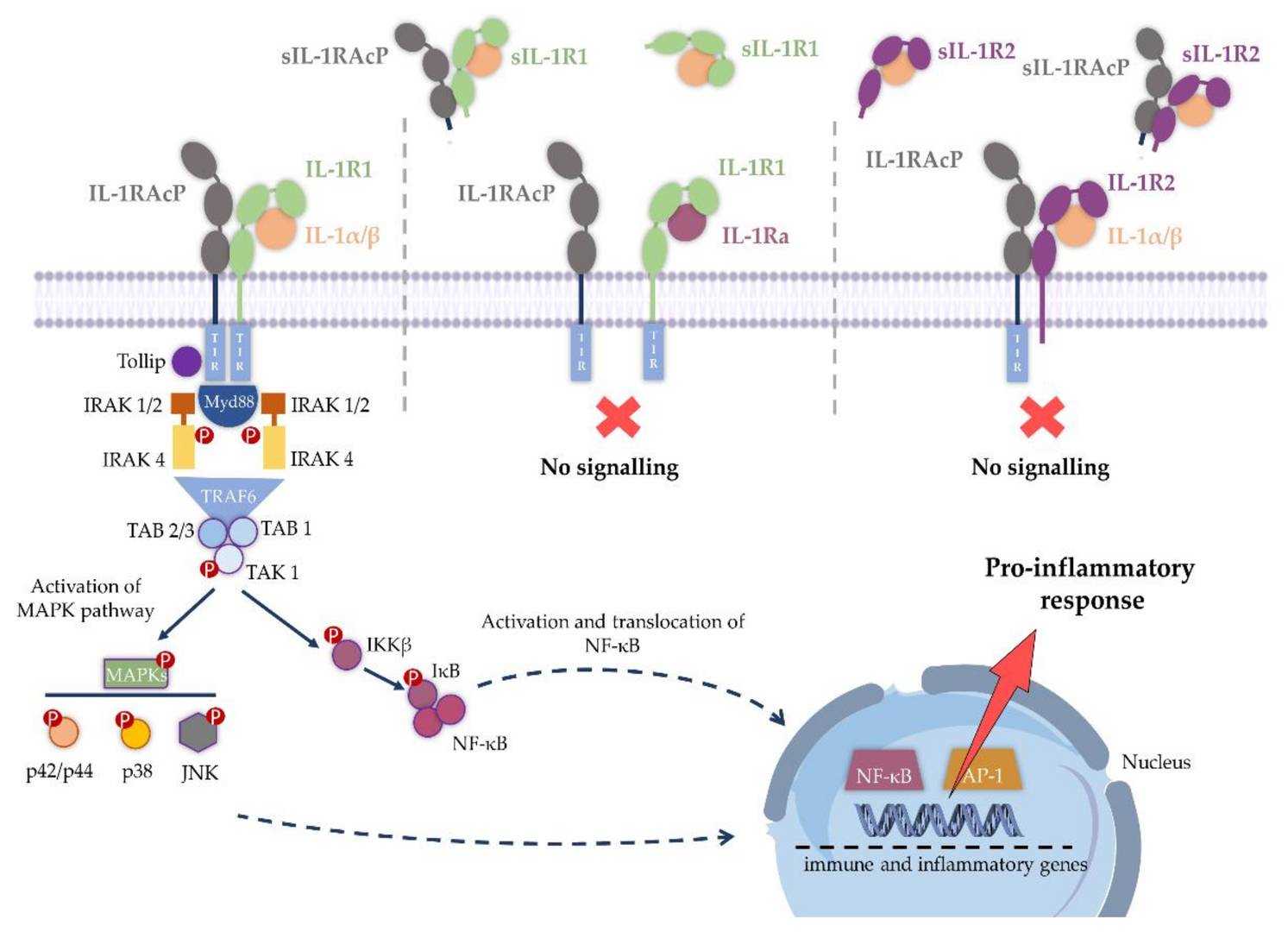 Fig.1 Schematic representation of IL-1 signaling.1
Several research currents keep converging on this receptor:
To produce a properly functioning IL1R1, the requirements of its multiple structural domains must be balanced, with no capacity sacrificed at the expense of another. After all, this molecule must sustain two core capabilities simultaneously: one is the activity to bind ligands, and the other is the ability to interact with other proteins downstream to transmit signals; any failure in either aspect renders it unusable. Its extracellular structural domain must maintain its original precise spatial structure, with the two ligand-capturing sites retained in their original state. If the produced molecule misfolds, fails to assemble into its correct conformation, or loses critical fragments due to structural defects, its ligand binding strength will weaken, and the efficiency of each binding event cannot be stabilized, making it completely incapable of supporting subsequent experiments.All our full-length IL1R1 products are produced in an optimized eukaryotic expression system. The native folding-assisting conditions built into this system are specifically matched to the complex structure of this receptor, enabling it to assemble into its correct conformation. We also select a form that integrates with the cell membrane, allowing all signal transduction components associated with this receptor to remain in a naturally functional working environment, preventing inactivation caused by artificial modifications. All products undergo three rounds of testing before shipment to enforce quality control: SDS-PAGE is used to verify purity, confirming that impurities will not interfere with experiments; analytical size-exclusion chromatography is used to verify monodispersity, ensuring all molecules exist independently and do not randomly aggregate; dynamic light scattering analysis is used to verify aggregation status, confirming that molecules do not clump into large masses and lose normal function.
Not finding the membrane protein product you need? Contact us to start your one-stop custom service!
A cell model used for IL1R1 research must meet two conditions to be usable: it must have an appropriate expression level, which is neither too high nor too low to interfere with experimental results, and it must have qualified assembly capacity to form a complete, functionally normal molecule. Overexpressing cell lines transduced with wild-type IL1R1 provide a stable and consistent receptor expression level for inflammation readout studies, eliminating batch-to-batch fluctuations. Genetically edited IL1R1 variants can separate the ligand capture and signal transduction processes, enabling researchers to dissect the core functional characteristics of this receptor without having to infer causal factors from two intertwined processes. Every cell line completes a full set of identification assessments before shipment, eliminating the need for you to spend time testing basic characteristics after receiving the product: first, we compare it with a calibrated standard to quantify the IL1R1 expression level on the cell surface, confirming the figures meet experimental requirements; next, imaging is used to confirm its correct localization to the cell membrane, ensuring it is not mislocalized and unable to function; finally, its response to interleukin-1 is recorded—by the time you receive the cells to start your experiment, all their signal transduction characteristics have already been fully confirmed. If your research project requires a specific molecular variant background, a specific combination of auxiliary chains, or a dedicated expression timeline coordinated with your stimulation experiments, this cell platform can be fully customized to your requirements. The entire cell model is constructed around the experiment you intend to conduct, and can perfectly adapt to your experimental workflow.
Not finding the stable cell line product you need? Contact us to start your one-stop custom service!
Antibody work on IL1R1 faces a challenge with few equals in cytokine-receptor biology: the decoy sibling receptor shares an extracellular architecture so similar that generic clones cannot reliably tell them apart, and in samples where both are present that ambiguity corrupts quantitation at its foundation. Our recombinant panel here is screened for genuine IL1R1-versus-decoy discrimination, then validated across lysate quantitation, surface staining of receptor-expressing cells, fixed-tissue distribution mapping, and live-cell imaging of receptor dynamics. Sequence-defined production keeps lot-to-lot performance steady, and where a project needs a different conjugate, a custom validation against a specific sample type, or a clone format adjustment to suit a particular workflow, that can be arranged on request—the panel flexes to meet the experimental design it serves.
Not finding the recombinant antibody product you need? Contact us to start your one-stop custom service!
Extending well beyond our standard catalog, we deliver fully customizable discovery and manufacturing solutions meticulously tailored to the sophisticated demands of IL1R1-targeted research and precompound development:
Catalog items work well for standard detection or signaling workflows. Custom production makes sense when constructs, formats, or quality attributes step beyond routine specifications. A short consultation is usually enough to decide.
Yes. Custom formats and integrated multi-component engagements are routine, with unified quality frameworks keeping specifications aligned across components.
Yes. Format selection support is part of the consultation step—describing the application is usually enough for the team to recommend a fitting configuration.
All IL1R1 products and services are provided strictly for preclinical research. They are not designed, validated, or authorized for any use involving human subjects.