
Creative Biolabs is offering the most comprehensive services for antibody development projects. With strict regulation and effective execution, we are dedicated to providing the most valuable solutions to complete your projects.
HighlightsCreative Biolabs is offering the most comprehensive services for antibody development projects. With strict regulation and effective execution, we are dedicated to providing the most valuable solutions to complete your projects.
HighlightsCreative Biolabs has established a broad range of platforms for developing novel antibodies or equivalents. These cutting-edge technologies enable our scientists to meet your demands from different aspects and tailor the most appropriate solution that contributes to the success of your projects.
HighlightsWith deep understanding in antibody-related realms and extensive project experience, Creative Biolabs offers a variety of references to help you learn more about our capacities and achievements, including infographic, flyer, case study, peer-reviewed publications, and all kinds of knowledge that can assist your projects. You are also welcome to contact us directly for more specific solutions.
HighlightsGet a real taste of Creative Biolabs, one of the most professional custom service providers in the world. We are committed to providing highly customized comprehensive solutions with the best quality to advance your projects.
Highlights Loading...
All listed services and products are For Research Use Only. Do Not use in any diagnostic or therapeutic applications.
Lysosomal-associated membrane protein family member 5 (LAMP5), encoded by the LAMP5 gene located on chromosome 20p12.2 and also known as BAD-LAMP, is a member of the LAMP family of membrane glycoproteins. The LAMP5 gene spans approximately 16 kb and was identified by Defays et al. (2011) through in silico analysis. The deduced 280-amino acid protein has a calculated molecular mass of 31.7 kD and shares 85% identity with mouse Lamp5. LAMP5 contains an N-terminal luminal domain with 4 highly conserved cysteines, followed by a single-pass transmembrane domain and a 24-amino acid cytoplasmic tail that carries a C-terminal endosomal targeting motif. The protein also features 3 putative N-glycosylation sites. LAMP5 is a type I single-pass membrane protein that recycles from the vesicles of the endocytic recycling compartment (ERC) to the plasma membrane. It is predominantly expressed in the brain and in plasmacytoid dendritic cells (pDCs), with additional expression detected in spleen, skin, and peripheral blood mononuclear cells. Within non-activated pDCs, LAMP5 accumulates in the endoplasmic reticulum-Golgi intermediate compartment (ERGIC). LAMP5 expression is rapidly diminished upon CpG-mediated activation or activation by Toll-like receptor ligands.
LAMP5 functions as a multifunctional modulator that orchestrates endosomal trafficking to regulate immune receptor signaling and synaptic transmission. In plasmacytoid dendritic cells, LAMP5 controls the trafficking of Toll-like receptor 9 (TLR9) to LAMP1+ late endosomes, leading to NF-κB activation and TNF production upon DNA detection. Through this mechanism, LAMP5 plays a critical role in modulating innate immune responses. In the nervous system, LAMP5 is expressed in subpopulations of GABAergic neurons, where electrophysiological analyses in mutants have shown alterations in short-term synaptic plasticity, suggesting that LAMP5 is involved in controlling the dynamics of evoked GABAergic transmission. Beyond these established functions, emerging evidence has associated LAMP5 with the regulation of autophagy and lysosomal stability, and has identified LAMP5 as a protein of interest in cancer research. These properties make LAMP5 an important research target for studies of endosomal trafficking, innate immune signaling, synaptic plasticity, and the molecular mechanisms underlying lysosomal membrane protein function.
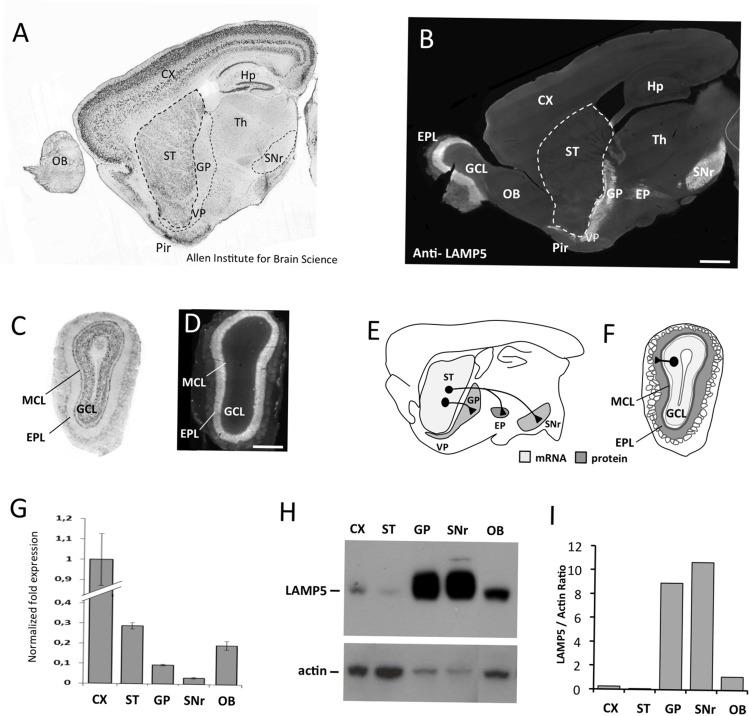 Fig. 1 Differential expression of LAMP5 mRNA and protein in the brain.1
LAMP5, encoded by the LAMP5 gene, functions as a lysosomal membrane protein that regulates endosomal trafficking and modulates immune and neuronal signaling:
Creative Biolabs offers high-quality LAMP5 membrane protein products produced using optimized expression systems. These include full-length type I transmembrane protein that retains the native membrane-spanning domain and cytoplasmic tail, as well as isolated luminal domain variants. The luminal domain contains four highly conserved cysteines and mediates protein-protein interactions involved in endosomal trafficking, making these proteins suitable for studies of lysosomal membrane protein function, endosomal trafficking, and protein interaction networks. All LAMP5 proteins undergo strict quality control to support consistent performance across applicable research platforms.
Not finding the protein product you need? Contact us to start your one-stop custom service!
Creative Biolabs provides custom-engineered LAMP5 stable cell lines, including overexpression and knockdown models. These cell lines are optimized for studies of endosomal trafficking, TLR9 signaling, synaptic plasticity, and lysosomal function. Each cell line undergoes stringent validation to ensure stable expression profiles and consistent functional performance in diverse experimental contexts.
Not finding the stable cell line product you need? Contact us to start your one-stop custom service!
High-specificity recombinant antibodies targeting LAMP5 are developed using antibody engineering technologies for research applications involving LAMP5 expression and localization. These antibodies can be used in studies of LAMP5 distribution in neuronal cells and plasmacytoid dendritic cells, and may also support characterization of LAMP5-containing endosomal complexes in combination with appropriate detection reagents.
Not finding the recombinant antibody product you need? Contact us to start your one-stop custom service!
Beyond catalog products, Creative Biolabs offers specialized custom services for LAMP5 research:








