
Creative Biolabs is offering the most comprehensive services for antibody development projects. With strict regulation and effective execution, we are dedicated to providing the most valuable solutions to complete your projects.
HighlightsCreative Biolabs is offering the most comprehensive services for antibody development projects. With strict regulation and effective execution, we are dedicated to providing the most valuable solutions to complete your projects.
HighlightsCreative Biolabs has established a broad range of platforms for developing novel antibodies or equivalents. These cutting-edge technologies enable our scientists to meet your demands from different aspects and tailor the most appropriate solution that contributes to the success of your projects.
HighlightsWith deep understanding in antibody-related realms and extensive project experience, Creative Biolabs offers a variety of references to help you learn more about our capacities and achievements, including infographic, flyer, case study, peer-reviewed publications, and all kinds of knowledge that can assist your projects. You are also welcome to contact us directly for more specific solutions.
HighlightsGet a real taste of Creative Biolabs, one of the most professional custom service providers in the world. We are committed to providing highly customized comprehensive solutions with the best quality to advance your projects.
Highlights Loading...
All listed services and products are For Research Use Only. Do Not use in any diagnostic or therapeutic applications.
LPS-responsive beige ankyrin (LRBA) is a large cytoplasmic-endosomal adaptor protein encoded by LRBA gene, which contains repeated domains of BEACH and WD. It is widely expressed in immune cells, epithelial cells and neurons, and mainly located in the endosomal membrane structure of Rab4/Rab11 cycle. Different from conventional endosomal transport factors, LRBA can stabilize the intracellular CTLA4 protein reserve pool by blocking lysosomal degradation pathway, and mediate CTLA4 to circulate back to the surface of regulatory T cell membrane, thus maintaining the immune suppression function of the body. Under immune homeostasis, the basic expression of LRBA can ensure the sufficient level of CTLA4 on the cell membrane surface and effectively limit the abnormal proliferation of autoreactive T cells. LPS inflammatory stimulation can induce the up-regulation of LRBA expression, enhance the circulating transport efficiency of immune checkpoint receptors, and inhibit excessive inflammatory response. Compared with the common vesicle sorting proteins, LRBA has a unique regulatory T cell checkpoint transport specific function, which can not be compensated by other BEACH family proteins, and effectively connects the regulation of endoplasmic cargo and the peripheral immune tolerance pathway. The loss of double allele function of LRBA will accelerate the degradation turnover of CTLA4 protein, weaken the immunosuppressive ability of regulatory T cells, and lead to serious autoimmune diseases with immunodeficiency, making LRBA the core research target of endosomal immune transport mechanism and targeted drug screening for autoimmune diseases.
LRBA is anchored on the circulating vesicle membrane to regulate the retention and transport of endosomes. Relying on the conserved BEACH and WD40 domains, it forms a stable complex with the intracellular segment of CTLA4 and Rab GTP enzyme. Its specific cargo binding motif can selectively bind to the immune checkpoint receptor, so that its interaction spectrum is clearly distinguished from the housekeeping vesicular sorting protein. LRBA-mediated CTLA4 cycle transport pathway connects endosome sorting process and regulatory T cell immunosuppression function, which can dynamically balance autoimmune tolerance and anti-infection immune response according to the intensity of inflammatory stimulation. In addition, LRBA is also involved in many basic biological processes such as autophagy maturation, MHC antigen presentation and epithelial cell secretion and transport. Deficient LRBA function triggers accelerated checkpoint degradation and breakdown of immune tolerance. Therefore, LRBA represents a pivotal research target for BEACH protein study and autoimmunity therapeutic screening.
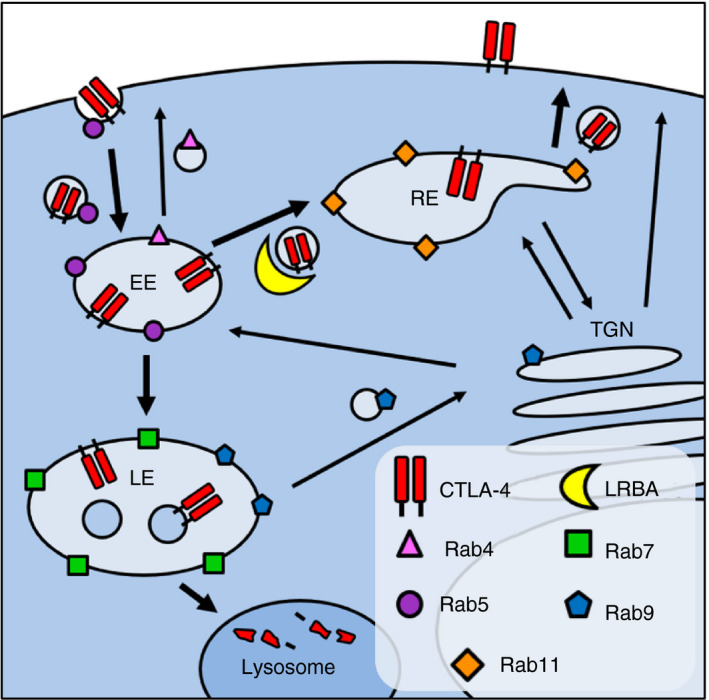 Fig. 1 Schematic diagram of LRBA-mediated CTLA-4 endosomal recycling pathway.1
The biological functions of LRBA are focused on citrate-malate exchange, cytosolic acetyl-CoA production and ferroptosis regulation:
Creative Biolabs offers high-quality LRBA proteins through optimized expression systems, including full-length BEACH adaptor and isolated CTLA4-binding domain variants. These products retain native cargo-stabilizing biological activity, suitable for endosomal trafficking and immune checkpoint interaction assays. All LRBA proteins undergo strict quality control to ensure consistent performance and reliable application across diverse research platforms.
Not finding the membrane protein product you need? Contact us to start your one-stop custom service!
Creative Biolabs provides custom-engineered LRBA stable cell lines, including overexpression and blank control models. These cell lines are optimized for BEACH protein profiling and CTLA4 trafficking functional analysis. Each cell line undergoes stringent validation to ensure stable expression profiles and consistent functional performance in diverse experimental contexts.
Not finding the stable cell line product you need? Contact us to start your one-stop custom service!
High-specificity recombinant antibodies targeting LRBA are developed via advanced antibody engineering technologies, with no cross-reactivity with other BEACH family proteins. These antibodies are validated for recycling endosome localization detection and lymphoid tissue profiling, and can be combined with CTLA4 detection reagents to analyze intracellular checkpoint trafficking complexes in Treg models.
Not finding the recombinant antibody product you need? Contact us to start your one-stop custom service!
Beyond catalog products, Creative Biolabs offers specialized custom services for LRBA research:
LRBA is a BEACH endosomal adaptor that binds CTLA4 to block lysosomal degradation and promote Treg surface receptor recycling to maintain immune tolerance.
LRBA controls CTLA4 stability and Treg function, mutations cause severe autoimmunity, and it serves as a novel immunotherapy target.
No, all LRBA products and services are strictly for research use only, not intended for clinical diagnosis or treatment.
Offerings include full LRBA BEACH proteins, isoform-specific detection antibodies and custom stable cell lines for endosomal immune research.
LRBA proteins are validated via CTLA4 co-binding and receptor recycling functional testing.








