Creative Biolabs is offering the most comprehensive services for antibody development projects. With strict regulation and effective execution, we are dedicated to providing the most valuable solutions to complete your projects.
HighlightsCreative Biolabs is offering the most comprehensive services for antibody development projects. With strict regulation and effective execution, we are dedicated to providing the most valuable solutions to complete your projects.
HighlightsCreative Biolabs has established a broad range of platforms for developing novel antibodies or equivalents. These cutting-edge technologies enable our scientists to meet your demands from different aspects and tailor the most appropriate solution that contributes to the success of your projects.
HighlightsWith deep understanding in antibody-related realms and extensive project experience, Creative Biolabs offers a variety of references to help you learn more about our capacities and achievements, including infographic, flyer, case study, peer-reviewed publications, and all kinds of knowledge that can assist your projects. You are also welcome to contact us directly for more specific solutions.
HighlightsGet a real taste of Creative Biolabs, one of the most professional custom service providers in the world. We are committed to providing highly customized comprehensive solutions with the best quality to advance your projects.
Highlights Loading...
All listed services and products are For Research Use Only. Do Not use in any diagnostic or therapeutic applications.
The MC4R gene is located in the 18q21.32 region of the human chromosome and encodes the melanocortin 4 receptor (MC4R), which belongs to the G protein-coupled receptor superfamily, specifically the melanocortin receptor subfamily within the rhodopsin-like class A GPCRs. MC4R is a multi-pass integral membrane protein with seven transmembrane domains, a structural hallmark of class A GPCRs, and its molecular weight is approximately 37 kDa. It is predominantly expressed in the paraventricular nucleus of the hypothalamus, where it localizes to the plasma membrane and to the primary cilia of hypothalamic neurons, the latter requiring the accessory protein MRAP2. As a key component of the leptin-melanocortin pathway, MC4R is activated by endogenous melanocortin agonists including α-MSH, β-MSH, and ACTH, primarily coupling to Gαs to stimulate adenylate cyclase and cAMP production, thereby generating anorexogenic signals that suppress food intake and promote negative energy balance. The endogenous antagonist agouti-related protein (AGRP) blocks MC4R signaling to stimulate appetite, and the balance between agonist and antagonist tone at MC4R is a critical determinant of body weight regulation. MC4R also engages non-canonical signaling through direct modulation of the Kir7.1 potassium channel independently of G protein coupling, and its constitutive internalization and recycling between the plasma membrane and endosomes is an atypical trafficking feature among GPCRs. Mutations in MC4R are the most common monogenic cause of severe human obesity, with over 300 pathogenic variants identified; these mutations impair receptor function through defective membrane trafficking, ER retention, reduced ligand binding, or disrupted G protein coupling, and heterozygous carriers exhibit early-onset hyperphagia and increased linear growth. The MC4R agonist setmelanotide has been approved as a targeted therapy for specific genetic obesities caused by deficiencies in the MC4R pathway. Therefore, MC4R is regarded as an important molecular target for studying GPCR signaling, energy homeostasis, and the genetic basis of obesity. Its functional analysis provides valuable tools for understanding the molecular regulation of appetite and developing precision therapies for metabolic disorders.
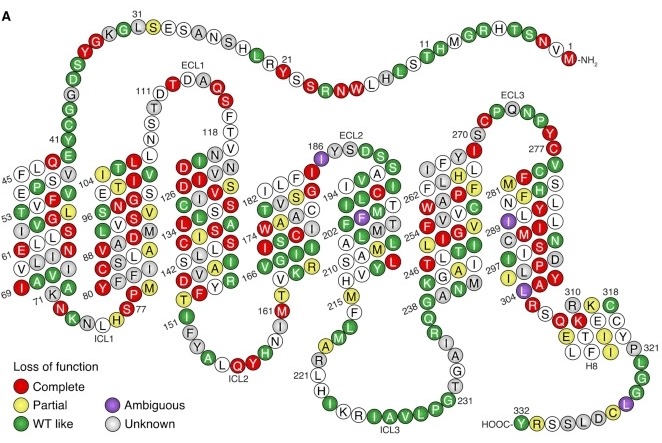 Fig. 1 MC4R is a seven transmembrane domain GPCR.1
The functional spectrum of MC4R is extensive and is continuously expanding:
Creative Biolabs offers a series of high-quality MC4R membrane protein products, suitable for structural and functional research. Relying on the independently developed MemDX™ recombinant membrane protein technology platform, MC4R proteins can be prepared through various expression systems, including virus-like particles (VLP) and in vitro prokaryotic expression systems. These rigorously validated protein products, such as MemDX™ recombinant human MC4R membrane protein as virus-like particles and human MC4R proteins from various expression systems, can be used in ELISA, antibody screening and identification, binding experiments, and functional research, providing reliable tools for researchers to analyze the ligand interactions and signaling mechanisms of MC4R.
Not finding the membrane protein product you need? Contact us to start your one-stop custom service!
Constructing a robust cell model is crucial for the study of MC4R-mediated energy homeostasis signaling. As a class A GPCR that functions as the central rheostat for appetite regulation and body weight control, the expression level and signaling activity of MC4R directly affect the balance between anorexogenic and orexigenic tone in hypothalamic circuits. Different ligand concentrations, receptor mutations affecting trafficking or G protein coupling, or changes in accessory protein availability may lead to significant differences in cAMP signaling output and neuronal regulation. Creative Biolabs offers customized MC4R membrane protein stable transfection cell models, covering wild-type and various functionally characterized obesity-associated mutant forms. These models stably express the target protein on the plasma membrane, and are suitable for studies on ligand binding and functional selectivity, G protein coupling and cAMP signaling assays, evaluation of agonist and antagonist pharmacology, and assessment of receptor trafficking and internalization kinetics, providing a reliable and reproducible platform for exploring the signaling mechanism, structure-function relationship, and pharmacological regulation of MC4R. Our technology ensures plasma membrane integrity and correct protein localization, facilitating your research.
Not finding the stable cell line product you need? Contact us to start your one-stop custom service!
Creative Biolabs offers highly specific recombinant antibodies targeting MC4R, produced using advanced recombinant antibody technology. Compared to traditional antibodies, these recombinant antibodies demonstrate superior performance in terms of specificity, sensitivity, and batch-to-batch consistency. They can also be modified and labeled in various ways. Our MC4R recombinant antibodies support a wide range of applications, including Western Blot, ELISA, flow cytometry, immunofluorescence, immunocytochemistry, immunohistochemistry, and immunoprecipitation, and can be used to detect differences in MC4R expression levels in various neuronal cell types and tissues, analyze its plasma membrane and primary ciliary localization, and conduct related research such as ligand-receptor interaction and cAMP signaling pathway analysis. These antibodies provide reliable detection tools for the structural analysis, functional study of MC4R, and the investigation of its regulation in the hypothalamic energy homeostasis network.
Not finding the recombinant antibody product you need? Contact us to start your one-stop custom service!
In addition to the standard products, Creative Biolabs also offers professional customized services for MC4R. MC4R has numerous functionally significant obesity-associated variants with differences in receptor trafficking, ligand binding, G protein coupling, and signaling activity. These molecular characteristics have specific requirements in aspects such as protein expression, antigen design, and functional verification. Leveraging our technology platform, we can assist you in completing the following customized projects:
MC4R primarily functions as a G protein-coupled receptor in the hypothalamic paraventricular nucleus, serving as a key component of the leptin-melanocortin pathway that regulates energy homeostasis and body weight. Upon activation by endogenous melanocortin agonists such as α-MSH, MC4R couples to Gαs to stimulate cAMP production, generating anorexogenic signals that suppress food intake. Its endogenous antagonist AGRP blocks this signaling to promote appetite. MC4R also engages non-canonical signaling through direct modulation of the Kir7.1 potassium channel independently of G protein coupling. The receptor localizes to both the plasma membrane and the primary cilia of neurons, with the latter being essential for its weight-regulating function. It is an important model for studying GPCR pharmacology and the molecular mechanisms of appetite regulation.
MC4R is the most common monogenic cause of severe human obesity, with over 300 pathogenic mutations identified that impair receptor function through diverse molecular mechanisms. Its central role in the leptin-melanocortin pathway makes it a key node for understanding energy homeostasis. The development of the MC4R agonist setmelanotide as a targeted therapy for certain genetic obesities validates MC4R as a therapeutic target and opens avenues for precision medicine approaches to obesity. Studying the regulation and function of MC4R is helpful for a deeper understanding of GPCR structure-function relationships, the neurobiology of feeding behavior, and the genetic basis of metabolic disease.
Not applicable. All MC4R products and services provided by Creative Biolabs are for research purposes only and cannot be used for any clinical diagnosis, prevention, treatment or cure of any disease.
We offer a variety of product types, including recombinant MC4R membrane proteins, stable cell models expressing MC4R, high-quality recombinant MC4R antibodies, as well as comprehensive customized services.