
Creative Biolabs is offering the most comprehensive services for antibody development projects. With strict regulation and effective execution, we are dedicated to providing the most valuable solutions to complete your projects.
HighlightsCreative Biolabs is offering the most comprehensive services for antibody development projects. With strict regulation and effective execution, we are dedicated to providing the most valuable solutions to complete your projects.
HighlightsCreative Biolabs has established a broad range of platforms for developing novel antibodies or equivalents. These cutting-edge technologies enable our scientists to meet your demands from different aspects and tailor the most appropriate solution that contributes to the success of your projects.
HighlightsWith deep understanding in antibody-related realms and extensive project experience, Creative Biolabs offers a variety of references to help you learn more about our capacities and achievements, including infographic, flyer, case study, peer-reviewed publications, and all kinds of knowledge that can assist your projects. You are also welcome to contact us directly for more specific solutions.
HighlightsGet a real taste of Creative Biolabs, one of the most professional custom service providers in the world. We are committed to providing highly customized comprehensive solutions with the best quality to advance your projects.
Highlights Loading...
All listed services and products are For Research Use Only. Do Not use in any diagnostic or therapeutic applications.
The MCAM gene at 11q23.3 encodes melanoma cell adhesion molecule (CD146/MUC18), a type I transmembrane glycoprotein of 646 amino acids belonging to the immunoglobulin superfamily. MCAM contains five extracellular Ig-like domains (two V-type and three C2-type), a single transmembrane helix, and a short cytoplasmic tail with protein kinase recognition motifs. The mature glycosylated protein is approximately 113-130 kDa due to extensive N-glycosylation. MCAM is constitutively expressed on vascular endothelial cells, smooth muscle cells, pericytes, activated T lymphocytes, and mesenchymal stem cells, with expression also found on melanoma cells where it was originally identified. As a cell adhesion molecule, MCAM mediates homophilic interactions between adjacent cells and heterophilic interactions with laminin-411, regulating cell adhesion, migration, and signaling. MCAM functions as a co-receptor for VEGFR2, enhancing VEGF-mediated angiogenesis and vascular permeability. MCAM facilitates lymphocyte transendothelial migration across the blood-brain barrier and is implicated in multiple sclerosis. MCAM overexpression correlates with melanoma progression, metastasis, and poor prognosis, while MCAM on tumor endothelial cells promotes angiogenesis. MCAM is therefore an important target for studying vascular biology, tumor metastasis, and inflammatory cell trafficking, providing tools for understanding cell adhesion mechanisms in health and disease.
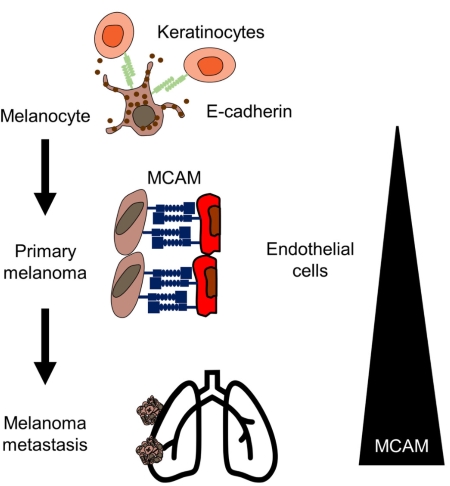 Fig. 1 Role of MCAM in Melanoma Metastatic Dissemination.1
The functional spectrum of MCAM spans vascular biology and tumor progression:
Creative Biolabs offers a series of high-quality MCAM membrane protein products, suitable for structural and functional studies of cell adhesion and vascular biology. Built on the independently developed MemDX™ recombinant membrane protein technology platform, MCAM proteins can be generated through various expression systems, including virus-like particles (VLP) and in vitro prokaryotic expression systems. These thoroughly characterized protein products, such as MemDX™ recombinant human MCAM membrane protein as virus-like particles and human MCAM proteins from diverse expression systems, can be used in ELISA, antibody screening, cell adhesion assays, and functional investigations, providing reliable tools for analyzing the homophilic binding mechanism and signaling functions of MCAM.
Not finding the membrane protein product you need? Contact us to start your one-stop custom service!
Constructing a robust cell model is essential for investigating MCAM-mediated adhesion and signaling in vascular biology and tumor metastasis. As an immunoglobulin superfamily adhesion molecule that mediates homophilic cell-cell interactions and enhances VEGFR2 signaling, MCAM expression level and adhesive function directly influence vascular integrity, immune cell trafficking, and tumor cell invasiveness. Altered MCAM expression or glycosylation may change cell adhesion and metastatic potential. Creative Biolabs offers customized MCAM membrane protein stable transfection cell models, encompassing wild-type and disease-associated variant forms. These models express the target protein on the plasma membrane, and are suitable for studies on MCAM-mediated adhesion, migration assays, VEGFR2 co-receptor function analysis, and evaluation of variant-dependent differences, providing a reliable platform for exploring MCAM structure-function relationships, the role of adhesion in metastasis, and vascular biology mechanisms. Our technology ensures cell membrane integrity and correct protein localization, facilitating your research.
Not finding the stable cell line product you need? Contact us to start your one-stop custom service!
Creative Biolabs offers highly specific recombinant antibodies targeting MCAM, manufactured using advanced recombinant antibody technology. Compared to traditional antibodies, these recombinant antibodies deliver improved performance in specificity, sensitivity, and batch-to-batch consistency. They also support various modifications and labeling strategies. Our MCAM recombinant antibodies are suitable for a broad range of applications, including Western Blot, ELISA, flow cytometry, immunofluorescence, immunocytochemistry, immunohistochemistry, and immunoprecipitation, and can be used to examine MCAM expression levels in endothelial cells, melanoma specimens, and inflammatory tissues, analyze its subcellular localization at intercellular junctions, and conduct related investigations such as adhesion studies and angiogenesis assays. These antibodies provide dependable detection reagents for the structural characterization, functional investigation of MCAM, and the analysis of its role in vascular biology and tumor progression.
Not finding the recombinant antibody product you need? Contact us to start your one-stop custom service!
In addition to the standard products, Creative Biolabs also offers professional customized services for MCAM. MCAM has documented variants with functional differences, including glycosylation variants affecting ligand binding and expression changes associated with melanoma progression. These variants present specific requirements in protein expression, adhesion analysis, and functional characterization. Leveraging our technology platform, we can assist you in completing the following customized projects:
MCAM encodes melanoma cell adhesion molecule (CD146), an immunoglobulin superfamily member that mediates calcium-independent homophilic cell-cell adhesion through its N-terminal Ig-like domains. MCAM functions as a co-receptor for VEGFR2 on endothelial cells, enhancing VEGF-mediated angiogenesis, and is expressed on pericytes regulating microvascular stability. MCAM also facilitates lymphocyte trafficking across the blood-brain barrier.
MCAM was originally identified as a melanoma progression marker, with overexpression correlating with tumor invasion, metastasis, and poor clinical outcome. MCAM promotes tumor angiogenesis through VEGFR2 co-receptor function and facilitates melanoma-endothelial interactions during metastasis. In neuroinflammation, MCAM mediates pathogenic Th17 cell migration across the blood-brain barrier in multiple sclerosis. MCAM is therefore a target of interest across oncology, vascular biology, and neuroimmunology.
Not applicable. All MCAM products and services provided by Creative Biolabs are for research purposes only and cannot be used for any clinical diagnosis, prevention, treatment or cure of any disease.
We offer a variety of product types, including recombinant MCAM membrane proteins, stable cell models expressing MCAM, high-quality recombinant MCAM antibodies, as well as comprehensive customized services.








