Creative Biolabs is offering the most comprehensive services for antibody development projects. With strict regulation and effective execution, we are dedicated to providing the most valuable solutions to complete your projects.
HighlightsCreative Biolabs is offering the most comprehensive services for antibody development projects. With strict regulation and effective execution, we are dedicated to providing the most valuable solutions to complete your projects.
HighlightsCreative Biolabs has established a broad range of platforms for developing novel antibodies or equivalents. These cutting-edge technologies enable our scientists to meet your demands from different aspects and tailor the most appropriate solution that contributes to the success of your projects.
HighlightsWith deep understanding in antibody-related realms and extensive project experience, Creative Biolabs offers a variety of references to help you learn more about our capacities and achievements, including infographic, flyer, case study, peer-reviewed publications, and all kinds of knowledge that can assist your projects. You are also welcome to contact us directly for more specific solutions.
HighlightsGet a real taste of Creative Biolabs, one of the most professional custom service providers in the world. We are committed to providing highly customized comprehensive solutions with the best quality to advance your projects.
Highlights Loading...
All listed services and products are For Research Use Only. Do Not use in any diagnostic or therapeutic applications.
Monocyte to macrophage differentiation-associated 2 (MMD2 or PAQR10) is a 377-amino acid transmembrane protein of the protection against mortality from viral infection and immune-mediated diseases family, containing an evolutionarily conserved seven-transmembrane domain architecture closely related with bacterial hemolysin III-type proteins, Unlike many other members within this homologous group that have been postulated as GPCR type receptors based on phylogenic evolutionary evidence showing conservation over distant evolutionary time periods throughout different species' genomes even among plants it does not contain canonical ligand dependent signaling abilities instead acting more like scaffold-like molecules controlling cellular activities towards dynamic Ras GTPase-stimulating pathways thereby regulating key pathway functions such relief/activation states via impacts upon downstream ERK activation amplitude/duration. MMD2 is a 10-exon gene undergoing extensive alternative splicing and producing various transcript variants and protein isoforms, which may have different functional properties. Based on tissue expression profiling, MMD2 has the highest levels of expression in the brain (RPKM 13.3) and testis (RPKM 4.2), with lower-level activity present throughout the frontal lobe, cerebral cortex, and various epithelial tissues. MMD2 expression is dynamically regulated during monocyte-to-macrophage differentiation in the bloodstream and upon tissue infiltration, while closely related MMD (PAQR11) is a direct mediator of this process through activation of MAPK signaling. MMD2 works in conjunction with MMD to control Ras signaling within the Golgi, where it promotes retention and activation of HRas, NRas, and KRas4A— but not KRAS4B — by direct protein–protein interactions. MMD2 interacts with RasGRP1, a guanine nucleotide exchange factor for Ras, and directs it to the Golgi membrane where sustained activation of this GTPase occurs in order to promote protracted ERK phosphorylation as well as augmented expression of transcription factors including c-Fos, JunB and Egr-1. MMD2 is a pan-cancer prognostic biomarker. Recent Pan-cancer Studies identified MMD2 as an actionable component, where its expression was associated with improved or reduced survival outcomes in some diseases.
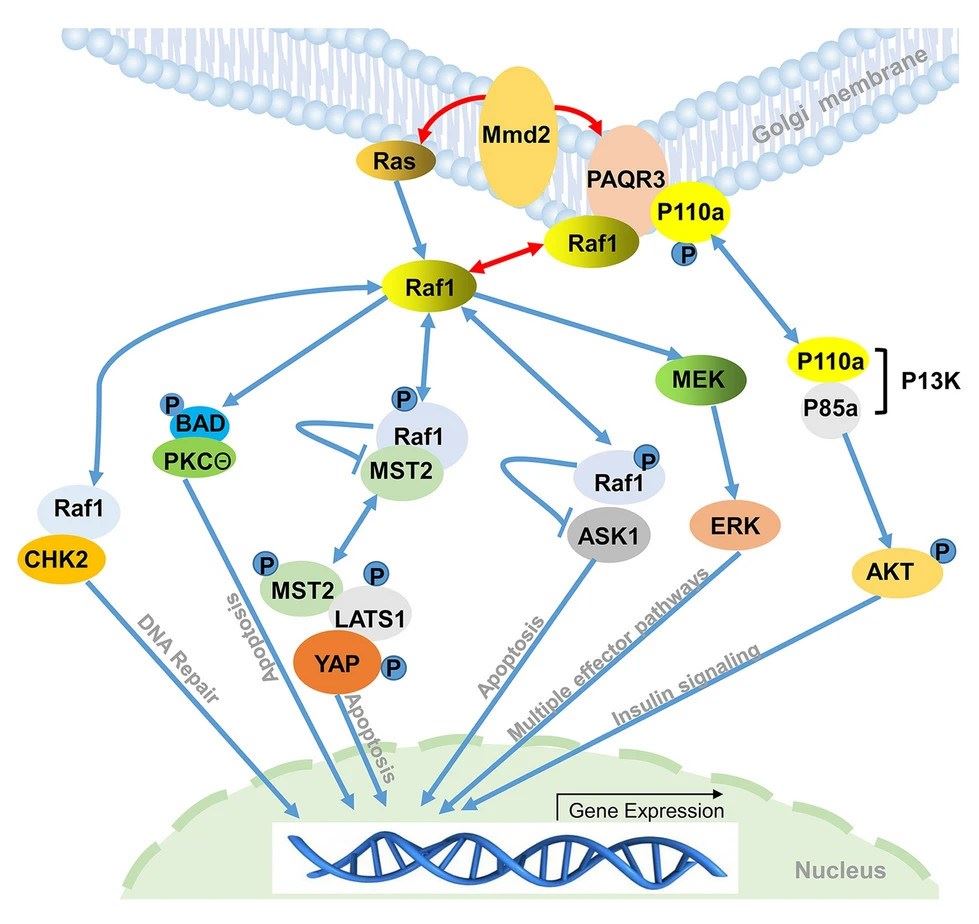 Fig.1 Deduced signaling pathways regulated by LvMmd2.1
The functional repertoire of MMD2 encompasses signal transduction, immune cell differentiation, and neurodevelopment demonstrating its diversified molecular interactions:
Creative Biolabs provides an updated portfolio of premium MMD2 membrane protein products, which are critical to structural and functional examination of this Golgi-resident seven-transmembrane regulator. Our Membrane Protein platform automatically generate MMD2 in a variety of expression systems. This gives researchers high confidence in utilizing their tools for analyzing MMD2 interactions with HRas, NRas, KRas4A and RasGRP1. Unlike previously described scaffolds (e.g. KRas10), our MMD2 preparations maintain native seven-transmembrane topology and Golgi-targeting sequences when generated in mammalian systems, allowing for physiologically relevant Ras signaling studies without relying on alternative technologies.
Not finding the membrane protein product you need? Contact us to start your one-stop custom service!
The generation of powerful cellular models is essential for the investigation of MMD2. MMD2 Membrane Protein Stable Cell Lines — Creative Biolabs delivers high-yield, custom-designed MMD2 membrane protein stable cell lines that can consistently express maximal amounts of target MMD2. These stable cell lines are amenable to drug screening, Ras activation assays, ERK phosphorylation studies and macrophage differentiation modeling along with high-throughput screening—undergoing a steady-state profile (MMD2 biology as well as pharmacology). Our expertise delivers superior expression and cell health, speeding your research pipeline. These include both MMD2-overexpressing lines for the study of Ras/ERK signaling enhancement or Golgi retention mechanisms, and MMD2-knockdown lines to study loss-of-function by a combination of flow cytometric analysis, Western blotting and functional assays designed to assess activation potency in response to active RAS.
Not finding the stable cell line product you need? Contact us to start your one-stop custom service!
We offer recombinant antibodies against MMD2 designed to support a range of research applications. Recombinant production provides sequence-defined, renewable reagents with consistent lot-to-lot production. Depending on the specific antibody and supporting datasheet, selected MMD2 antibodies may be suitable or available for applications such as Western Blotting (WB), ELISA, Flow Cytometry (FCM), Immunofluorescence (IF), Immunocytochemistry (ICC), and Immunoprecipitation (IP). These antibodies can support the detection and analysis of MMD2 in appropriate research samples and model systems. Product-specific specificity, epitope information, sample compatibility, and application performance should be determined according to the validation data available for each individual antibody.
Not finding the recombinant antibody product you need? Contact us to start your one-stop custom service!
In addition to the catalog portfolio, Creative Biolabs provides targeted custom services for membrane protein and antibody discovery & development. Backed with large years of experience and cutting-edge platforms, we can help you in:
No. All reagents and services are for research use only (RUO) and cannot be used as a reagent or service within diagnostic testing or therapeutic purposes.
Yes, we have generated stable lines that maintain robust MMD2 expression throughout differentiation, as confirmed by immunoblotting and confocal microscopy. Each batch is released with documentation of lipid droplet formation kinetics and differentiation marker profiles, providing a standardized cellular platform for long-term mechanistic studies without repeated transient transfection.
Yes, some clones have been confirmed with fixed and permeabilized cells showing punctate fluorescence staining patterns that co-localize with known lipid droplet & ER markers. Validation incorporates peptide competition and MMD2-knockdown controls to verify specificity for the epitope.
For example, we can provide engineered variants with altered residues in either the transmembrane or loop regions as stable cell lines that express recombinant proteins. These materials are important markers for having a dissected structural requirements as it pertains to membrane association and lipid droplet targeting.