Creative Biolabs is offering the most comprehensive services for antibody development projects. With strict regulation and effective execution, we are dedicated to providing the most valuable solutions to complete your projects.
HighlightsCreative Biolabs is offering the most comprehensive services for antibody development projects. With strict regulation and effective execution, we are dedicated to providing the most valuable solutions to complete your projects.
HighlightsCreative Biolabs has established a broad range of platforms for developing novel antibodies or equivalents. These cutting-edge technologies enable our scientists to meet your demands from different aspects and tailor the most appropriate solution that contributes to the success of your projects.
HighlightsWith deep understanding in antibody-related realms and extensive project experience, Creative Biolabs offers a variety of references to help you learn more about our capacities and achievements, including infographic, flyer, case study, peer-reviewed publications, and all kinds of knowledge that can assist your projects. You are also welcome to contact us directly for more specific solutions.
HighlightsGet a real taste of Creative Biolabs, one of the most professional custom service providers in the world. We are committed to providing highly customized comprehensive solutions with the best quality to advance your projects.
Highlights Loading...
All listed services and products are For Research Use Only. Do Not use in any diagnostic or therapeutic applications.
Myelin regulatory factor (MYRF) is a fascinating membrane-bound transcriptional regulator that occupies an essential non-redundant position in oligodendrocyte differentiation and central nervous system (CNS) myelination. To free its N-terminal transcription factor domain for nuclear entry and gene activation, it requires an unusual autoproteolytic self-cleavage event. This parasite activation mechanism, which has a molecular evolutionary basis via an intramolecular chaperone auto-processing (ICA) domain homologous to bacteriophage tail spike proteins and is the first such domain described for eukaryotic protein function, may also underlie MYRF's distinction from all other known mammalian transcription factors. MYRF is most abundantly expressed in oligodendrocytes but it also shows distinct expression patterns in other cell types, such as the retinal pigment epithelium (RPE), where MYRF function is necessary for normal eye development and coelomic epithelium-derived cells that give rise to certain visceral organs during organogenesis. This association has expanded to a wider spectrum of heterozygous pathogenic variants in MYRF implicated in human disease, including nanophthalmos, cardiac-urogenital-diaphragm-lung (CUDL) syndrome comprising congenital heart defects and pulmonary hypoplasia, as well as the recently characterized neurological disorder known as MYRF-related mild encephalopathy with reversible myelin vacuolization (MMERV). Adverse traits conferred by MYRF mutations capture a balance of its ubiquitous biologic activities and the variation among developmental processes in their sensitivity to gene dosage perturbations.
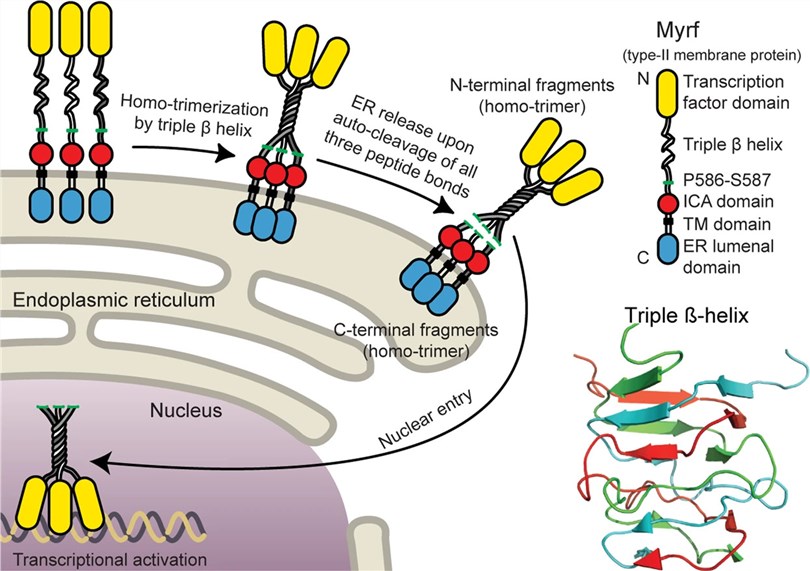 Fig.1 The schematic of Myrf auto-cleavage.1
MYRF's functional repertoire encompasses several facets of neural development, myelin biology and disease pathogenesis:
A high-quality and updated selection of MYRF protein products crucial for structural and functional studies on this demanding membrane-bound transcription factor. MYRF can be expressed in different expression systems using our proprietary recombinant protein technology. Realising that full-length MYRF is a large type II transmembrane protein, which requires correct ER insertion for authentic autoproteolytic processing, our portfolio nicely covers the requirement of structure; we have produced not only full length MYRF but also N-MYRF -the released transcription factor fragment after self-cleavage and DBD-dedicated to structural studies in addition to the ICA domain, mainly directed towards cleavage mechanism study. Formats available include detergent-solubilized full-length preparations, soluble N-MYRF fragments with native trimeric assembly and a range of tag combinations for domain constructs (His-tag, FLAG-tag, GST-tag or StrepTag). We provide co-expression and/or co-purification of this heteromeric complex for researchers studying the TMEM98-MYRF regulatory interaction. For your application needs, each batch is tested at the standard level by various quality control methods including SDS-PAGE, Western blot analysis, SEC-HPLC, DNA-binding EMSA and functional transcriptional activation assays.
Not finding the membrane protein product you need? Contact us to start your one-stop custom service!
We offer a new resource of purposefully engineered MYRF stable cell lines with high-level and reproducible expression across the range of potential forms-of-action target constructs. These stable cell lines are well-suited for drug screening, myelin gene reporter assays, and high-throughput screening campaigns. The cell line development platform can be used in various host backgrounds such as HEK293, CHO-K1 and the CG-4 rat oligodendrocyte progenitor cell line with either an inducible or constitutive expression system. Using these vectors we have produced inducible lines with ON (i.e., MYRF-expression) or OFF-MYRF expression for lineage tracing and functional studies, as well knockdown via dominant-negative MYRF constructs for loss-of-function analyses along with the introduction of integrated whole-cell myelin transcriptional gene reporter constructs such MBP-luciferase or PLP1-GFP. The homogenous and stable expression of these transgene cell lines with functional myelin gene induction assays is validated by flow cytometry, Western blotting, and immunofluorescence localization assay.
Not finding the stable cell line product you need? Contact us to start your one-stop custom service!
We provide a comprehensive suite of high-affinity recombinant antibodies targeting MYRF that are engineered for robust performance across applications. Using cutting-edge recombinant technologies, these antibodies are more specific, sensitive and demonstrate better batch-to-batch reproducibility than hybridoma-derived monoclonal antibodies. Our anti-MYRF antibodies are generated against specific epitopes spread across the N-terminal Pro domain, DBD, ICA domain and transmembrane region/C-terminal domains to achieve rigorous detection of both full-length 125 kDa ER-associated protein as well as the 75-kDa N-MYRF cleavage product. This data sheet lists all validated applications including Western blot (detected both full-length and cleaved forms in oligodendrocyte lysates), immunohistochemistry (IHC) of brain/spinal cord tissue sections, immunofluorescence IF for subcellular localization studies ER nuclear flow cytometry ELISA. They are available in both monoclonal and polyclonal versions, conjugated to fluorescent dyes (PE, FITC, Alexa Fluor), enzymes (HRP or AP) or biotin for your custom experimental processes. In addition to specificity, our matched antibody pairs also demonstrate effective quantitative detection of MYRF in complex biological samples such as cerebrospinal fluid and serum.
Not finding the recombinant antibody product you need? Contact us to start your one-stop custom service!
In addition to our catalog products, we provide specialized custom services for membrane protein and antibody discovery & development. Using our deep expertise and world-class platforms, we can help you with:
No. All MYRF products and services are intended for research use only and are not intended for diagnostic, therapeutic, or other clinical applications.
We offer a range of products including recombinant MYRF proteins (full-length, N-MYRF cleavage product, DBD, and ICA domain constructs), stable cell lines expressing wild-type and mutant MYRF, and high-quality recombinant anti-MYRF antibodies, along with comprehensive custom services.
Yes, we have constructed stable lines in which MYRF transcription is placed under a tetracycline-responsive promoter. This arrangement permits precise initiation of expression at defined time points and subsequent monitoring of progressive myelin basic protein induction, proteolipid protein promoter occupancy, and membrane sheet extension with temporal resolution, eliminating the asynchronous differentiation inherent to constitutive overexpression systems.
Mammalian expression systems (HEK293, CHO) are recommended for full-length MYRF to ensure proper ER insertion, transmembrane domain folding, and authentic autoproteolytic processing. Insect cell systems are also suitable. Bacterial expression is feasible for individual soluble domains (DBD, ICA) but cannot support full-length protein production or cleavage. Co-expression with TMEM98 is available for studying the regulatory complex.