Creative Biolabs is offering the most comprehensive services for antibody development projects. With strict regulation and effective execution, we are dedicated to providing the most valuable solutions to complete your projects.
HighlightsCreative Biolabs is offering the most comprehensive services for antibody development projects. With strict regulation and effective execution, we are dedicated to providing the most valuable solutions to complete your projects.
HighlightsCreative Biolabs has established a broad range of platforms for developing novel antibodies or equivalents. These cutting-edge technologies enable our scientists to meet your demands from different aspects and tailor the most appropriate solution that contributes to the success of your projects.
HighlightsWith deep understanding in antibody-related realms and extensive project experience, Creative Biolabs offers a variety of references to help you learn more about our capacities and achievements, including infographic, flyer, case study, peer-reviewed publications, and all kinds of knowledge that can assist your projects. You are also welcome to contact us directly for more specific solutions.
HighlightsGet a real taste of Creative Biolabs, one of the most professional custom service providers in the world. We are committed to providing highly customized comprehensive solutions with the best quality to advance your projects.
Highlights Loading...
All listed services and products are For Research Use Only. Do Not use in any diagnostic or therapeutic applications.
PTCH1, also known as Patched 1 or PTC1, is a 1,447-amino acid integral membrane protein and a key component of the Hedgehog (Hh) signaling pathway. PTCH1 functions as the primary receptor for Hedgehog family ligands and regulates pathway activity by controlling Smoothened (SMO), contributing to developmental patterning and adult tissue homeostasis. PTCH1 also has sterol-related transport and regulatory functions that are closely linked to its control of Hedgehog signaling.
Pathogenic alterations in PTCH1 are associated with Gorlin syndrome and are also frequently observed in basal cell carcinoma and subsets of medulloblastoma, particularly those involving aberrant Sonic Hedgehog signaling. Dysregulated PTCH1/Hedgehog pathway activity has additionally been investigated in other disease models. Beyond its canonical signaling role, PTCH1 has also been studied in the context of membrane transport and cellular resistance mechanisms. These findings make PTCH1 relevant to research on Hedgehog signaling, sterol regulation, membrane transport, and disease-associated pathway dysregulation.
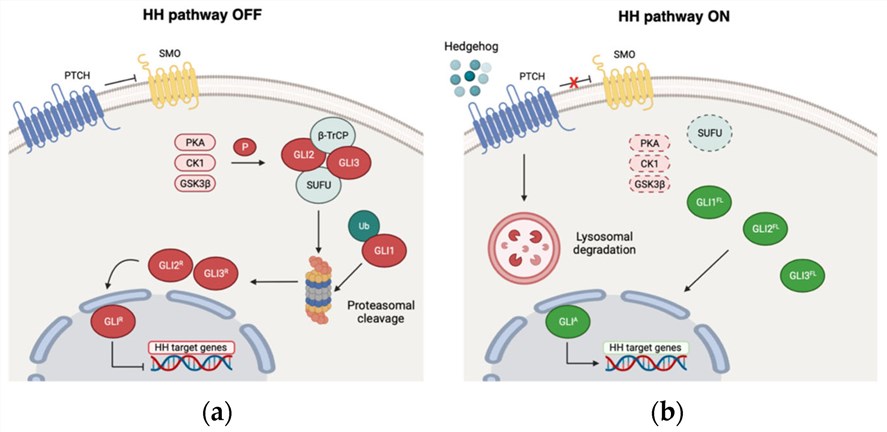 Fig.1 The canonical Hedgehog-GLI signaling.1
PTCH1 is unique in that it integrates multiple physiological and pathological functions, largely due to its dual role as a morphogen receptor and a lipid transporter:
The high molecular weight, twelve-transmembrane architecture, and large extracellular domains of PTCH1 present specific challenges for recombinant protein design and structural studies. Creative Biolabs provides PTCH1 membrane protein preparations and engineered research constructs designed to support structural biology, ligand-binding studies, antibody development and characterization, and related investigations of PTCH1 function. Construct design, expression format, membrane-associated preparation, and functional characterization can be selected according to the intended research application and available project data.
Not finding the membrane protein product you need? Contact us to start your one-stop custom service!
For performing ligand-binding assays as well as antibody screening, reliable cellular models that traffic PTCH1 into the primary cilium while retaining functional Hedgehog pathway regulation are essential. Creative Biolabs constructs custom PTCH1 stable cell lines from optimized transduction and selection protocols that restore homogeneous, ciliate-localized, and sustained-near-physiologic receptor expression. We use a combination of lentiviral delivery, transposon-mediated integration and targeted knock-in methodologies within our proprietary cell engineering platform to have fine control over genetics. Individual lines are then subjected to single cell monoclonal selection for clonal purity, combined with extensive phenotypic validation documenting surface receptor density and functional responses to stimulation by the SHH ligand or canonical pathway inhibition.
Not finding the stable cell line product you need? Contact us to start your one-stop custom service!
Sequence-defined recombinant antibodies can provide useful tools for studying PTCH1 expression, localization, and function in research models. Creative Biolabs provides recombinant antibody discovery and development programs targeting PTCH1 for research applications. Our antibody development workflow may include immunogen design, antibody selection, recombinant expression, and downstream characterization according to specific project requirements. Antibody specificity, affinity, epitope recognition, and suitability for particular applications should be determined based on antibody-specific characterization data. Recombinant production also provides renewable, sequence-defined reagents that support consistent research use.
Not finding the recombinant antibody product you need? Contact us to start your one-stop custom service!
Beyond standard catalog products, Creative Biolabs provides specialized discovery services catering to all aspects of PTCH1 research. These sophisticated capabilities cater to the investigators looking for mechanistic understanding that require custom reagents, elaborate assay designs or multi-component integrated workflows:
Yes, dual-stable lines have been created in which full length PTCH1 and SMO are expressed from separate loci. All batches are released with documentation of SHH-stimulated SMO ciliary accumulation and Gli-responsive reporter activation, to enable reproducible studies in the pathway without having to repeat transient transfection every time.
Yes, certain clones tested have been confirmed on lightly fixed monolayers providing distinct staining at the primary cilium that co-localizes with acetylated alpha-tubulin. Validation consisted of peptide competition and recombinant antigen controls to confirm epitope specificity.
Yes, we produce recombinant proteins and stable cell lines expressing proven pathogenic variants in the sterol-sensing domain or transmembrane helices. Such materials allow for the direct comparison of SMO sequestration efficiency, ligand-binding affinity and ciliary retention to wild-type values.
Yes, its protein is concentrated in a non-ionic detergent buffer and then buffer-exchanged into a lipid-compatible. It enables direct incorporation into synthetic membranes for either cryo-electron microscopy or sterol-transfer assays.