Creative Biolabs is offering the most comprehensive services for antibody development projects. With strict regulation and effective execution, we are dedicated to providing the most valuable solutions to complete your projects.
HighlightsCreative Biolabs is offering the most comprehensive services for antibody development projects. With strict regulation and effective execution, we are dedicated to providing the most valuable solutions to complete your projects.
HighlightsCreative Biolabs has established a broad range of platforms for developing novel antibodies or equivalents. These cutting-edge technologies enable our scientists to meet your demands from different aspects and tailor the most appropriate solution that contributes to the success of your projects.
HighlightsWith deep understanding in antibody-related realms and extensive project experience, Creative Biolabs offers a variety of references to help you learn more about our capacities and achievements, including infographic, flyer, case study, peer-reviewed publications, and all kinds of knowledge that can assist your projects. You are also welcome to contact us directly for more specific solutions.
HighlightsGet a real taste of Creative Biolabs, one of the most professional custom service providers in the world. We are committed to providing highly customized comprehensive solutions with the best quality to advance your projects.
Highlights Loading...
All listed services and products are For Research Use Only. Do Not use in any diagnostic or therapeutic applications.
S100A6, encoded by the S100A6 gene (also known as CACY) located on human chromosome 1q21 within the epidermal differentiation complex, is a member of the S100 family of EF-hand calcium-binding proteins. The S100A6 gene is clustered with other S100 family genes on chromosome 1q21, a region frequently altered in transformed cells. The protein, also known as calcyclin, is a 10.5 kDa acidic molecule composed of 90 amino acids. Each S100A6 monomer contains two EF-hand calcium-binding motifs—an atypical N-terminal EF-hand (the S100-hand) that binds Ca2+ with lower affinity, and a canonical C-terminal EF-hand that binds Ca2+ with higher affinity. In solution, S100A6 forms a stable homodimer in both the Ca2+-free and Ca2+-bound states. Crystal structures of human S100A6 have been determined at atomic resolution (1.15 Å for the Ca2+-free state and 1.44 Å for the Ca2+-bound state), revealing a dramatic global conformational change and altered charge distribution upon Ca2+ binding that exposes two symmetrically positioned target-binding sites. S100A6 is expressed in diverse mammalian tissues, with high levels observed in epithelial cells and fibroblasts. It is also found in neurons, glial cells, lymphocytes, platelets, and smooth muscle cells. Within cells, S100A6 is predominantly cytoplasmic but can localize to the nucleus and cytoplasmic membranes in the presence of Ca2+.
S100A6 functions as a calcium sensor that translates transient increases in intracellular Ca2+ levels into downstream cellular responses through Ca2+-dependent conformational changes and target protein interactions. Upon Ca2+ binding, S100A6 undergoes a conformational change that increases its overall hydrophobicity and allows it to interact with a diverse array of target proteins. S100A6 also binds Zn2+ through distinct, not yet fully characterized structures. To date, numerous S100A6-interacting proteins have been identified, distributed across the cytoplasm (including annexins II, VI, XI, CacyBP/SIP, and Sgt1), the nucleus (including lamin A/C, p53, and FOR20), the cell membrane (including RAGE and integrin β), and the extracellular space (including lumican and PRELP). Most of these interactions occur in a Ca2+-dependent manner. Through these interactions, S100A6 has been implicated in the regulation of cell proliferation, the cell cycle, cytoskeletal dynamics, cell differentiation, and stress responses. S100A6 is normally expressed in the G1 phase of the cell cycle, suggesting a role in cell cycle progression. Studies have shown that S100A6 depletion leads to decreased levels of cyclin-dependent kinase 1 (CDK1), which is essential for eukaryotic cell-cycle progression. S100A6 may also have extracellular functions, and emerging evidence has identified roles in various cellular processes beyond the intracellular compartment. Its differential expression across various cell types and in different pathological contexts makes S100A6 a significant research target for studies of calcium signaling, cell cycle regulation, cytoskeletal biology, and the molecular mechanisms underlying S100 protein function.
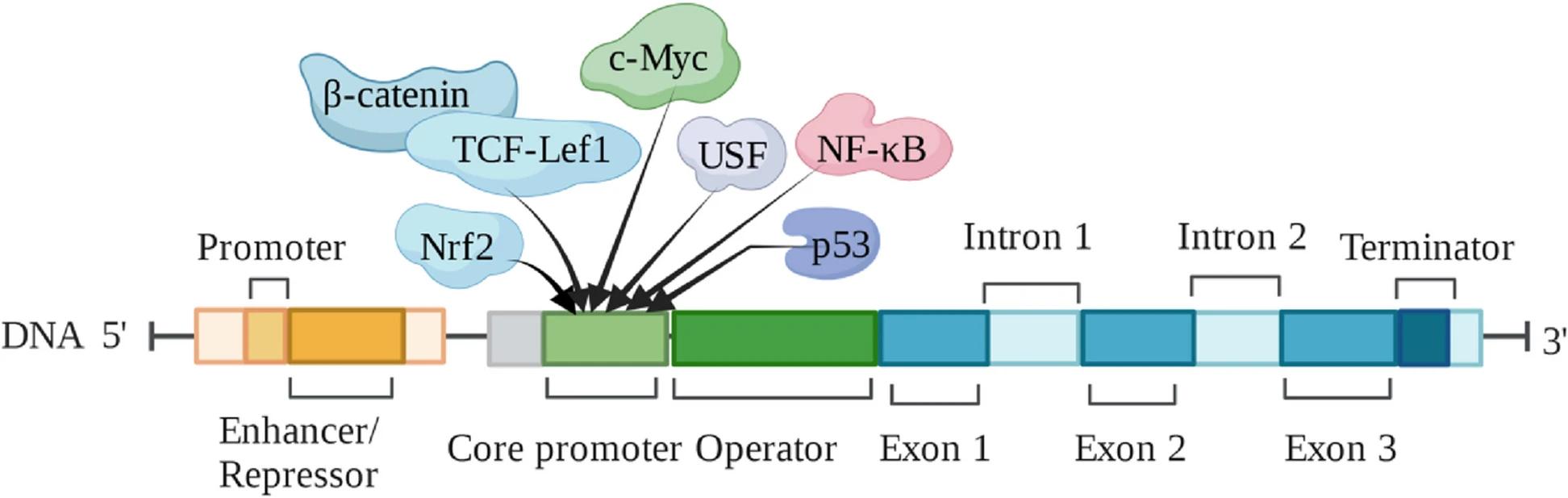 Fig. 1 S100A6 gene structure and transcription factors.1
S100A6, encoded by the S100A6 gene, functions as a small EF-hand calcium-binding protein that regulates intracellular signaling through Ca2+-dependent conformational changes and target protein interactions:
Creative Biolabs offers high-quality S100A6 proteins produced using optimized expression systems, including full-length S100A6 protein and variant constructs. The protein contains two EF-hand calcium-binding motifs that mediate Ca2+-dependent conformational changes and target protein interactions, making it suitable for studies of calcium signaling, protein-protein interactions, and S100 family biology. All S100A6 proteins undergo strict quality control to support consistent performance across applicable research platforms.
Not finding the protein product you need? Contact us to start your one-stop custom service!
Creative Biolabs provides custom-engineered S100A6 stable cell lines, including overexpression and knockdown models. These cell lines are optimized for studies of calcium signaling, cell cycle regulation, cytoskeletal dynamics, and S100 protein function. Each cell line undergoes stringent validation to ensure stable expression profiles and consistent functional performance in diverse experimental contexts.
Not finding the stable cell line product you need? Contact us to start your one-stop custom service!
High-specificity recombinant antibodies targeting S100A6 are developed using antibody engineering technologies for research applications involving S100A6 expression and localization. These antibodies can be used in studies of S100A6 distribution in various cell types and tissues, and may also support characterization of S100A6-containing protein complexes in combination with appropriate detection reagents.
Not finding the recombinant antibody product you need? Contact us to start your one-stop custom service!
Beyond catalog products, Creative Biolabs offers specialized custom services for S100A6 research: