Creative Biolabs is offering the most comprehensive services for antibody development projects. With strict regulation and effective execution, we are dedicated to providing the most valuable solutions to complete your projects.
HighlightsCreative Biolabs is offering the most comprehensive services for antibody development projects. With strict regulation and effective execution, we are dedicated to providing the most valuable solutions to complete your projects.
HighlightsCreative Biolabs has established a broad range of platforms for developing novel antibodies or equivalents. These cutting-edge technologies enable our scientists to meet your demands from different aspects and tailor the most appropriate solution that contributes to the success of your projects.
HighlightsWith deep understanding in antibody-related realms and extensive project experience, Creative Biolabs offers a variety of references to help you learn more about our capacities and achievements, including infographic, flyer, case study, peer-reviewed publications, and all kinds of knowledge that can assist your projects. You are also welcome to contact us directly for more specific solutions.
HighlightsGet a real taste of Creative Biolabs, one of the most professional custom service providers in the world. We are committed to providing highly customized comprehensive solutions with the best quality to advance your projects.
Highlights Loading...
All listed services and products are For Research Use Only. Do Not use in any diagnostic or therapeutic applications.
Solute carrier family 16 member 1 (SLC16A1), encoded by the SLC16A1 gene located on chromosome 1p13.2-p12 and also known as monocarboxylate transporter 1 (MCT1), is a member of the SLC16 family of proton-linked monocarboxylate transporters. The SLC16A1 gene spans approximately 44.5 kb and contains 5 exons. The protein consists of 12 transmembrane alpha helices (TMs) with intracellular N- and C-termini and a large intracellular loop between TMs 6 and 7. This topology, characteristic of the major facilitator superfamily (MFS), has been confirmed for MCT1 through structural studies. Cryo-EM structures of human MCT1 have been determined, revealing the molecular basis of substrate binding and transport. SLC16A1 is widely expressed in normal tissues, with high levels found in erythrocytes, cardiac muscle, brain, proximal digestive tract, and basolateral intestinal epithelium. Expression at the cell surface requires the ancillary proteins basigin (BSG) and embigin (EMB).
SLC16A1 functions as a bidirectional proton-coupled monocarboxylate transporter that catalyzes the rapid transport of monocarboxylates across the plasma membrane. The transporter mediates the movement of metabolically essential substrates including lactate, pyruvate, acetate, and the ketone bodies acetoacetate and beta-hydroxybutyrate. Through this proton-coupled transport mechanism, SLC16A1 plays a central role in cellular metabolism, mediating the transmembrane flux of key metabolic substrates—most notably lactate, pyruvate, and butyrate. As a major lactate exporter, SLC16A1 is critical for the lactate shuttle, which couples glycolytic and oxidative cells. SLC16A1 has also been identified as a key regulator of cellular metabolism with emerging evidence showing its unexpected nuclear localization (nMCT1) and potential to modulate chromatin state through metabolite-driven epigenetic regulation. Mutations in the SLC16A1 gene are associated with erythrocyte lactate transporter defect. These properties make SLC16A1 an important research target for studies of cellular metabolism, monocarboxylate transport, the lactate shuttle, and metabolic reprogramming in health and disease.
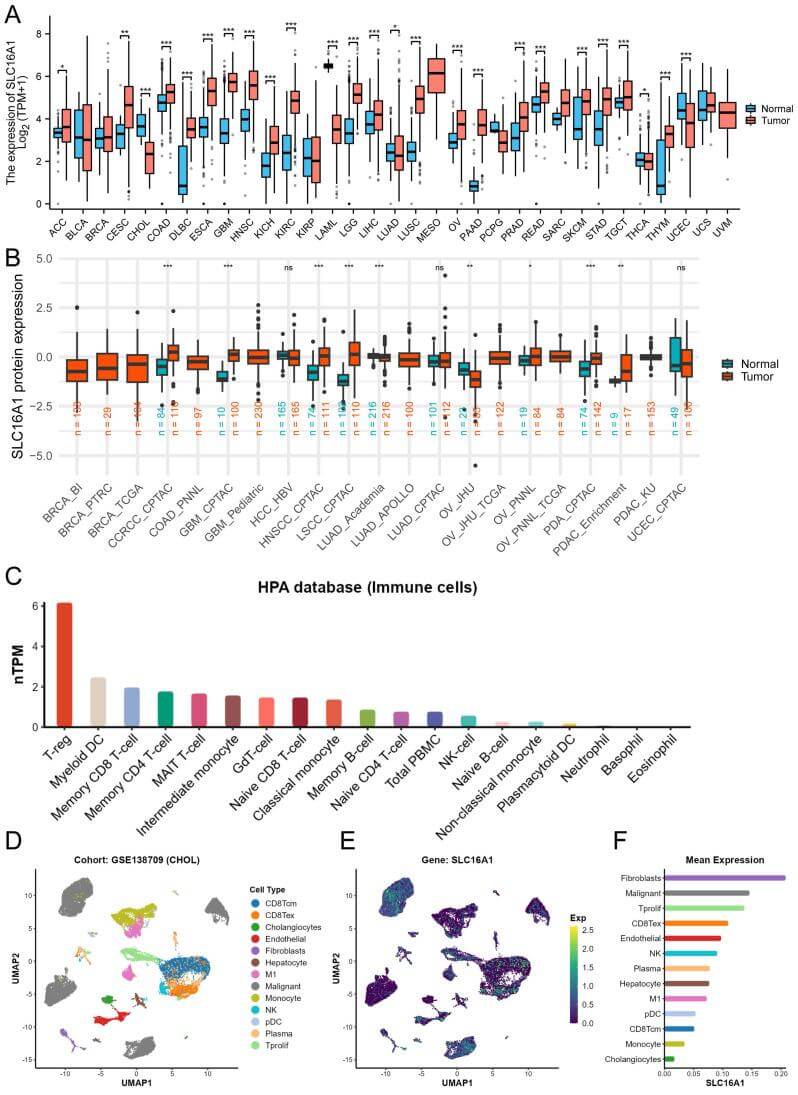 Fig. 1 SLC16A1 Expression Analysis in Human Cancer.1
SLC16A1, encoded by the SLC16A1 gene, functions as a proton-coupled monocarboxylate transporter that regulates the transmembrane flux of key metabolic substrates:
Creative Biolabs offers high-quality SLC16A1 membrane protein products produced using optimized expression systems. These include full-length multi-pass transmembrane protein that retains the native 12-transmembrane domain architecture and intracellular loop. The 12-transmembrane domain architecture mediates proton-coupled monocarboxylate transport, making these proteins suitable for studies of substrate transport kinetics, proton coupling mechanisms, and transporter function. All SLC16A1 proteins undergo strict quality control to support consistent performance across applicable research platforms.
Not finding the protein product you need? Contact us to start your one-stop custom service!
Creative Biolabs provides custom-engineered SLC16A1 stable cell lines, including overexpression and knockdown models. These cell lines are optimized for studies of monocarboxylate transport, cellular metabolism, lactate shuttle dynamics, and metabolic reprogramming. Each cell line undergoes stringent validation to ensure stable expression profiles and consistent functional performance in diverse experimental contexts.
Not finding the stable cell line product you need? Contact us to start your one-stop custom service!
High-specificity recombinant antibodies targeting SLC16A1 are developed using antibody engineering technologies for research applications involving SLC16A1 expression and localization. These antibodies can be used in studies of SLC16A1 distribution in various tissues and cell types, and may also support characterization of SLC16A1-basigin complexes and transporter function in combination with appropriate detection reagents.
Not finding the recombinant antibody product you need? Contact us to start your one-stop custom service!
Beyond catalog products, Creative Biolabs offers specialized custom services for SLC16A1 research: