Creative Biolabs is offering the most comprehensive services for antibody development projects. With strict regulation and effective execution, we are dedicated to providing the most valuable solutions to complete your projects.
HighlightsCreative Biolabs is offering the most comprehensive services for antibody development projects. With strict regulation and effective execution, we are dedicated to providing the most valuable solutions to complete your projects.
HighlightsCreative Biolabs has established a broad range of platforms for developing novel antibodies or equivalents. These cutting-edge technologies enable our scientists to meet your demands from different aspects and tailor the most appropriate solution that contributes to the success of your projects.
HighlightsWith deep understanding in antibody-related realms and extensive project experience, Creative Biolabs offers a variety of references to help you learn more about our capacities and achievements, including infographic, flyer, case study, peer-reviewed publications, and all kinds of knowledge that can assist your projects. You are also welcome to contact us directly for more specific solutions.
HighlightsGet a real taste of Creative Biolabs, one of the most professional custom service providers in the world. We are committed to providing highly customized comprehensive solutions with the best quality to advance your projects.
Highlights Loading...
All listed services and products are For Research Use Only. Do Not use in any diagnostic or therapeutic applications.
Solute Carrier Family 2 Member 3 (SLC2A3) also known as GLUT3 is a glucose transporter specialized to provide cells with immediate access to glucose. SLC2A3 is one of 14 facilitative hexose transporters found within the SLC2 family and is the highest affinity member of this group. The SLC2A3 binding site binds to glucose very strongly which allows the transporter to function close to its maximum velocity when there is a decline in circulating glucose levels and when other members of the SLC2 family are functioning at much lower rates due to their lower affinity for glucose. SLC2A3 consists of 12 transmembrane alpha-helices arranged in an alternating access mechanism. This mechanism allows SLC2A3 to transport glucose along its concentration gradient. There is no requirement for ions or ATP; rather, the transport of glucose occurs through a conformational change in SLC2A3 from an outward-facing conformation to an inward-facing conformation. This change in conformation enables SLC2A3 to move glucose across the cell membrane in either direction based upon the concentration gradient. Although SLC2A3 functions simply, its regulation, tissue distribution, and role in research are complex. SLC2A3's reputation as a high-affinity transporter stems from its tissue distribution. Neurons are among the most glucose-dependent cells in the body because of their high rate of energy consumption. Therefore, neurons express large amounts of SLC2A3 and SLC2A3 has become nearly synonymous with neuronal glucose supply. Placenta tissue uses SLC2A3 to transport glucose to the fetus. Sperm cells use SLC2A3 to generate energy necessary for motility. Immune cells that have been activated up-regulate SLC2A3 expression in response to the increased metabolic demands associated with activation. In every case, the underlying theme remains consistent: whenever glucose demand exceeds reliability of supply, cells utilize SLC2A3 as their glucose transporter. The tissue distribution of SLC2A3 has allowed researchers to investigate its role in cancer metabolism research. In research models, proliferating tumor cells experience a similar situation as described previously – the cells require a continuous supply of glucose; however, the blood vessels providing nutrients to the tumor cells do not reliably supply them with sufficient quantities of glucose. Many research studies have demonstrated a correlation between increased expression of SLC2A3 and aggressive phenotypes of tumors that are capable of growing under hypoxic conditions.
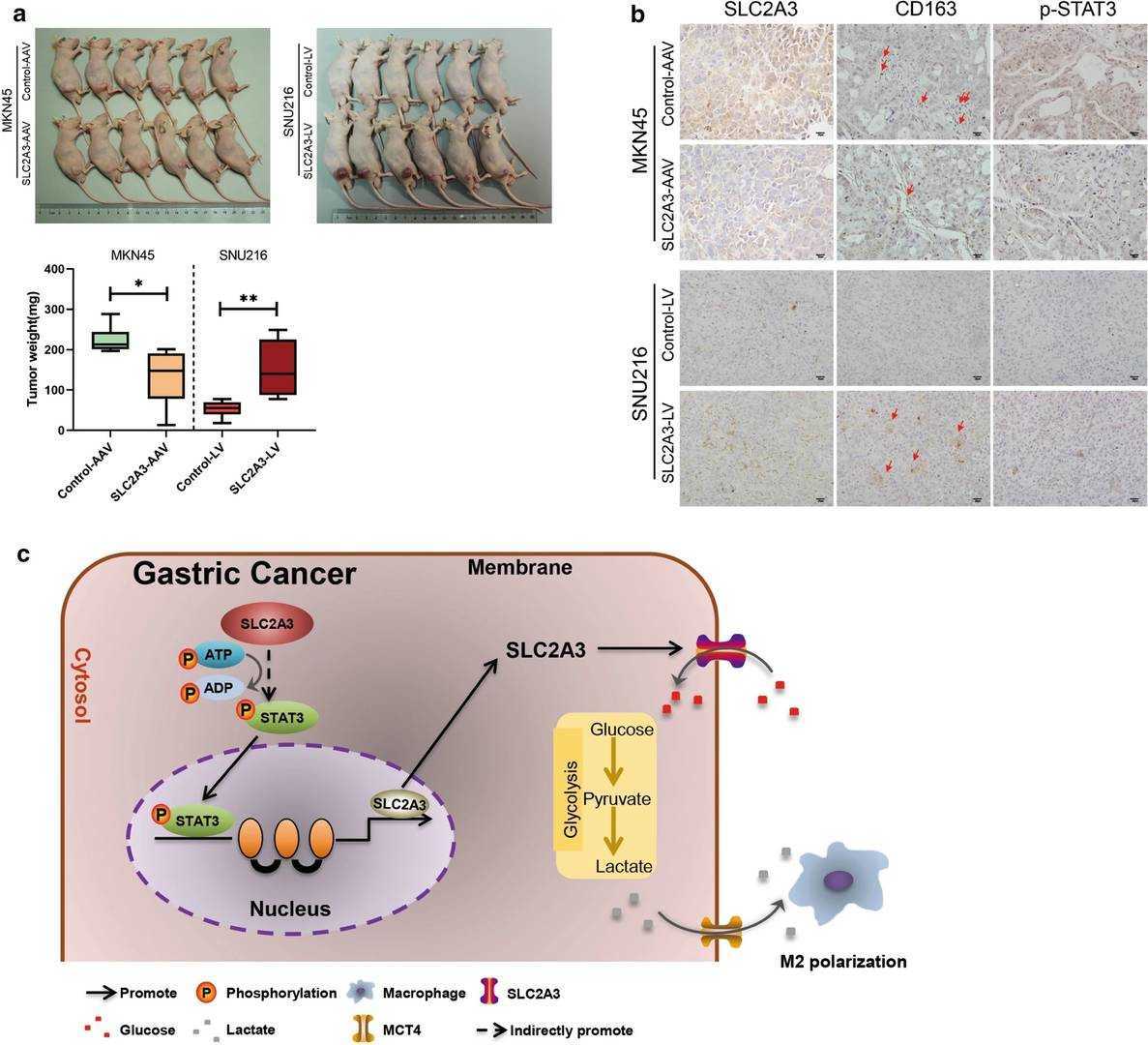 Fig.1 SLC2A3 played tumor-promotive roles in vivo.1
Several research currents keep converging on this transporter:
To produce SLC2A3 in an acceptable manner requires the ability to maintain the functionality of the "rocking switch". A sample of SLC2A3 that is produced in such a way that the transmembrane core is locked into a single conformation (or if it loses its ability to tune the binding pocket's affinity), may meet all of the requirements for being pure, but it will not perform well in any of the relevant transport measurements. SLC2A3 is produced using our optimized eukaryotic expression systems with appropriate folding support to match the architecture of SLC2 proteins. Quality assessment appropriate to the specific protein preparation can be performed to evaluate parameters such as sample purity and homogeneity. If your research needs a specific variant background, a defined affinity-competition condition, or a presentation compatible with a particular flux assay, we can alter the format of the sample preparation based upon your protocol – as long as the sample preparation follows the experimental design.
Not finding the membrane protein product you need? Contact us to start your one-stop custom service!
SLC2A3 cell model development depends upon both the density of expression and the ability to function as a transporter — a transporter provides the cell with its substrates only when it is expressed at the plasma membrane in an alternating access conformation. Wild-type overexpression cell lines provide known densities for uptake and flux experiments; engineered variant cell lines allow us to distinguish between binding pocket affinities and conformational cycling. Each clone used in our studies undergoes characterization prior to distribution — we quantify the amount of surface expression using standardized calibration curves — therefore we know how each cell line performs before we begin experimenting. If you need a specific variant background, a given density tier or a time-dependent expression profile that matches your flux protocol, our platform can accommodate those needs; the cell line we create will be designed specifically for the experiment you wish to perform with it.
Not finding the stable cell line product you need? Contact us to start your one-stop custom service!
The fourteen member family issue is a major obstacle to the development of antibodies to SLC2A3. SLC2 transporters have similar structural characteristics (twelve transmembrane helices) and high sequence homology among the transmembrane core regions. Generic monoclonal antibodies are prone to drifting towards cross-reactivity and thus disrupting quantitative measurements in samples containing multiple GLUT isoforms. The recombinant clone panel described in this study has been screened for true SLC2A3 specificity, followed by validation through quantitative assessment using lysate analysis, surface staining of transporter expressing cells, immunohistochemical mapping of transporter distribution in fixed tissues and dynamic live-cell imaging of cellular localization and trafficking of SLC2A3. Since each recombinant clone was produced with defined sequences, consistent performance will be maintained from lot-to-lot. Additionally, if the experimenter requires a conjugate other than what is available within the panel, a clone format adjustment to accommodate a specific workflow or validation with a different sample type can be requested; therefore, the panel provides flexibility to support the experimental design of the project it is being used for.
Not finding the recombinant antibody product you need? Contact us to start your one-stop custom service!
Extending well beyond our standard catalog, we deliver fully customizable discovery and manufacturing solutions meticulously tailored to the sophisticated demands of SLC2A3-targeted research and precompound development:
Catalog items work well for standard detection or transport workflows. Custom production makes sense when constructs, formats, or quality attributes step beyond routine specifications. A short consultation is usually enough to decide.
Yes. Custom formats and integrated multi-component engagements are routine, with unified quality frameworks keeping specifications aligned across components.
Reactivity is validated against the antigen source species, and performance in other species depends on sequence conservation. Checking reactivity documentation against the sample origin is the fastest way to confirm fit.
All SLC2A3 products and services are provided strictly for preclinical research. They are not designed, validated, or authorized for any use involving human subjects.