
Creative Biolabs is offering the most comprehensive services for antibody development projects. With strict regulation and effective execution, we are dedicated to providing the most valuable solutions to complete your projects.
HighlightsCreative Biolabs is offering the most comprehensive services for antibody development projects. With strict regulation and effective execution, we are dedicated to providing the most valuable solutions to complete your projects.
HighlightsCreative Biolabs has established a broad range of platforms for developing novel antibodies or equivalents. These cutting-edge technologies enable our scientists to meet your demands from different aspects and tailor the most appropriate solution that contributes to the success of your projects.
HighlightsWith deep understanding in antibody-related realms and extensive project experience, Creative Biolabs offers a variety of references to help you learn more about our capacities and achievements, including infographic, flyer, case study, peer-reviewed publications, and all kinds of knowledge that can assist your projects. You are also welcome to contact us directly for more specific solutions.
HighlightsGet a real taste of Creative Biolabs, one of the most professional custom service providers in the world. We are committed to providing highly customized comprehensive solutions with the best quality to advance your projects.
Highlights Loading...
All listed services and products are For Research Use Only. Do Not use in any diagnostic or therapeutic applications.
Sortilin 1 (SORT1) was the initial member of a group of sorting receptors known for moving back and forth between different locations within cells. Most sorting receptors reside in only one location on the cell's surface; however, sortilin travels continuously back and forth from the trans-Golgi network, endosomal compartments, and the plasma membrane, transporting various types of ligands from each of these three locations to each of the others. These movements are based upon the interpretation of signals that are read by sortilin's cytoplasmic tail. Sortilin's extracellular portion has a very large luminal domain that contains a binding surface that can interact with many different types of cargo. This includes: neurotrophin precursors that need to be transported by neurons in a careful manner, lipoproteins that help transport cholesterol throughout the body via blood vessels, and growth-factor precursors that are handled by cells in ways that ultimately determine cellular programming. Sortilin's small cytoplasmic tail includes the acidic-cluster and dileucine motifs that are recognized by cellular sorting mechanisms — effectively providing "postal codes" that determine which direction sortilin will travel next and what types of cargo it will carry along with it. The biological footprint of sortilin is found in two areas that are typically occupied by only a single protein. Within the nervous system, sortilin acts as a trafficking partner for proneurotrophins and other similar ligands. Through this role, sortilin assists in determining whether proneurotrophins will mature, act as signaling molecules, or undergo degradation — and thereby contribute to whether or not neurons survive or die — decisions that are currently being mapped out through ongoing research in neuroscience. Within metabolic physiology, sortilin acts as a lipoprotein handling receptor — i.e., it binds to lipoprotein particles at specific locations on the cell membrane, and affects circulating cholesterol levels through mechanisms that have been genetically linked to metabolic research. Together with its documented roles in the formation of secretory granules in endocrine tissues, and its ability to be shed into a soluble circulating form, sortilin accumulates a portfolio that supports its status as one of the most extensively studied members of the sorting-receptor family.
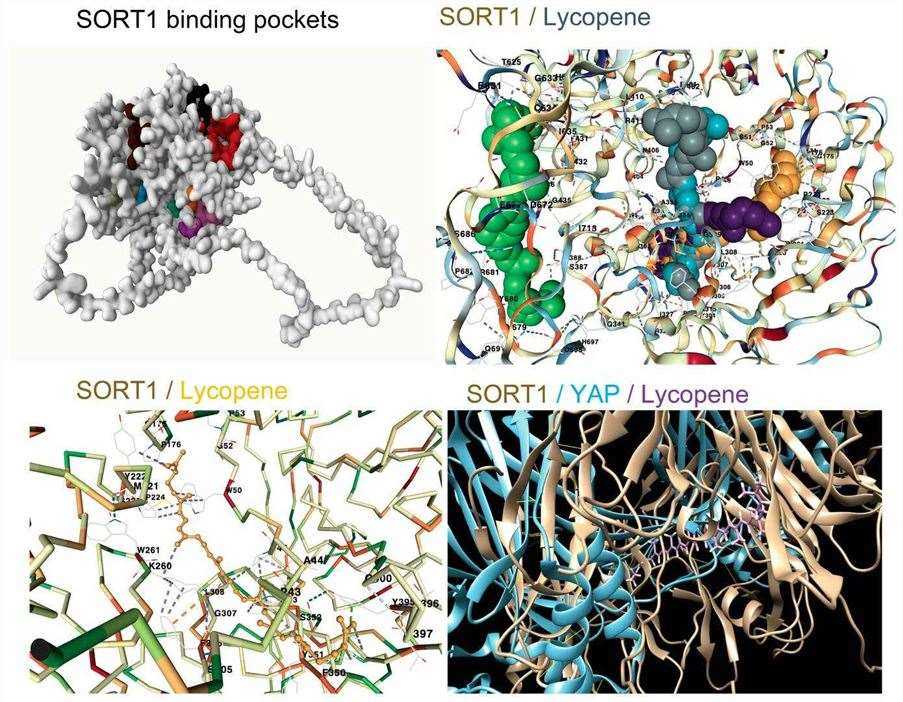 Fig.1 Targetability of human Sortilin1 (SORT1).1
Several research currents keep converging on this sorting receptor:
Producing SORT1 credibly means respecting its two-sided architecture. Full-length SORT1 comes from our optimized eukaryotic expression systems with folding support matched to the Vps10p-domain architecture, and formats are chosen to serve the receptor's actual experimental itineraries. Release testing covers purity by SDS-PAGE, monodispersity by analytical size-exclusion chromatography. If your study requires a tail-motif variant background, a defined cargo condition, or a presentation matched to a particular itinerary assay, the format can be adjusted around your protocol—the preparation follows the experimental design.
Not finding the membrane protein product you need? Contact us to start your one-stop custom service!
Cellular models for SORT1 work turn on expression level and itinerary fidelity working together—a sorting receptor that reaches the wrong compartment sorts the wrong cargo. Wild-type overexpression lines and different variants let researchers reprogram the itinerary and observe how cargo routing follows. Each clone is characterized before release, so the line's behavior is established before experiments begin. Should your program call for a particular variant background, a specific density tier, or an expression schedule built around your trafficking timeline, the platform can be tailored to fit; the cell line is constructed to serve the experiment it will run in.
Not finding the stable cell line product you need? Contact us to start your one-stop custom service!
Antibody work on SORT1 faces the family problem: the Vps10p-domain relatives share the luminal architecture and enough sequence that generic clones drift into cross-reactivity, corrupting quantitation in samples where multiple sorting receptors cycle through the same compartments. Our recombinant panel here is screened for genuine SORT1 discrimination. Sequence-defined production keeps lot-to-lot performance steady, and where a project needs a different conjugate, validation against a specific sample type, or an adjustment in clone format to fit a particular workflow, that can be arranged on request—the panel flexes to meet the experimental design it serves.
Not finding the recombinant antibody product you need? Contact us to start your one-stop custom service!
Extending well beyond our standard catalog, we deliver fully customizable discovery and manufacturing solutions meticulously tailored to the sophisticated demands of SORT1-targeted research and compound development:
Compact sequence signatures in the tail encode destinations that the trafficking machinery reads. Altering them reprograms the itinerary, making the motifs both a functional element and an experimental handle.
Because the receptor moves among compartments, itinerary studies combine localization data with kinetic reasoning, treating compartment residence time as a measured variable rather than an assumption.
Clones are screened against related sorting receptors during selection, with off-target panel results accompanying documentation so specificity claims remain transparent.
Neurotrophin trafficking, lipoprotein metabolism, secretory-granule biology, and general membrane-trafficking mechanisms are the standing territories, with soluble-form research spanning several of them.









