
Creative Biolabs is offering the most comprehensive services for antibody development projects. With strict regulation and effective execution, we are dedicated to providing the most valuable solutions to complete your projects.
HighlightsCreative Biolabs is offering the most comprehensive services for antibody development projects. With strict regulation and effective execution, we are dedicated to providing the most valuable solutions to complete your projects.
HighlightsCreative Biolabs has established a broad range of platforms for developing novel antibodies or equivalents. These cutting-edge technologies enable our scientists to meet your demands from different aspects and tailor the most appropriate solution that contributes to the success of your projects.
HighlightsWith deep understanding in antibody-related realms and extensive project experience, Creative Biolabs offers a variety of references to help you learn more about our capacities and achievements, including infographic, flyer, case study, peer-reviewed publications, and all kinds of knowledge that can assist your projects. You are also welcome to contact us directly for more specific solutions.
HighlightsGet a real taste of Creative Biolabs, one of the most professional custom service providers in the world. We are committed to providing highly customized comprehensive solutions with the best quality to advance your projects.
Highlights Loading...
All listed services and products are For Research Use Only. Do Not use in any diagnostic or therapeutic applications.
The SNARE responsible for maintaining the function of the cell's late endosomal compartments is Syntaxin 7 (STX7). A member of the syntaxin family — the membrane-anchored Q-SNAREs which each contribute one helix to the four-helix bundles that drive membrane fusion — STX7 is located at the endosomal branch of the family tree; well away from the synaptic syntaxins that gave the family its fame. Its single C-terminal transmembrane helix anchors it into late endosomal membranes and its extended cytosolic region assembles with partner SNAREs — other Q-SNAREs and R-SNAREs of endosomal vesicles — to form the complexes that allow late endosomes to fuse together and link the endosomal pathway to the lysosomal system. In contrast to synaptic fusion, which is triggered by millisecond-scale calcium fluxes, endosomal fusion operates on a slower schedule of maturation, identity, and delivery; and STX7 is one of its principal orchestrators. The biology that relies on this fusion machinery is the cell's digestive and recycling economy. Late endosomes obtain cargo from early endosomes, mature via fusion events that STX7 facilitates, and then interact with lysosomes where degradation is completed. If the machinery is impaired, then cargo trafficking slows down: endosomal compartments expand, material that should be degraded accumulates, and the downstream effects spread throughout every pathway that relies upon timely compartment maturation. Additionally, the crystal structure of the endosomal SNARE complex including STX7 indicated that even though STX7 is used in a different compartment and operates on a different schedule than its synaptic counterparts, the four-helix bundle it forms uses the same structural "grammar" as its synaptic cousins. Therefore, it appears that evolution created all SNAREs based on a single architectural blueprint, and simply changed the "addressing system" for each type of SNARE, rather than developing new types of "engines" for each type of SNARE.
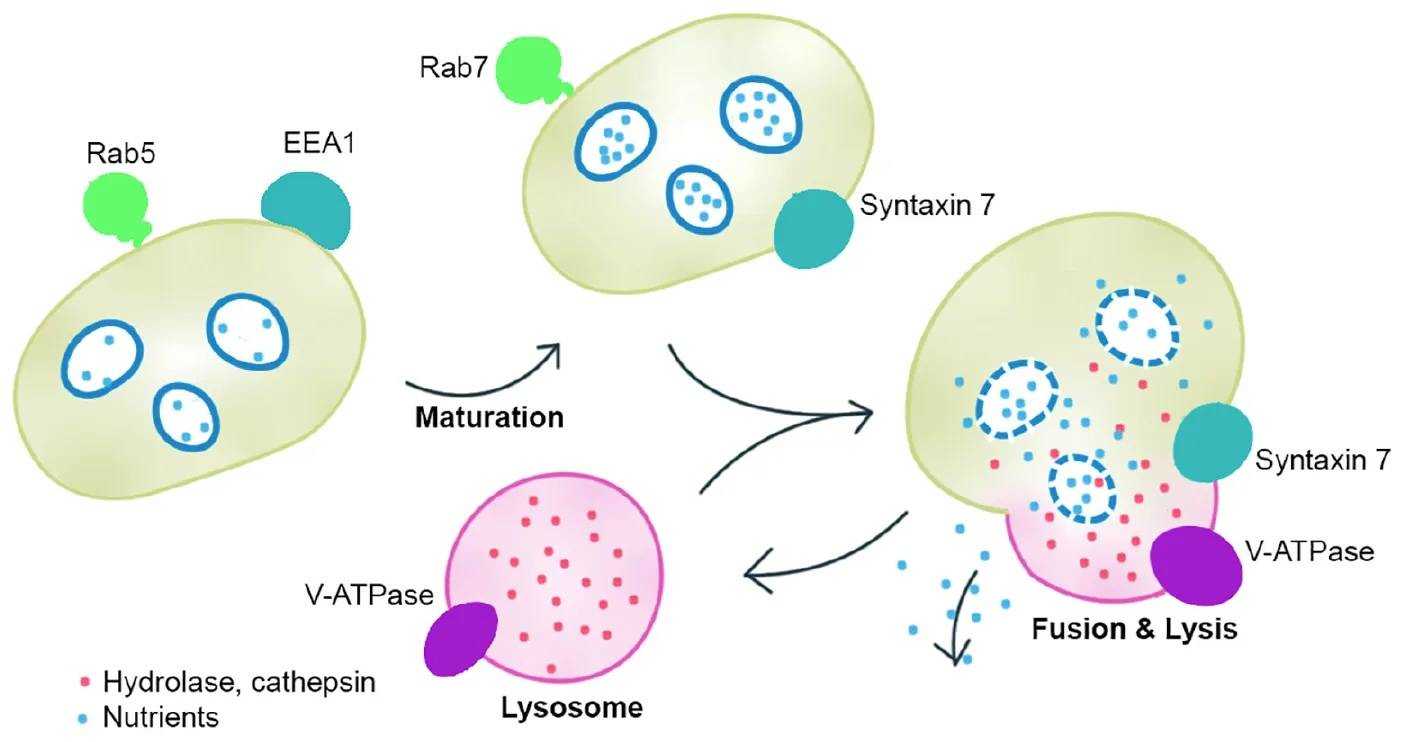 Fig.1 A working model showing the function of the highly expressed gene.1
Several research currents keep converging on this SNARE:
When making an accurate representation of STX7, there are two key aspects to maintain. First, the extended SNARE-motif region which will assemble as part of the fusion complex must remain functional. Second, the transmembrane anchor which allows the STX7 to insert itself into endosomal membranes must also remain intact. A soluble portion of the STX7 protein could provide answers to some questions; however, studies that focus on the interaction between the protein and the membrane environment will need the full-length (anchored) version of the protein. Our expression systems are designed to preserve both of these regions, and we select a format based on how well the SNARE region remains available for interaction with partners depending upon what type of study is being conducted. All of our proteins undergo release testing for purity using SDS-PAGE. Depending on the needs of your study (e.g., whether you need a specific partner arrangement, a certain membrane composition, or a presentation that matches a specific fusion/assembly assay), the format we prepare can be altered according to your protocol.
Not finding the membrane protein product you need? Contact us to start your one-stop custom service!
The cellular models of STX7 rely upon both the expression level of STX7 and how well STX7 targets to the late-endosome. If STX7 fails to target to the late-endosome, it cannot function properly in mediating fusion reactions as designed. Researchers use wild-type overexpression lines and various types of STX7 mutants to determine which amino acids are involved in interacting with partners. Each clone is characterized prior to release so that the clone's characteristics have been identified prior to conducting experiments. If your program requires a specific mutant background, a certain cell density tier, or an expression scheme based on your cellular trafficking timeline, the platform may be customized to accommodate those needs. Therefore, each clone is generated to support the experiment it will be used for.
Not finding the stable cell line product you need? Contact us to start your one-stop custom service!
Antibody development with STX7 is hindered by the family issue. The Syntaxin family has the same SNARE helical motif. The cytosolic regions of all of these family members are similar enough to create cross-reactive clones when developing generic clones; thus, corrupting quantitation in samples with multiple syntaxins contributing to trafficking. To ensure that our recombinant panel is genuinely discriminating for STX7, we have screened the clones for specificity. Our use of sequence-defined production provides consistent lot-to-lot performance. If your project requires a conjugate option, validation against a specific sample type, or a clone format adjustment to fit into your workflow, we can make those adjustments upon request – our recombinant panel provides flexibility to support your experimental design.
Not finding the recombinant antibody product you need? Contact us to start your one-stop custom service!
Extending well beyond our standard catalog, we deliver fully customizable discovery and manufacturing solutions meticulously tailored to the sophisticated demands of STX7-targeted research and precompound development:
Synaptic fusion runs on millisecond calcium triggers at the plasma membrane; endosomal fusion runs on slower maturation schedules within intracellular compartments. The engine is conserved—the schedule and address system differ.
STX7's fusion complexes assemble from defined partner SNAREs, and the partner roster determines which fusion events it participates in. Complex-aware formats are what make reconstitution and interaction claims meaningful.
Structural and assembly studies often proceed well with the defined soluble region, while fusion and trafficking studies require the membrane-anchored form. The formats are complementary rather than interchangeable.
All STX7 products and services are provided strictly for preclinical research. They are not designed, validated, or authorized for any use involving human subjects.









