
Creative Biolabs is offering the most comprehensive services for antibody development projects. With strict regulation and effective execution, we are dedicated to providing the most valuable solutions to complete your projects.
HighlightsCreative Biolabs is offering the most comprehensive services for antibody development projects. With strict regulation and effective execution, we are dedicated to providing the most valuable solutions to complete your projects.
HighlightsCreative Biolabs has established a broad range of platforms for developing novel antibodies or equivalents. These cutting-edge technologies enable our scientists to meet your demands from different aspects and tailor the most appropriate solution that contributes to the success of your projects.
HighlightsWith deep understanding in antibody-related realms and extensive project experience, Creative Biolabs offers a variety of references to help you learn more about our capacities and achievements, including infographic, flyer, case study, peer-reviewed publications, and all kinds of knowledge that can assist your projects. You are also welcome to contact us directly for more specific solutions.
HighlightsGet a real taste of Creative Biolabs, one of the most professional custom service providers in the world. We are committed to providing highly customized comprehensive solutions with the best quality to advance your projects.
Highlights Loading...
All listed services and products are For Research Use Only. Do Not use in any diagnostic or therapeutic applications.
TAP-binding protein (TAPBP; also known as tapasin, TPN, or TPSN) is encoded by the TAPBP gene located within the major histocompatibility complex (MHC) region at chromosome 6p21.32. This gene encodes a type I transmembrane glycoprotein belonging to the immunoglobulin superfamily. It contains adjacent extracellular IgV-like and IgC-like domains, a transmembrane region involved in TAP association, and a C-terminal cytoplasmic ER retrieval motif (KKKAE). TAPBP is a subunit of the peptide-loading complex (PLC), a dynamic assembly that also includes the transporters associated with antigen processing (TAP1/TAP2), the lectin-like chaperone calreticulin, the oxidoreductase ERp57, and MHC class I molecules. TAPBP is expressed in most nucleated cells, with particularly high levels found in fully differentiated neutrophils.
TAPBP acts as the central organizer of the PLC, linking newly assembled MHC class I molecules to TAP transporters and coordinating the peptide-loading process. Beyond its structural role, TAPBP functions as a peptide-editing factor: it catalyzes the selection of high-affinity peptides and stabilizes the conformation of MHC class I molecules receptive to peptide binding, thereby ensuring that only stable peptide-MHC class I complexes reach the cell surface. Furthermore, TAPBP forms a disulfide-linked heterodimer with ERp57 and interacts with TAP1 independently of TAP2; this interaction helps couple TAP-mediated peptide transport to MHC class I peptide loading rather than determining peptide binding to TAP. Using cryo-electron microscopy and X-ray crystallography, scientists have elucidated the structural basis of PLC assembly, including the structures of the MHC I-tapasin-ERp57 module and the human PLC editing module. TAPBP deficiency in humans leads to an autosomal recessive primary immunodeficiency disorder characterized by markedly reduced cell-surface expression of MHC class I molecules, impaired CD8⁺ T-cell development, and defective cytotoxic responses against viruses. These characteristics make TAPBP a key target for studying the mechanisms of antigen processing and presentation, MHC class I molecule assembly, and peptide editing.
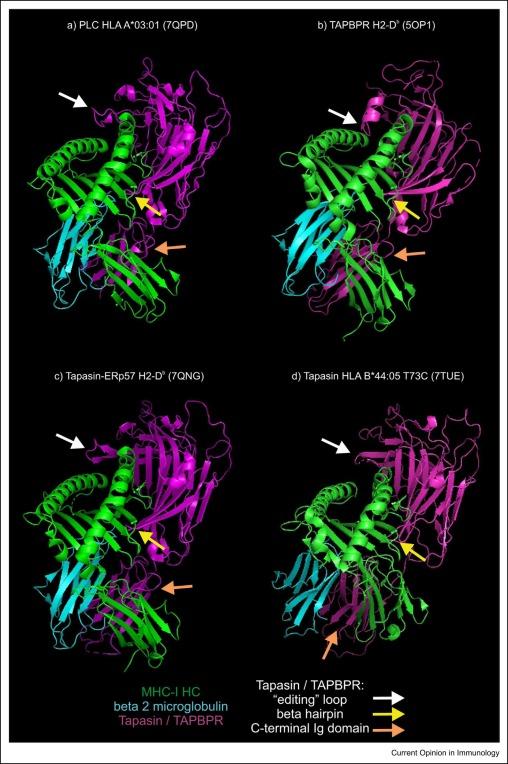 Fig. 1 Structures of tapasin-bound or TAPBPR-bound MHC-I molecules.1
TAPBP, encoded by the TAPBP gene, functions as the central chaperone of the peptide-loading complex that regulates MHC class I peptide loading and editing:
Creative Biolabs provides TAPBP membrane protein products produced using optimized expression systems. These include full-length single-pass type I transmembrane protein that retains the native immunoglobulin-like domain, transmembrane region, and C-terminal ER retention motif, as well as isolated extracellular domain variants. The immunoglobulin-like domain mediates MHC class I binding, while the transmembrane region contributes to TAP association and the cytoplasmic C terminus mediates ER retention/retrieval, making isolated constructs suitable for TAPBP–MHC I interaction studies; functional peptide loading/editing requires an appropriately reconstituted complex including MHC I/β2M, TAP, ERp57 and calreticulin. All TAPBP proteins undergo strict quality control to support consistent performance across applicable research platforms.
Not finding the protein product you need? Contact us to start your one-stop custom service!
Creative Biolabs provides custom-engineered TAPBP stable cell lines, including overexpression and knockdown models. These cell lines are optimized for studies of peptide-loading complex assembly, MHC class I peptide editing, and TAPBP-associated immunodeficiency mechanisms. Each cell line undergoes stringent validation to ensure stable expression profiles and consistent functional performance in diverse experimental contexts.
Not finding the stable cell line product you need? Contact us to start your one-stop custom service!
High-specificity recombinant antibodies targeting TAPBP are developed using antibody engineering techniques for research applications involving TAPBP expression and localization. These antibodies can be used in studies of TAPBP distribution in the endoplasmic reticulum and immune tissues and may also support characterization of TAPBP-containing peptide-loading complexes in combination with appropriate detection reagents.
Not finding the recombinant antibody product you need? Contact us to start your one-stop custom service!
Beyond catalog products, Creative Biolabs offers specialized custom services for TAPBP research:
TAPBP (tapasin) is the central chaperone of the peptide-loading complex that bridges MHC class I molecules to the TAP transporter and functions as a peptide editor to select high-affinity peptides for stable peptide–MHC class I complex formation.
TAPBP is essential for MHC class I antigen presentation and CD8⁺ T cell development. Its deficiency causes an inborn error of immunity with impaired antiviral responses, making it important for studies of antigen processing and immune regulation.
No, all TAPBP products and services are strictly for research use only, not intended for clinical diagnosis or treatment.
Offerings include full-length TAPBP membrane proteins, extracellular domain variants, specific detection antibodies, and custom stable cell lines for antigen presentation and MHC class I assembly research.
TAPBP proteins may support research on MHC class I binding and TAP1 interaction, depending on protein format and experimental context.









