Creative Biolabs is offering the most comprehensive services for antibody development projects. With strict regulation and effective execution, we are dedicated to providing the most valuable solutions to complete your projects.
HighlightsCreative Biolabs is offering the most comprehensive services for antibody development projects. With strict regulation and effective execution, we are dedicated to providing the most valuable solutions to complete your projects.
HighlightsCreative Biolabs has established a broad range of platforms for developing novel antibodies or equivalents. These cutting-edge technologies enable our scientists to meet your demands from different aspects and tailor the most appropriate solution that contributes to the success of your projects.
HighlightsWith deep understanding in antibody-related realms and extensive project experience, Creative Biolabs offers a variety of references to help you learn more about our capacities and achievements, including infographic, flyer, case study, peer-reviewed publications, and all kinds of knowledge that can assist your projects. You are also welcome to contact us directly for more specific solutions.
HighlightsGet a real taste of Creative Biolabs, one of the most professional custom service providers in the world. We are committed to providing highly customized comprehensive solutions with the best quality to advance your projects.
Highlights Loading...
All listed services and products are For Research Use Only. Do Not use in any diagnostic or therapeutic applications.
Toll-like receptor 10 (TLR10) is a single-pass transmembrane glycoprotein encoded by the TLR10 gene, composed of multiple extracellular leucine-rich repeat domains, a transmembrane segment and cytoplasmic TIR signaling tail, and acts as a regulatory co-receptor subunit for TLR2-containing pattern recognition receptor complexes. TLR10 is widely expressed across lymphoid cells, myeloid and epithelial cell populations, serving as a molecular scaffold mediating TLR heterodimer formation and balancing downstream immune kinase recruitment upon pathogen ligand stimulation.
TLR10 exerts its biological effects through dynamic heterodimeric assembly with primary TLR receptor chains, a mechanism that modulates ligand binding stability and bidirectional intracellular signal cascade activation efficiency. Unlike ligand-sensing primary TLR receptors, TLR10 cannot independently initiate full immune signal output and relies on receptor dimerization to tune signal amplitude; it recruits cytoplasmic signal mediators to assembled receptor complexes, separating extracellular pathogen pattern recognition from intracellular immune transcription factor activation and shaping sustained tissue immune response signals. This dual regulatory mode adjusts the magnitude of local tissue immune responses after microbial stimulation, fine-tuning resident immune cell activation and inflammatory mediator secretion levels, while sustained abnormal TLR10-mediated signal transmission drives imbalanced immune homeostasis and inflammatory lesions. TLR10 participates in key physiological and pathological processes including innate pathogen sensing, balanced immune activation, cytokine-mediated tissue inflammation and chronic immune-related disorders. Dysregulation of TLR10 expression or receptor dimerization capacity is closely associated with disrupted anti-pathogen immune surveillance and dysregulated inflammatory responses, making TLR10 a crucial research target for pattern recognition receptor signaling, innate immunity and inflammatory disease research.
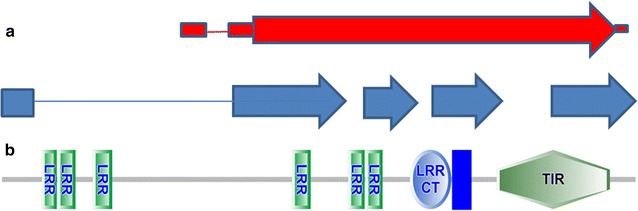 Fig. 1 Linear topological architecture of human TLR10, composed of extracellular LRR ligand-binding domains, transmembrane segment and cytoplasmic TIR signaling domain.1
The biological functions of TLR10 are focused on pattern recognition receptor heterodimerization, bidirectional immune signal propagation and tissue immune balance:
Creative Biolabs offers high-purity TLR10 proteins through optimized heterologous expression systems, including full-length TLR10 and isolated extracellular leucine-rich repeat domain variants with modified glycosylation status. These products are suitable for pattern recognition receptor signaling research, receptor complex interaction detection, and small molecule immune modulator screening for inflammatory disorder research. All TLR10 proteins undergo strict quality control, including purity analysis and biological activity validation to preserve core receptor function.
Not finding the membrane protein product you need? Contact us to start your one-stop custom service!
Creative Biolabs provides custom-engineered TLR10 stable cell lines, including overexpressing and knockdown models in myeloid and epithelial cell models. These cell lines are optimized for studying TLR10-mediated receptor heterodimer assembly mechanisms, pattern recognition signal cascade dynamics, and immune modulator sensitivity. Each cell line undergoes stringent validation, including stable expression detection and functional integrity verification.
Not finding the stable cell line product you need? Contact us to start your one-stop custom service!
High-specificity recombinant antibodies targeting TLR10 are developed via advanced antibody engineering technologies. These antibodies are validated for multiple applications, including immunofluorescence for TLR10 membrane localization, Western blot for expression analysis, and co-immunoprecipitation for TLR10-receptor complex research, enabling precise analysis of TLR10 expression, subcellular localization and functional regulation.
Not finding the recombinant antibody product you need? Contact us to start your one-stop custom service!
Beyond catalog products, Creative Biolabs offers specialized custom services for TLR10 research:
TLR10 is a Toll-like pattern recognition co-receptor that directly heterodimerizes with TLR2-family primary receptors to modulate pathogen-induced immune signal amplitude, balance tissue immune response dynamics, and mediate controlled innate immune activation upon microbial stimulation.
TLR10 is a core regulator of TLR-mediated innate immune signaling and tissue immune homeostasis, and its dysregulation is associated with unbalanced inflammatory lesions and chronic immune disorders. It is a critical target for pattern recognition receptor and innate immunity research.
No, all TLR10 products and services are strictly for research use only, not intended for clinical diagnosis or treatment.
Offerings include TLR10 proteins (full-length, extracellular leucine-rich repeat domain variants), specific recombinant antibodies, and custom stable immune cell lines, supporting pattern recognition and inflammatory research.
TLR10 proteins are validated by TLR heterodimer binding assays and immune signal regulation verification to ensure native regulatory function in innate immune research.