
Creative Biolabs is offering the most comprehensive services for antibody development projects. With strict regulation and effective execution, we are dedicated to providing the most valuable solutions to complete your projects.
HighlightsCreative Biolabs is offering the most comprehensive services for antibody development projects. With strict regulation and effective execution, we are dedicated to providing the most valuable solutions to complete your projects.
HighlightsCreative Biolabs has established a broad range of platforms for developing novel antibodies or equivalents. These cutting-edge technologies enable our scientists to meet your demands from different aspects and tailor the most appropriate solution that contributes to the success of your projects.
HighlightsWith deep understanding in antibody-related realms and extensive project experience, Creative Biolabs offers a variety of references to help you learn more about our capacities and achievements, including infographic, flyer, case study, peer-reviewed publications, and all kinds of knowledge that can assist your projects. You are also welcome to contact us directly for more specific solutions.
HighlightsGet a real taste of Creative Biolabs, one of the most professional custom service providers in the world. We are committed to providing highly customized comprehensive solutions with the best quality to advance your projects.
Highlights Loading...
All listed services and products are For Research Use Only. Do Not use in any diagnostic or therapeutic applications.
Transmembrane protein 97 (TMEM97) also known as MAC30, is a polytopic membrane protein containing four predicted transmémbrene α-helices and an approximate molecular mass of 20–24 kDa. Localised mostly in the endosomal and lysosomal compartments, with contributions also from plasma membrane (PM) and Golgi pool representations, TMEM97 has surfaced as a critical node of intracellular cholesterol trafficking and lipid homeostasis. Structural and pharmacological studies of TMEM97 have recently confirmed it to be the main binding component within sigma-2 receptor complex, which is a molecular target for synthetic ligands that selectively kill rapidly proliferating tumor cells. TMEM97 interacts with low-density lipoprotein receptor (LDLR) and Niemann-Pick type C1 (NPC1) protein to regulate cholesterol egress from late endosomes in the context of the endolysosomal network, made up for membrane composition, cell signaling, cellular metabolism adaptation. In oncogenic settings, TMEM97 expression is substantially overexpressed in breast carcinoma, non-small cell lung cancer (NSCLC), prostate adenocarcinoma and glioblastoma multiforme where it promotes survival, proliferation of tumor cells as well nullification of endoplasmic reticulum stress. Key bioinformatics analyses indicated TMEM97 regulates amyloid precursor protein processing and neuronal autophagic flux in the nervous system implicating its role neural degeneration Alzheimer disease pathogenesis. TMEM97 combines versatile lipid-regulatory functions with sigma-2 receptor pharmacology and a disease-associated expression profile, making it an exceptionally appealing target for radioligand tumor imaging as well as cholesterol-modulating therapeutics (either mechanistically complimentary to statins or non-statinal) plus precision oncology drug conduit.
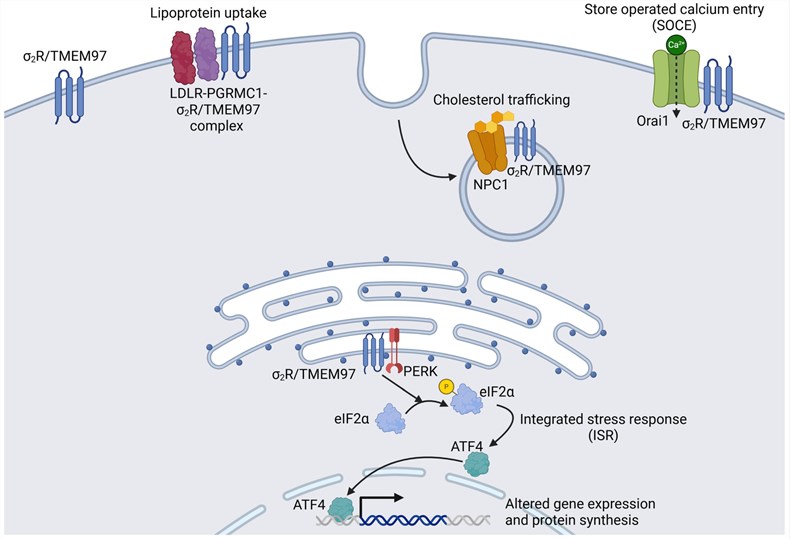 Fig.1 σ2R/TMEM97 subcellular localization and function.1
TMEM97 orchestrates multiple cellular programs that go beyond its original annotation as a meningioma-associated antigen:
We present a broad panel of full-length and engineered TMEM97 membrane protein preparations designed to support research on this endolysosomal transmembrane protein. Considering the importance of appropriate membrane topology and preservation of structural features relevant to ligand recognition and TMEM97-associated cholesterol biology, our platform provides membrane protein formats tailored to different experimental requirements. These preparations can support ligand-binding studies, protein interaction research, structural and biochemical characterization, and investigations of TMEM97-associated cholesterol transport mechanisms. Protein format, production conditions, quality-control specifications, and available functional characterization are determined according to the corresponding product data or individual project requirements. Our TMEM97 collection provides research-ready materials for applications such as ligand-binding analysis, assay development, and membrane protein studies.
Not finding the membrane protein product you need? Contact us to start your one-stop custom service!
Physiologically relevant cellular platforms are important for investigating TMEM97-associated cholesterol trafficking and related cellular responses. Leveraging lentiviral- and transposon-based delivery approaches, we provide TMEM97 stable cell lines designed to support studies of TMEM97 expression, localization, ligand response, and endolysosomal lipid biology. Depending on project requirements, customized cell models incorporating selected variants, reporter systems, or appropriate controls can be discussed to address specific mechanistic questions. These platforms provide scalable research tools for investigating TMEM97-associated cholesterol homeostasis, evaluating small-molecule modulators, and supporting broader studies of endolysosomal lipid transport. Specific cell configurations, validation methods, and functional readouts are determined according to individual project requirements.
Not finding the stable cell line product you need? Contact us to start your one-stop custom service!
Our complete library of sequence-defined high-affinity monoclonal antibodies allow you to customize your TMEM97 research, designed for the topology of this endolysosomal transmembrane protein. These antibodies are capable of binding to latent and active TMEM97 conformations, as well as glycosylation-dependent epitopes on the extracellular and intracellular loops. They are pre-validated for: TMEM97 Western Blotting (both reducing and non-reducing), ligand competition Direct ELISA, Flow cytometry of fixed/permeabilized tumor cells; as well as high-resolution immunofluorescence & confocal microscopy of endosomal/lysosomal compartments. The latter can be used to perform immunohistochemistry on paraffin-embedded tissue sections and take the advantage of being functional blocking receptor interfering reagents. This data enables assessment of TMEM97 - expression profile across diverse cancer cell types, intracellular trafficking and aid in the design therapeutic antibodies for oncological & neurodegenerative disorder treatment.
Not finding the recombinant antibody product you need? Contact us to start your one-stop custom service!
In addition to our catalogue products, we also offer a complete hosted service for protein design and engineering with specific applications in difficult endolysosomal transmembrane proteins:
Our products will include the elements necessary for glycosylation and proper disulfide bond formation to support endolysosomal localization & ligand recognition.
Yes, our TMEM97 products have been engineered to properly localize to endosomes and lysosomes in order for them respond appropriately (in a physiologically relevant manner) when exposed with sigma-2 ligands provided the presence of cholesterol.
No, all reagents and services provided are designated solely for research purposes and cannot be used for diagnostic testing or therapeutic purposes.
Yes, we have established stable lines where transcription of TMEM97 is regulated by a doxycycline-responsive promoter. This system allows for exactly timed initiation of expression at pre-determined time points and follow-up analysis of progressive filipin clearance, mTORC1 reactivation, and SREBP-2 target gene down-regulation with temporal resolution without the chronic cholesterol depletion or compensatory upregulation in HMG-CoA reductase that is a hallmark characteristic confounding constitutive overexpression systems.








