
Creative Biolabs is offering the most comprehensive services for antibody development projects. With strict regulation and effective execution, we are dedicated to providing the most valuable solutions to complete your projects.
HighlightsCreative Biolabs is offering the most comprehensive services for antibody development projects. With strict regulation and effective execution, we are dedicated to providing the most valuable solutions to complete your projects.
HighlightsCreative Biolabs has established a broad range of platforms for developing novel antibodies or equivalents. These cutting-edge technologies enable our scientists to meet your demands from different aspects and tailor the most appropriate solution that contributes to the success of your projects.
HighlightsWith deep understanding in antibody-related realms and extensive project experience, Creative Biolabs offers a variety of references to help you learn more about our capacities and achievements, including infographic, flyer, case study, peer-reviewed publications, and all kinds of knowledge that can assist your projects. You are also welcome to contact us directly for more specific solutions.
HighlightsGet a real taste of Creative Biolabs, one of the most professional custom service providers in the world. We are committed to providing highly customized comprehensive solutions with the best quality to advance your projects.
Highlights Loading...
All listed services and products are For Research Use Only. Do Not use in any diagnostic or therapeutic applications.
Transient receptor potential cation channel subfamily V member 3 (TRPV3) is a channel that allows the skin to detect warmth. Two seminal studies published side-by-side in 2002 marked the beginning of the thermo-TRP field and identified TRPV3 as being activated by temperatures above 30 degrees Celsius (the lower end of the comfortable temperature range for skin). This was unique among thermosensors because its expression profile distinguished it from other thermosensors. TRPV3 is highly expressed in keratinocytes, which make up the protective layer of the skin, and in epithelial tissues located in the oral cavity and nose, where the body interacts with the environment. The discovery changed how we view the biology of temperature. We now know that detecting warmth is not simply a matter of reading out information from nerve endings. Instead, it involves a dialogue between skin cells, which sense warmth through TRPV3, secrete signaling molecules, and communicate with the nervous system about what they have detected on the surface. As with most TRP channels, TRPV3 has a typical structure consisting of six transmembrane segments per monomer, a calcium-permeable pore formed by tetramers of monomers, and an activation mechanism mediated by temperature, ligand binding, and prior channel activation history. A particularly interesting aspect of TRPV3 is that repeated thermal or chemical activation often produces use-dependent sensitization, with progressively enhanced responses; prolonged stimulation may also produce context-dependent inactivation. The list of known ligands for TRPV3 is also quite extensive; several plant-based compounds used in traditional warming remedies directly activate the channel, providing researchers with a chemical tool to study the thermosensor. Finally, genetic mutations that affect TRPV3 function result in severe inherited skin disorders in humans, thereby establishing a strong link between TRPV3 function and epidermal biology using genetics.
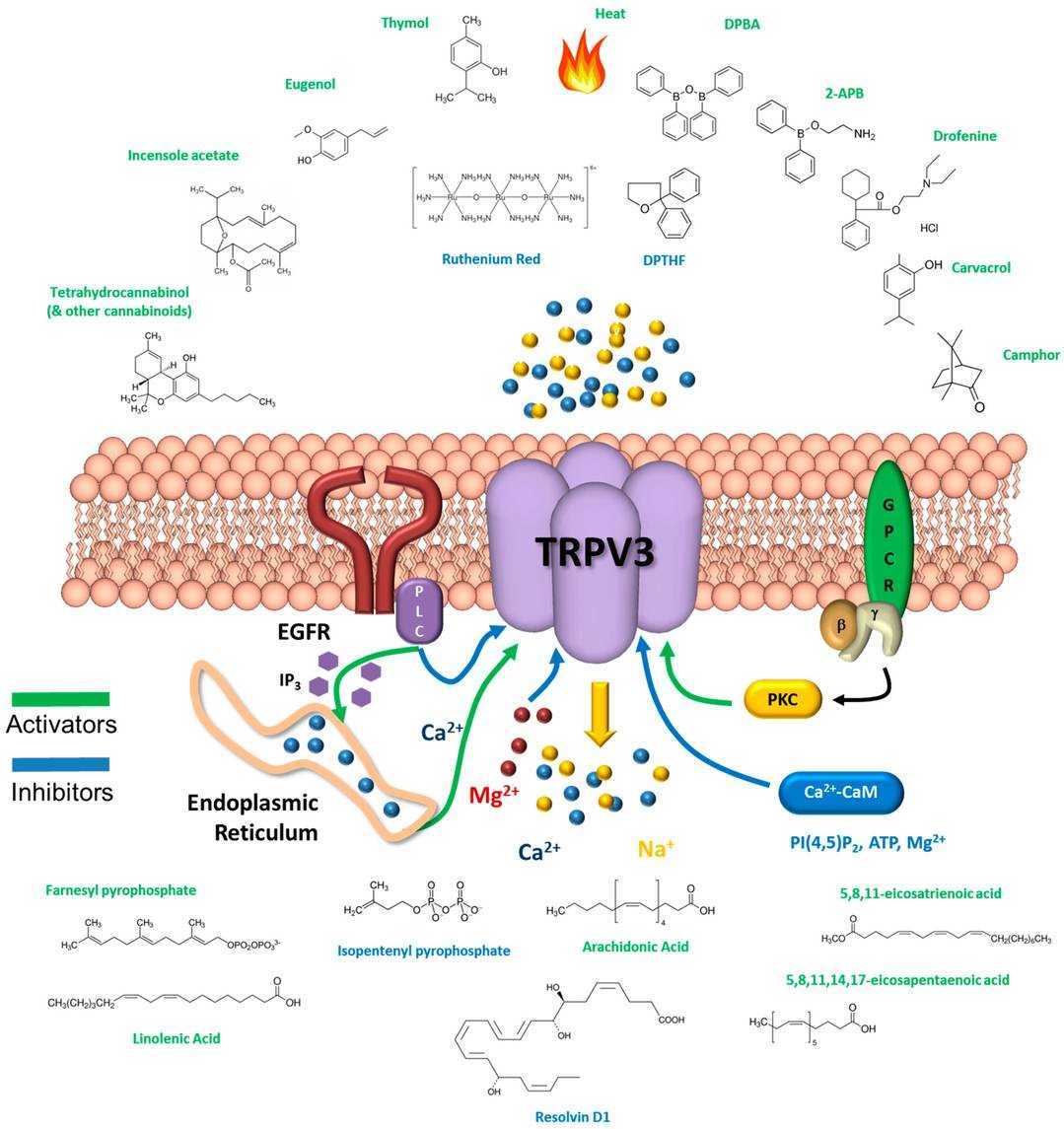 Fig.1 Activators, inhibitors and modulators of TRPV3.1
Several research currents keep converging on this channel:
Producing TRPV3 credibly means being able to verify function as it exists in nature - under temperature control. Any preparation which is able to form, but cannot gate is going to pass all of the quality control tests, however, it is going to fail every single one of the thermo-sensitivity assays that matter. The full-length version of TRPV3 is produced using our optimized eukaryotic expression system and folding supports which match the architectural design of TRPs. Whether you are studying a specific variant background, require a defined thermal protocol, or need a format which matches your electrophysiological setup, we can tailor the format of the preparation to meet your protocols requirements - the preparation follows the experimental design.
Not finding the membrane protein product you need? Contact us to start your one-stop custom service!
The TRPV3 model works through a combination of how many channels are expressed at the cell surface and how well they open (gating). Only when a channel moves to the surface and keeps its heat-sensing part intact does it report that the environment is warm. Overexpression lines of wild-type channels and engineered versions are used to study how these processes interact. All clones are tested prior to being made available to researchers, which means that the characteristics of each clone have been determined before researchers use them in their experiments. If you need a specific variant background, a certain amount of expression that matches the way you record data, or a timing of expression that matches the type of stimuli you apply, the platform can be adjusted to meet those needs; each cell line is created specifically for the experiment that it will be used for.
Not finding the stable cell line product you need? Contact us to start your one-stop custom service!
Antibody development against TRPV3 has been limited by the TRP-family challenge; i.e., all of the thermosensitive channels contain the same six-helix structure and have many amino acids in common in their cytoplasmic domains. Thus, generic clones are susceptible to developing cross-reactivity and therefore compromising quantitative analysis of samples containing more than one thermo-TRP channel. To overcome this limitation, our recombinant panel is evaluated for its ability to discriminate among the various thermo-TRP channels. The use of sequence defined clone production ensures consistent clone behavior from lot-to-lot. Furthermore, if a customer requires a different conjugate, wants to validate a clone for use with a specific sample type, or wishes to alter the clone format to accommodate a specific workflow, we can make those adjustments upon request. In short, our recombinant panel provides flexibility to support the experimental design used in conjunction with it.
Not finding the recombinant antibody product you need? Contact us to start your one-stop custom service!
Extending well beyond our standard catalog, we deliver fully customizable discovery and manufacturing solutions meticulously tailored to the sophisticated demands of TRPV3-targeted research and compound development:
Each clone's validation summary describes which sample types it has been tested against. Matching those descriptions to your sample origin is the fastest way to confirm fit.
Yes. Off-target screening data against related family members are collected during clone selection and can be shared so specificity claims are transparent.
All TRPV3 products and services are provided strictly for preclinical research. They are not designed, validated, or authorized for any use involving human subjects.
In many cases, yes. Format preferences can be discussed when the order is placed, and preparation is adjusted where the protein's stability permits.









