
Creative Biolabs is offering the most comprehensive services for antibody development projects. With strict regulation and effective execution, we are dedicated to providing the most valuable solutions to complete your projects.
HighlightsCreative Biolabs is offering the most comprehensive services for antibody development projects. With strict regulation and effective execution, we are dedicated to providing the most valuable solutions to complete your projects.
HighlightsCreative Biolabs has established a broad range of platforms for developing novel antibodies or equivalents. These cutting-edge technologies enable our scientists to meet your demands from different aspects and tailor the most appropriate solution that contributes to the success of your projects.
HighlightsWith deep understanding in antibody-related realms and extensive project experience, Creative Biolabs offers a variety of references to help you learn more about our capacities and achievements, including infographic, flyer, case study, peer-reviewed publications, and all kinds of knowledge that can assist your projects. You are also welcome to contact us directly for more specific solutions.
HighlightsGet a real taste of Creative Biolabs, one of the most professional custom service providers in the world. We are committed to providing highly customized comprehensive solutions with the best quality to advance your projects.
Highlights Loading...
All listed services and products are For Research Use Only. Do Not use in any diagnostic or therapeutic applications.
WFDC2 (WAP four-disulfide core domain 2), also known as HE4 (Human Epididymis Protein 4), is a relatively small, secreted glycoprotein that belongs to the whey acidic protein (WAP) family. The mature polypeptide contains about 124 amino acid residues and has an estimated molecular mass of approximately 13 kDa, which can increase to 20-25 kDa after being glycosylated at N-linked asparagine residues. From a structural standpoint, WFDC2 contains two WAP/four-disulfide-core domains that contribute to its disulfide-stabilized structure. Although WAP-family proteins can regulate proteases, the precise inhibitory activities and substrate specificity of WFDC2 remain context-dependent and require direct experimental evidence. Physiologically speaking, WFDC2 is produced in the reproductive system, in the respiratory tract epithelium, and in secretory glands. Within these areas, WFDC2 appears to play roles in providing protection against pathogens; in maintaining the structure of extracellular matrices; and in preserving the integrity of epithelial barriers. In cancer biology research, WFDC2 is currently receiving much attention because it is typically found to be upregulated in several types of solid tumors. It is thought that WFDC2 may help to control proteolytic activity within the tumor microenvironment; contribute to stromal remodeling; and be involved in regulating cell adhesion. Additionally, since WFDC2 is expressed in only a limited number of normal tissues and is secreted in large amounts, it is considered a potential therapeutic target for use in cancer biology research, mucosal immunology research, and pre-clinical drug discovery.
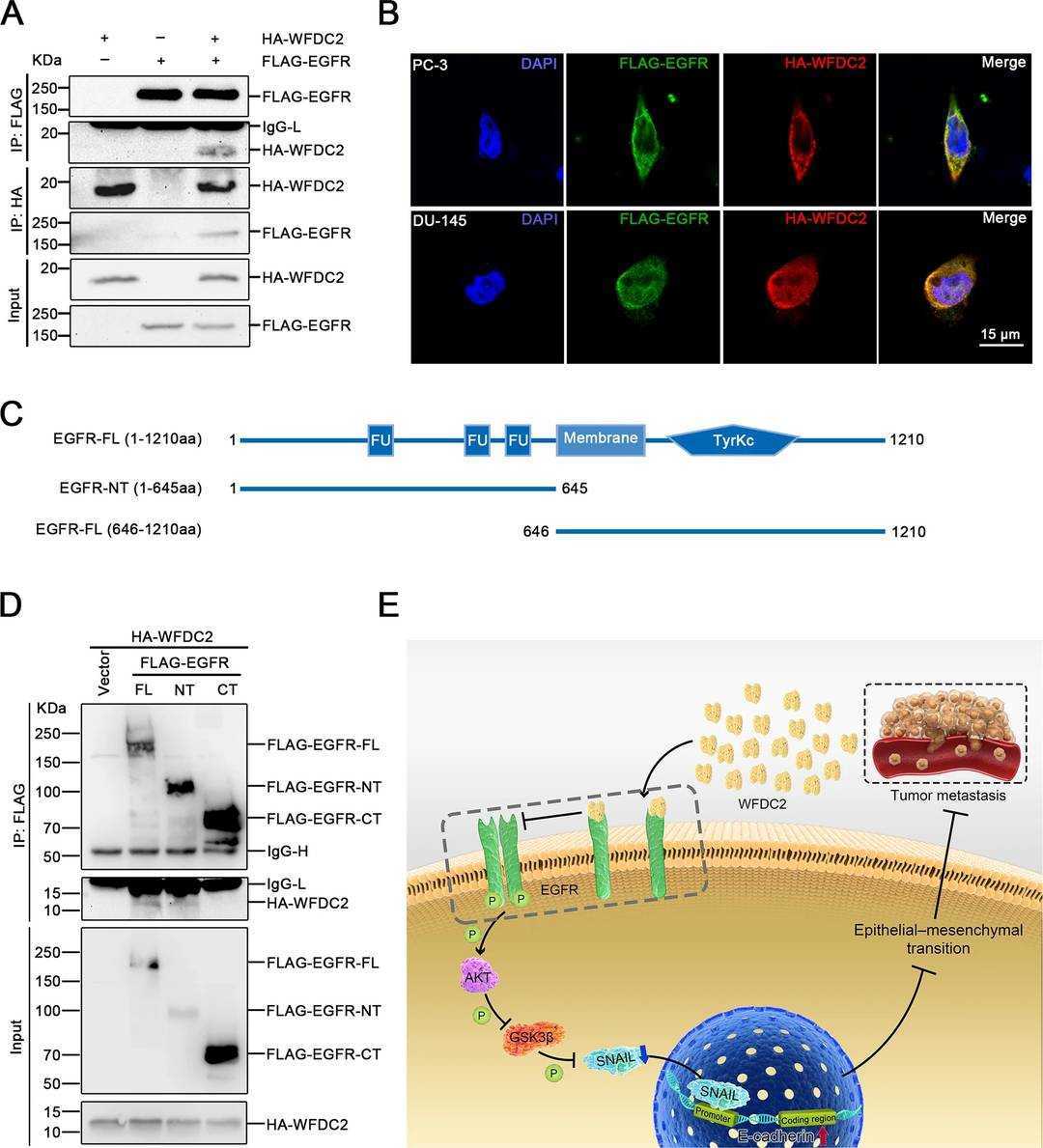 Fig.1 WFDC2 binds to the EGFR extracellular domain.1
WFDC2 coordinates diverse biological programs that extend considerably beyond its nominal designation as a simple protease inhibitor:
The bioactive, structurally accurate WFDC2 proteins offered by us are thoroughly tested and can be produced at levels that satisfy the strict needs of various research studies. In addition, we utilize a highly developed protein expression system that has been designed to operate in various appropriate environments to support the diverse high-level needs of each study. Finally, our product list contains numerous versions of WFDC2 proteins for use in multiple research areas.
Not finding the protein product you need? Contact us to start your one-stop custom service!
The development of cell-based systems which accurately represent the secretion of WFDC2 and the resulting extracellular accumulation is critical to understanding the role WFDC2 plays in protecting mucous membranes and for quickly assessing potential compounds. Using state-of-the-art genomic integration techniques as well as methods to deliver genes stably into cells, we have generated a comprehensive group of WFDC2-expressing stable cell lines. These cell lines exhibit high levels of physiologically relevant expression of WFDC2 and respond functionally to inflammatory and hormonal stimuli. All cell lines undergo rigorous authentication to provide essential tools for studying basic mechanisms, screening compounds, and improving reagents used to study the WFDC2 pathway.
Not finding the stable cell line product you need? Contact us to start your one-stop custom service!
Recombinant antibodies targeting WFDC2 can be developed and characterized for target specificity and compatibility with research applications. Antibody formats, sample requirements, and cross-reactivity considerations can be evaluated according to project needs; application-specific performance should be supported by relevant validation data.
Not finding the recombinant antibody product you need? Contact us to start your one-stop custom service!
Extending well beyond our standard catalog, we deliver fully customizable discovery and manufacturing solutions meticulously tailored to the sophisticated demands of WFDC2-targeted research and compound development:
Yes. Our mammalian expression systems, coupled with proprietary refolding protocols for non-mammalian hosts, ensure proper formation of WFDC2.
Absolutely. Our monoclonal antibodies have been raised against unique epitopes within the WFDC2 mature sequence that exhibit minimal sequence homology with other proteins. Extensive cross-reactivity testing by Western blot, ELISA, and immunohistochemistry confirms exquisite specificity, rendering them suitable for quantification in complex biological matrices.
Our integrated offering spans three principal material classes: recombinant WFDC2 proteins in diverse biochemical presentations, stable expression systems with validated secretory competence, and sequence-defined antibodies targeting distinct structural regions of the polypeptide.
No. All materials directed against WFDC2—spanning recombinant protein lots, stable secretion systems, and epitope-mapped antibodies—are reserved exclusively for preclinical investigation.









