Creative Biolabs is offering the most comprehensive services for antibody development projects. With strict regulation and effective execution, we are dedicated to providing the most valuable solutions to complete your projects.
HighlightsCreative Biolabs is offering the most comprehensive services for antibody development projects. With strict regulation and effective execution, we are dedicated to providing the most valuable solutions to complete your projects.
HighlightsCreative Biolabs has established a broad range of platforms for developing novel antibodies or equivalents. These cutting-edge technologies enable our scientists to meet your demands from different aspects and tailor the most appropriate solution that contributes to the success of your projects.
HighlightsWith deep understanding in antibody-related realms and extensive project experience, Creative Biolabs offers a variety of references to help you learn more about our capacities and achievements, including infographic, flyer, case study, peer-reviewed publications, and all kinds of knowledge that can assist your projects. You are also welcome to contact us directly for more specific solutions.
HighlightsGet a real taste of Creative Biolabs, one of the most professional custom service providers in the world. We are committed to providing highly customized comprehensive solutions with the best quality to advance your projects.
Highlights Loading...
All listed services and products are For Research Use Only. Do Not use in any diagnostic or therapeutic applications.
Zona pellucida glycoprotein 3 (ZP3) contributes to sperm–zona pellucida recognition in a species-dependent manner. This protein is a major constituent of the Zona Pellucida, the thick, clear, outside layer of the egg that is located between the incoming sperm and the oocyte membrane. There are very few glycoproteins—usually three or four—that make up the Zona Pellucida, and of those glycoproteins, ZP3 is an important subject in sperm–zona recognition research, particularly in classical mouse models; however, the relative contributions of ZP2, ZP3, and other zona proteins differ across mammalian species. Experimental work has implicated ZP3 in sperm binding and recognition in certain species, while broader evidence supports a multicomponent and species-dependent recognition process. Structural analysis provided the molecular perspective to supplement the functional evidence. The biology related to the sperm-egg recognition process is highly regulated. Interactions between sperm and zona pellucida components can contribute to acrosomal responses, depending on the species and experimental system- the exocytosis mechanism that releases the enzymes necessary for sperm to penetrate the Zona Pellucida. After a single sperm penetrates and fertilizes the egg, the cortical reaction occurs, changing the Zona Pellucida's chemistry so no other sperm can bind to it and making it harder for sperm to penetrate (polyspermy), which would harm embryonic development. Therefore, ZP3 has two roles in this process; it is both the doorway for a single sperm to enter the Zona Pellucida and, after fertilization, a part of the barrier that keeps out all other sperm. Additionally, because the chemical interactions that cause sperm-ZP3 recognition are known to be species-specific, the Zona Pellucida has been used as a model system to study how reproductive barriers develop at the molecular level.
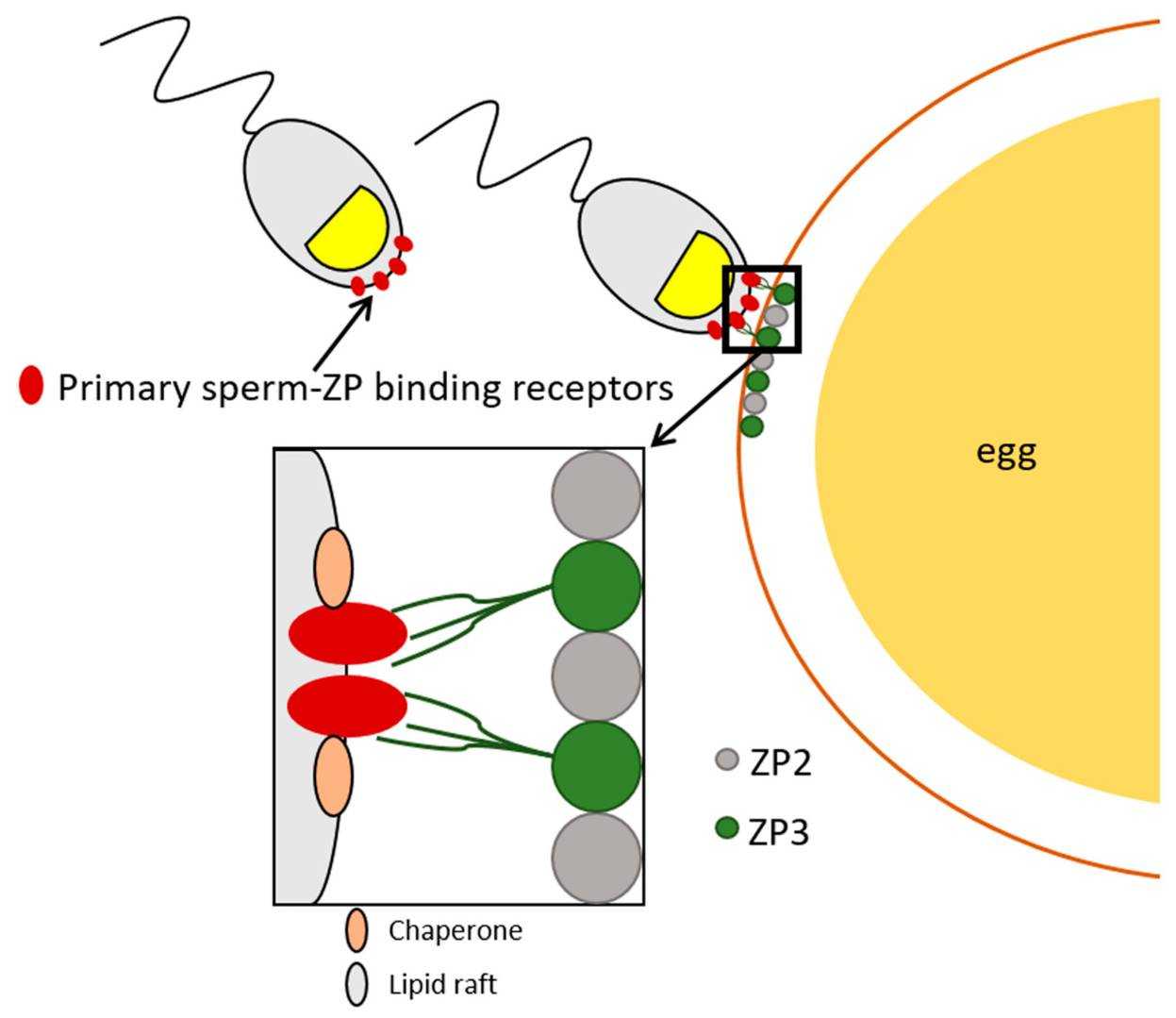 Fig.1 Illustration of primary sperm-ZP interaction.1
Several research currents keep converging on this coat glycoprotein:
Respecting the ZP3 processing state is required to produce a valid ZP3. An improperly folded or processed ZP3 will have misfolded ZP domains, resulting in a representation of ZP3's recognition and assembly behaviors that are inaccurate. To obtain recombinant ZP3 appropriate for zona pellucida research, we use expression and processing formats selected for the mature extracellular glycoprotein or a specifically defined precursor construct. The purity of the ZP3 is assessed via SDS-PAGE. Depending on the needs of your study (i.e., specific variant background, defined partner condition, presentation compatible with a particular binding or assembly assay), the format of the ZP3 may be modified based upon your protocol – i.e., the ZP3 is prepared in accordance with the experimental design.
Not finding the protein product you need? Contact us to start your one-stop custom service!
Cellular models of ZP3 activity contain a germline specificity factor. ZP3 is expressed only in oocytes and early embryos, therefore, all cellular models of ZP3 activity are, by definition, artificial environments. Overexpression of wild-type and/or variant forms of ZP3 allow researchers to determine what portions of the protein provide the sperm-binding specificity. Prior to being released, each clone is characterized. This establishes the characteristics of the line before experimentation begins. If your project requires a specific variant background, a particular output tier, or an expression schedule based upon your assembly timeline, the platform can be customized to meet those needs; each cell line is created to meet the requirements of the experiment it will be used for.
Not finding the stable cell line product you need? Contact us to start your one-stop custom service!
The antibody research of ZP3 presents a "two-front" problem; the coat proteins have the same ZP-domain structure, and the broader ZP-domain family also has the same structure, allowing for generic clones to move toward cross-reactivity in two ways. The recombinant panel presented in this study is evaluated for real discrimination of ZP3 from both coat proteins and family members. Recognition-surface formats are utilized when studies require evaluation of the specific sperm-binding area. Sequence-based production provides consistency among production lots, and if a research project requires a different conjugate, validation of a specific sample type, or alteration of the clone format to accommodate a specific workflow, these changes may be accommodated upon request — the flexibility of the panel allows it to be adapted to the experimental design it supports.
Not finding the recombinant antibody product you need? Contact us to start your one-stop custom service!
In addition to our catalog products, Creative Biolabs specializes in custom services for membrane protein and antibody discovery & development. Using our deep knowledge and sophisticated platforms we can support you with:
The zona pellucida is the extracellular coat surrounding the mammalian egg, built from a small set of glycoproteins. ZP3 is its principal sperm receptor—the first specific binding partner arriving sperm encounter.
The protein's behavior depends on correct processing and ZP-domain folding, which not every expression system supports. Processing-state verification is what separates a useful preparation from a misleading one.
Fertilization biology, coat assembly, reproductive barrier research, ZP-domain structural biology, and contraception-oriented investigation are the standing territories of use.
All ZP3 products and services are provided strictly for preclinical research. They are not designed, validated, or authorized for any use involving human subjects.