Creative Biolabs is offering the most comprehensive services for antibody development projects. With strict regulation and effective execution, we are dedicated to providing the most valuable solutions to complete your projects.
HighlightsCreative Biolabs is offering the most comprehensive services for antibody development projects. With strict regulation and effective execution, we are dedicated to providing the most valuable solutions to complete your projects.
HighlightsCreative Biolabs has established a broad range of platforms for developing novel antibodies or equivalents. These cutting-edge technologies enable our scientists to meet your demands from different aspects and tailor the most appropriate solution that contributes to the success of your projects.
HighlightsWith deep understanding in antibody-related realms and extensive project experience, Creative Biolabs offers a variety of references to help you learn more about our capacities and achievements, including infographic, flyer, case study, peer-reviewed publications, and all kinds of knowledge that can assist your projects. You are also welcome to contact us directly for more specific solutions.
HighlightsGet a real taste of Creative Biolabs, one of the most professional custom service providers in the world. We are committed to providing highly customized comprehensive solutions with the best quality to advance your projects.
HighlightsCannabinoid receptor (CBR) is a subfamily of GPCRs that mediate the cannabinoid signal. The receptor includes two members, the cannabinoid receptor 1 (CBR1) and 2 (CBR2), in which CBR1, in particular, plays a crucial role in neuropathic and other diseases and has received much attention as a potential therapeutic target. As a result, it's crucial to identify the function that cannabinoid receptors play in the body.
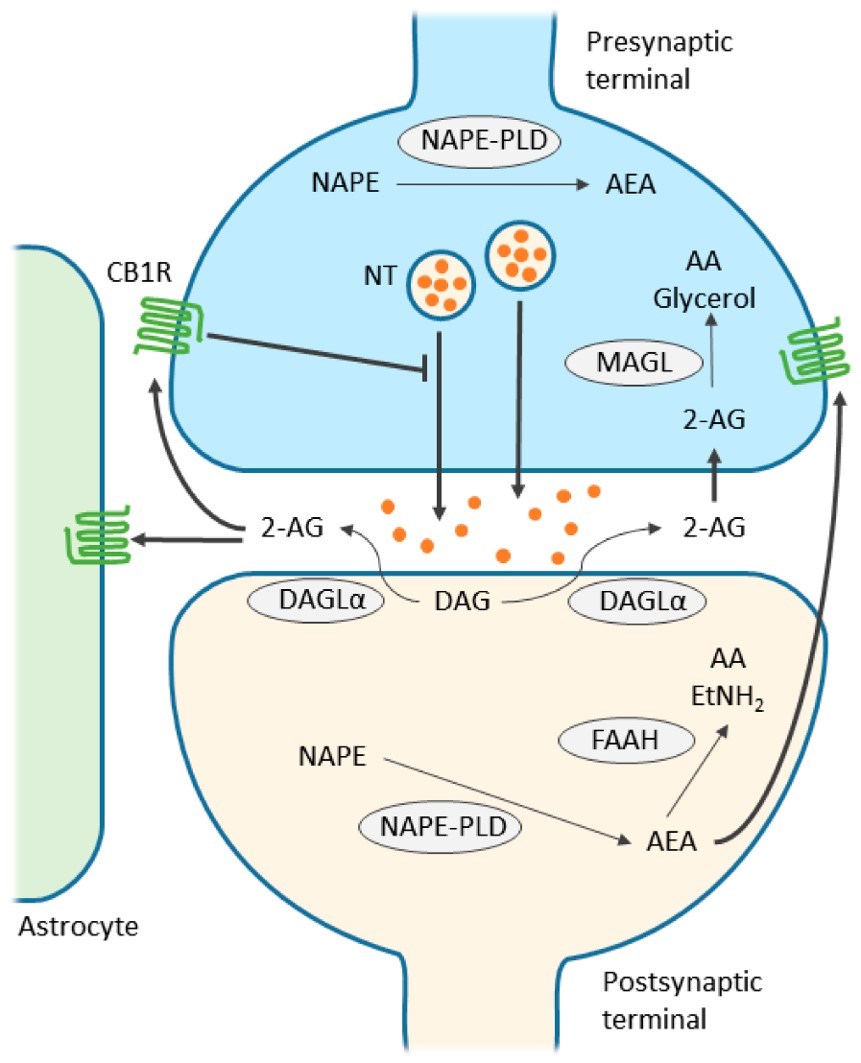 Fig.1 Simplified scheme representing endocannabinoid retrograde signaling mediated synaptic transmission.1
When the cannabinoid receptor reacts with agonists, the G protein-coupled to the cannabinoid receptor is activated, thereby activating downstream signaling. Based on this fact, Creative Biolabs succeeded in developing Hi-Affi™ in vitro cell-based cannabinoid receptor functional assay service and is devoted to offering top-notch services to customers all around the world. We provide the analysis of both signaling pathways and G-protein by measuring the Gi/Go activation, and we are capable of helping global customers to:
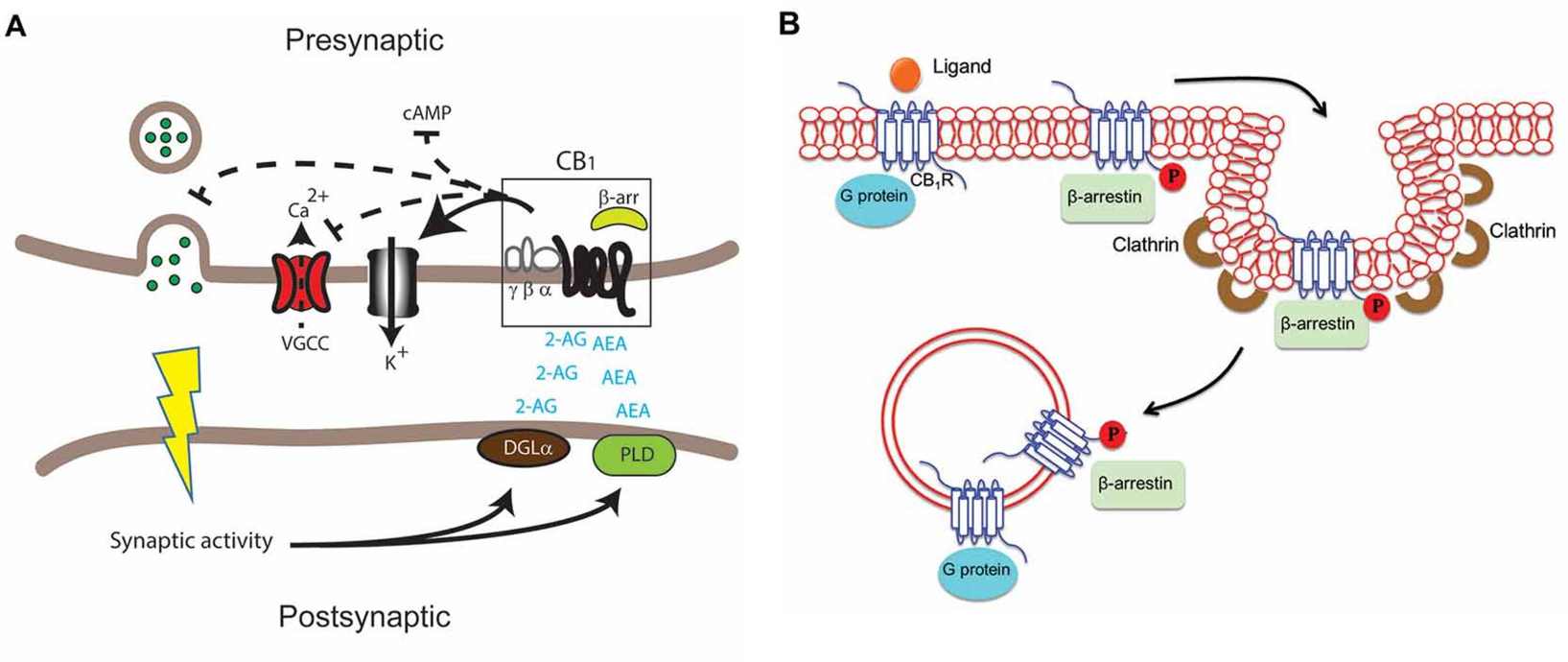 Fig.2 Signaling pathway of cannabinoid receptors.2
Purpose: To identify whether WIN-55's (WIN-55, which is a mixed CB1/CB2 agonist) anti-proliferative activity is mediated by CBR2.
Method: Employing the method of immunocytochemical (ICC) to investigate the CBR expression in the inhibited RCC cells.
Results: The findings suggest that RCC cells produced the CB2 receptor but not the CB1 receptor (data not shown), which revealed low levels of CB1 receptor expression as compared with CB2 receptor expression.
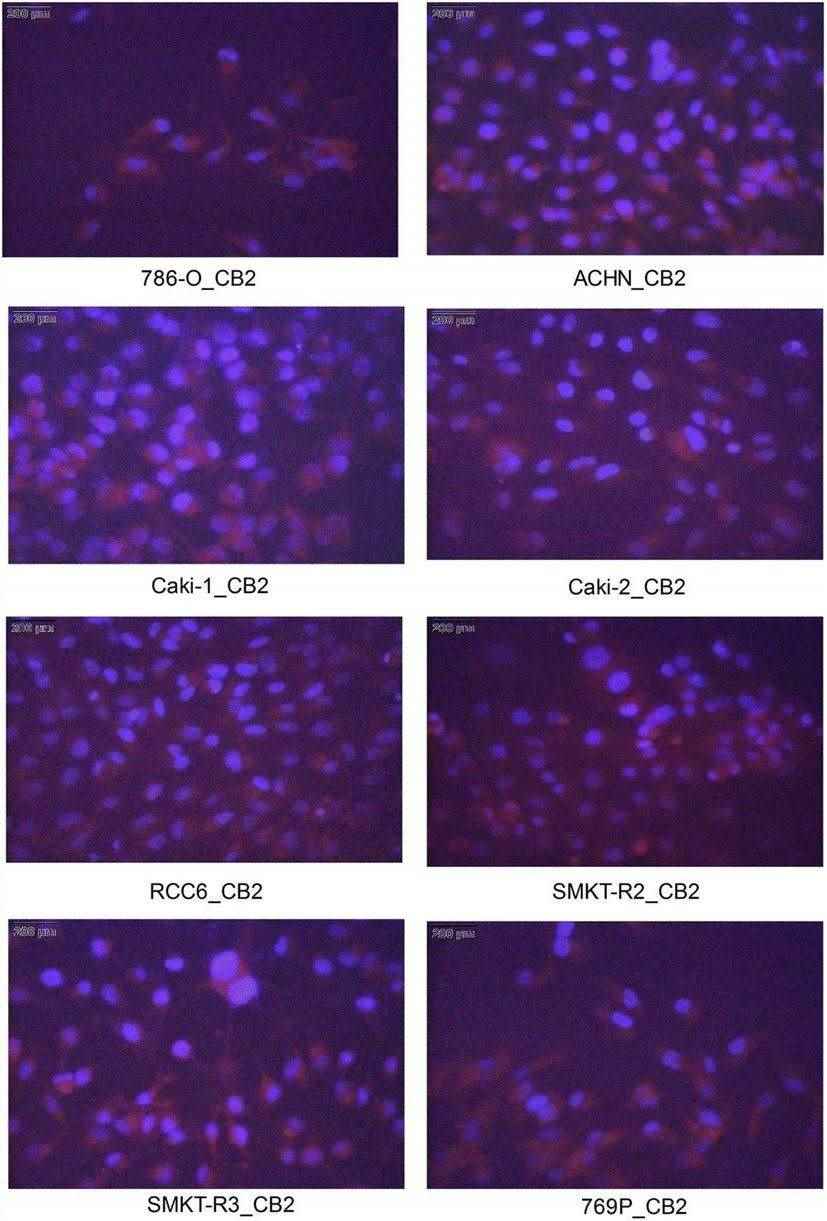 Fig.3 Immunocytochemical (ICC) staining of cannabinoid receptors.3

In the field of GPCR functional identification, Creative Biolabs is constantly optimizing and innovating as well as committed to presenting the most ideal results for each customer. Feel free to contact us whenever you have any questions about our Hi-Affi™ in vitro cell-based cannabinoid receptor functional assay service. We're delighted to get to work with you.
Q1: What distinguishes CB1 receptors from CB2 receptors?
A1: The brain, adipose tissue, liver, and skeletal muscle all have high levels of CB1 expression. CB2 is linked to nonpsychoactive anti-inflammatory and immunomodulatory actions.
Q2: How to identify the function of cannabinoid receptors?
A2: When an agonist binds to CBR1, it activates Gi/Go, triggering a physiological response that includes PKA activation. We evaluate Gi/Go activation.
References
All listed services and products are For Research Use Only. Do Not use in any diagnostic or therapeutic applications.