"Creative Biolabs is committed to providing highly customized comprehensive solutions with the best quality to advance our global clients’ projects."
Ligand-Receptor Interaction Service by Yeast Display
Services Workflow Platform Advantages Related Services FAQ
Advancing Receptor Peptide Discovery with Creative Biolabs
Researchers investigating receptors, unvalidated ligand‑receptor complexes and poorly defined signaling interfaces often encounter technical limitations with conventional peptide screening technologies, particularly regarding maintenance of conformational integrity and preservation of post‑translational modifications (PTMs). Creative Biolabs' proprietary yeast‑display‑enabled peptide discovery service directly overcomes these bottlenecks. Our integrated platform enables comprehensive ligand library screening for target receptors, systematic identification of core signaling interaction sites, and de‑novo discovery of peptide binders for uncharacterized receptors. Clients obtain rigorously validated hit compounds with robust binding profiles, applicable to subsequent functional validation, off‑target risk evaluation and lead candidate optimization.
Explore Related Solutions

Identify immunogenic peptide candidates for vaccine development or TCR‑directed therapeutics.
Improve affinity, stability, or selectivity of existing peptide leads through iterative mutagenesis and selection.
Assess how phosphorylation, glycosylation, or lipidation affects peptide‑receptor binding.

Combine machine‑learning library prediction with empirical yeast display screening for accelerated hit discovery.
For more information, please click Yeast Display Platform - Creative Biolabs
Request a Quote →
From Gene to Hit: Our Proven Workflow
The pathway from target concept to validated peptide hit follows a structured, quality‑controlled sequence designed for reproducibility and transparency.

Material Preparation
Clients provide either the recombinant target protein (purified or membrane‑associated) or the gene sequence encoding the receptor of interest. For orphan receptors, sequence data alone suffices to initiate library design.

Library Preparation
Yeast surface display libraries are constructed with peptide diversity relevant to the target class, incorporating appropriate scaffold architectures.

Selection
Libraries undergo iterative magnetic and fluorescence‑activated cell sorting (FACS) under stringently controlled binding conditions.

Enrichment Monitoring
Binding populations are tracked across selection rounds using flow cytometric analysis.

Hit Recovery
Individual yeast clones from enriched pools are isolated, and peptide‑encoding sequences are retrieved.
Deliverables
Sequence‑identified peptide hits; Relative binding affinity ranking via FACS titration; Specificity assessment against control targets; Raw flow cytometry data and summary reports.
Learn More About Process →
The Engine Behind the Discovery: Our Yeast Display Platform
|
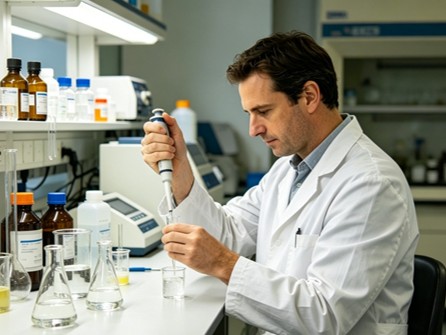
Yeast display offers distinct advantages for peptide discovery that synthetic or bacterial systems cannot replicate. The eukaryotic secretory and folding machinery enables production of peptide libraries with native disulfide bridging, glycosylation patterns where relevant, and conformational integrity that mimics membrane‑associated presentation. Quantitative screening via FACS allows real‑time selection stringency adjustment, researchers can gate for high‑affinity binders, slow off‑rates, or cross‑reactive profiles in a single experiment.
|
|
For detailed specifications on library diversity, vector systems, sorting parameters, and validation protocols, Yeast Display Platform - Creative Biolabs
Get a Tailored Proposal →
Why Smart Labs Choose Creative Biolabs
Researchers investigating deorphanization projects or seeking to map previously unknown interaction interfaces receive not just hit sequences but contextual binding data that informs downstream validation strategy.
Biomimetic environment
Peptides displayed on the yeast cell surface present in a native, unconstrained conformation that closely mimics interactions between membrane‑proximal ligands and their receptors. This design reduces false positives arising from misfolded or artificially immobilized peptides, delivering hit lists that translate more reliably to cellular contexts.
PTM fidelity
Unlike phage display, the yeast system supports proper formation of disulfide bonds, phosphorylation where engineered, and other eukaryotic post‑translational modifications critical for certain peptide‑receptor interactions.
FACS throughput and resolution
High-speed sorting enables processing of libraries exceeding 108 unique clones with resolution down to 2‑fold affinity differences. Selection gates can be tuned incrementally across rounds to progressively tighten binding criteria.
Cross‑species compatibility
Screens designed to assess cross‑reactivity across human, mouse, and non‑human primate orthologs are fully supported. This capability proves particularly valuable for off‑target analysis, species‑specific toxicology assessment, and identification of novel cytokine or growth factor receptor pairs where ligand specificity remains uncharacterized.
Contact Our Experts →
Broader Services for Your Reference
Explore our complete suite of yeast display technology offerings
Custom library design and construction covering diverse peptide scaffolds and diversities.
High‑throughput FACS‑based screening against soluble, membrane‑bound, or complex antigen targets.
Rationally improve antibody lead affinity and biophysical properties.
Enhance TCR specificity, affinity, or stability for cell therapy applications.
Full human antibody discovery from naïve or immune yeast display libraries.
End‑to‑end antibody hit generation against challenging targets.
Improve expression, stability, or activity of protein leads through directed evolution.
→ Get a tailored proposal for your target
You Asked, We Answered
-
What is the minimum peptide library size recommended for receptor screening?
For truly receptors with no known ligand, libraries of 108 unique peptides are recommended to adequately sample sequence space. Creative Biolabs can advise on diversity requirements based on receptor family and desired hit stringency.
-
Who owns the intellectual property for discovered peptide hits?
Creative Biolabs does not claim ownership of client‑directed discoveries. All peptide sequences, binding data, and derived IP belong to the client. Standard material transfer and service agreements are provided for review prior to project initiation.
-
Can the platform accommodate cyclic or stapled peptides?
Yes. Yeast display supports genetically encoded peptide libraries incorporating cysteine‑constrained cyclic designs. Stapled peptide discovery requires specialized library construction (non‑natural amino acid incorporation) and is handled through custom service agreements please inquire directly with project specifications.
All listed services and products are For Research Use Only. Do Not use in any diagnostic or therapeutic applications.