
Creative Biolabs is offering the most comprehensive services for antibody development projects. With strict regulation and effective execution, we are dedicated to providing the most valuable solutions to complete your projects.
HighlightsCreative Biolabs is offering the most comprehensive services for antibody development projects. With strict regulation and effective execution, we are dedicated to providing the most valuable solutions to complete your projects.
HighlightsCreative Biolabs has established a broad range of platforms for developing novel antibodies or equivalents. These cutting-edge technologies enable our scientists to meet your demands from different aspects and tailor the most appropriate solution that contributes to the success of your projects.
HighlightsWith deep understanding in antibody-related realms and extensive project experience, Creative Biolabs offers a variety of references to help you learn more about our capacities and achievements, including infographic, flyer, case study, peer-reviewed publications, and all kinds of knowledge that can assist your projects. You are also welcome to contact us directly for more specific solutions.
HighlightsGet a real taste of Creative Biolabs, one of the most professional custom service providers in the world. We are committed to providing highly customized comprehensive solutions with the best quality to advance your projects.
Highlights Loading...
All listed services and products are For Research Use Only. Do Not use in any diagnostic or therapeutic applications.
CACNG1 (calcium voltage-gated channel auxiliary subunit gamma 1), also known as CACNLG or the γ1 subunit, is encoded by the CACNG1 gene on chromosome 17q24.2. The protein is a 222-amino-acid polypeptide of approximately 25 kDa with four predicted transmembrane helices and cytoplasmic N- and C-termini, placing it in the PMP-22/EMP/MP20/Claudin superfamily of tetraspan membrane proteins. CACNG1 expression is highly enriched in skeletal muscle, with lower levels in heart and brain. In muscle fibers, it is an integral membrane protein of the transverse tubule (T-tubule) system, the sarcolemmal invaginations that carry action potentials into the cell interior.
CACNG1 serves as an auxiliary subunit of the skeletal muscle L-type calcium channel (dihydropyridine receptor), a complex that also includes the pore-forming α1S subunit (CACNA1S), an intracellular β subunit (CACNB1 or CACNB2), and the extracellular α2δ-1 subunit (CACNA2D1). Within this complex, CACNG1 modulates the inactivation kinetics of L-type calcium currents, influencing the duration and amplitude of calcium flux. The L-type channel acts as the voltage sensor for excitation-contraction coupling: depolarization triggers conformational changes in α1S that open the ryanodine receptor (RYR1) and release calcium from the sarcoplasmic reticulum. CACNG1 is an integral part of this machinery, contributing to calcium handling during contraction. Consistent with this role, CACNG1 knockout mice display abnormal muscle electrophysiology. Variants in CACNG1 have been examined in hypokalemic periodic paralysis and malignant hyperthermia susceptibility, although their exact contribution remains under investigation. CACNG1 is thus a useful target for research on calcium channel auxiliary subunits, skeletal muscle excitation-contraction coupling, and calcium channel inactivation.
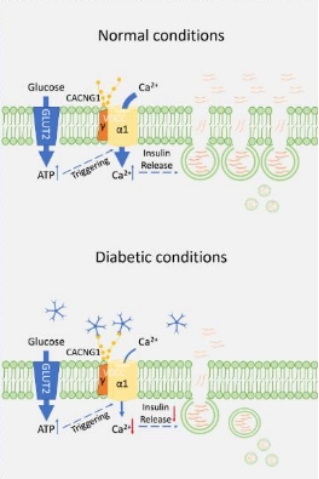 Fig. 1 Graphical summary of beta cell function.1
CACNG1, encoded by the CACNG1 gene, functions as a tetraspan auxiliary subunit of the skeletal muscle L-type calcium channel complex that regulates calcium current inactivation and muscle excitability:
Creative Biolabs offers high-quality CACNG1 membrane protein products produced using optimized expression systems. These include full-length multi-pass transmembrane protein that retains the native four-transmembrane helix topology and cytoplasmic termini, as well as isolated domain variants. The four-transmembrane architecture and PMP-22/EMP/MP20/Claudin family fold mediate membrane integration and assembly within the skeletal muscle calcium channel complex, making these proteins suitable for studies of voltage-gated calcium channel auxiliary subunit function, membrane protein complex assembly, and excitation-contraction coupling characterization. All CACNG1 proteins undergo strict quality control to support consistent performance across applicable research platforms.
Not finding the protein product you need? Contact us to start your one-stop custom service!
Creative Biolabs provides custom-engineered CACNG1 stable cell lines, including overexpression and knockdown models. These cell lines are optimized for studies of L-type calcium channel regulation, calcium current inactivation kinetics, excitation-contraction coupling, and skeletal muscle physiology. Each cell line undergoes stringent validation to ensure stable expression profiles and consistent functional performance in diverse experimental contexts.
Not finding the stable cell line product you need? Contact us to start your one-stop custom service!
High-specificity recombinant antibodies targeting CACNG1 are developed using antibody engineering techniques for research applications involving CACNG1 expression and localization. These antibodies can be used in studies of CACNG1 distribution in skeletal muscle T-tubule fractions and may also support characterization of CACNG1-containing calcium channel complexes in combination with appropriate detection reagents.
Not finding the recombinant antibody product you need? Contact us to start your one-stop custom service!
Beyond catalog products, Creative Biolabs offers specialized custom services for CACNG1 research:
CACNG1 is a tetraspan auxiliary subunit of the skeletal muscle L-type calcium channel complex that regulates the inactivation kinetics of L-type calcium currents and participates in excitation-contraction coupling.
CACNG1 is an integral component of the skeletal muscle calcium channel complex, and its role in regulating calcium current inactivation and muscle excitability makes it important for studies of voltage-gated calcium channel auxiliary subunit biology, muscle physiology, and calcium channel-related disorders.
No, all CACNG1 products and services are strictly for research use only, not intended for clinical diagnosis or treatment.
Offerings include full-length CACNG1 membrane proteins, domain variants, specific detection antibodies, and custom stable cell lines for calcium channel regulation and muscle physiology research.
CACNG1 proteins are validated via protein-protein interaction assays, membrane protein complex assembly assays, and relevant functional characterization in applicable research platforms.









