
Creative Biolabs is offering the most comprehensive services for antibody development projects. With strict regulation and effective execution, we are dedicated to providing the most valuable solutions to complete your projects.
HighlightsCreative Biolabs is offering the most comprehensive services for antibody development projects. With strict regulation and effective execution, we are dedicated to providing the most valuable solutions to complete your projects.
HighlightsCreative Biolabs has established a broad range of platforms for developing novel antibodies or equivalents. These cutting-edge technologies enable our scientists to meet your demands from different aspects and tailor the most appropriate solution that contributes to the success of your projects.
HighlightsWith deep understanding in antibody-related realms and extensive project experience, Creative Biolabs offers a variety of references to help you learn more about our capacities and achievements, including infographic, flyer, case study, peer-reviewed publications, and all kinds of knowledge that can assist your projects. You are also welcome to contact us directly for more specific solutions.
HighlightsGet a real taste of Creative Biolabs, one of the most professional custom service providers in the world. We are committed to providing highly customized comprehensive solutions with the best quality to advance your projects.
Highlights Loading...
All listed services and products are For Research Use Only. Do Not use in any diagnostic or therapeutic applications.
CLCN4 (Cl /H+ antiporter 4, also annotated as ClC 4) encodes a multi pass integral membrane antiporter belonging to the CLC chloride proton exchanger family, predominantly detected within endolysosomal compartments and broadly expressed across multiple vertebrate tissue compartments with prominent abundance in neuronal populations. This vesicular transporter contains multiple transmembrane helical segments and cytosolic CBS regulatory domains, capable of forming homo or heterodimer assemblies to mediate electrogenic 2Cl⁻/H⁺ exchange across intracellular organelle membranes. Following biosynthesis, newly synthesized CLCN4 undergoes folding and endomembrane system quality control processing. Mature transporter molecules embed within endosomal lysosomal membrane surfaces, while partial protein pools remain stored within intracellular vesicular compartments to sustain protein maturation, membrane trafficking and physiological protein turnover. Organelle resident abundance of CLCN4 can be dynamically tuned to satisfy tissue specific vesicular ion homeostasis and endomembrane adaptive demands.
Within endosomal compartments, ClC-4 is best characterized as an electrogenic 2Cl-/H+ exchanger rather than as a general membrane-partner scaffold. Its intracellular localization is closely linked to ClC-3: ClC-4 can heterodimerize with ClC-3, which promotes trafficking from the endoplasmic reticulum to endosomal compartments. These complexes contribute to ionic conditions within the endosomal/lysosomal system and are relevant to intracellular membrane trafficking, although the physiological role of ClC-4 is not fully defined. CLCN4 sequence variants can alter exchanger function, stability, or trafficking, making the protein useful for studying intracellular CLC transporters and vesicular ion homeostasis.
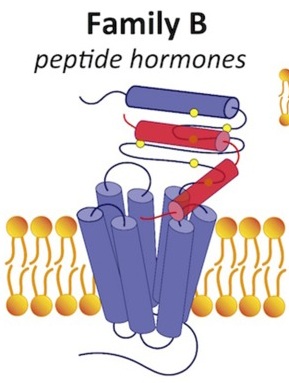 Fig. 1 Comparative schematic of a class B GPCR topolog.1
The best-established features of intracellular ClC-4 biology center on coupled chloride/proton exchange and its localization within the endosomal system:
Creative Biolabs offers CLCN4 membrane protein products and customizable protein formats for research on CLC-family exchanger structure and function. Project design can be matched to the intended biochemical, binding, or comparative analysis workflow, with specifications defined according to research needs. Please contact us to discuss a suitable CLCN4 protein format for your study.
Not finding the membrane potein product you need? Contact us to start your one-stop custom service!
Creative Biolabs provides CLCN4 stable cell line products and customizable cell models for studies of CLCN4 expression, intracellular localization, and exchanger-related cell biology. Model design can be aligned with the intended research readout without prespecifying unsupported expression levels or validation outcomes.
Not finding the stable cell line product you need? Contact us to start your one-stop custom service!
Creative Biolabs provides recombinant antibodies for CLCN4 research, including applications such as target detection and intracellular localization studies. Antibody format and project requirements can be selected according to the intended research workflow, and application suitability should be confirmed for the selected reagent.
Not finding the recombinant antibody product you need? Contact us to start your one-stop custom service!
Beyond catalog products, Creative Biolabs offers specialized custom services for CLCN4 research:
CLCN4 encodes ClC-4, an intracellular electrogenic 2Cl-/H+ exchanger. It is associated mainly with endosomal compartments and contributes to vesicular ion homeostasis; its physiological role is still being clarified.
ClC-4 is useful for investigating intracellular CLC transporters, endosomal ion homeostasis, and trafficking. Its association with ClC-3 and sensitivity to sequence variation also support structure-function studies.
No, CLCN4 associated research reagents from Creative Biolabs are exclusively built for exploring CLC antiporter dependent membrane regulatory mechanisms, and shall not be deployed for any clinical oriented workflows. These preparations are optimized for basic laboratory investigation and do not satisfy performance benchmarks required for clinical implementation.
Offerings include CLCN4 membrane protein, recombinant antibodies, and stable cell research models, with custom formats available according to project requirements.
Research approaches can combine CLCN4 protein or cell models with localization, expression, or ion-transport readouts selected for the study design.









