Creative Biolabs is offering the most comprehensive services for antibody development projects. With strict regulation and effective execution, we are dedicated to providing the most valuable solutions to complete your projects.
HighlightsCreative Biolabs is offering the most comprehensive services for antibody development projects. With strict regulation and effective execution, we are dedicated to providing the most valuable solutions to complete your projects.
HighlightsCreative Biolabs has established a broad range of platforms for developing novel antibodies or equivalents. These cutting-edge technologies enable our scientists to meet your demands from different aspects and tailor the most appropriate solution that contributes to the success of your projects.
HighlightsWith deep understanding in antibody-related realms and extensive project experience, Creative Biolabs offers a variety of references to help you learn more about our capacities and achievements, including infographic, flyer, case study, peer-reviewed publications, and all kinds of knowledge that can assist your projects. You are also welcome to contact us directly for more specific solutions.
HighlightsGet a real taste of Creative Biolabs, one of the most professional custom service providers in the world. We are committed to providing highly customized comprehensive solutions with the best quality to advance your projects.
Highlights Loading...
All listed services and products are For Research Use Only. Do Not use in any diagnostic or therapeutic applications.
Ectodysplasin A2 receptor (EDA2R), also known as XEDAR, TNFRSF27, or EDA-A2R, is encoded by the EDA2R gene on chromosome Xq12. The gene spans approximately 43 kb and contains 10 exons, producing multiple alternatively spliced transcript variants. EDA2R is a type III transmembrane protein of the tumor necrosis factor receptor (TNFR) superfamily, characterized by an extracellular N-terminus, a single transmembrane domain, and a cytoplasmic C-terminus. Its extracellular region contains three cysteine-rich repeats that mediate ligand recognition. The cytoplasmic domain harbors a TRAF6-binding site encoded by amino acids 252–260, which is essential for signal transduction. EDA2R is widely expressed across tissues, with notable expression in thyroid, ovary, and stromal cells of the endometrium. During embryonic development, EDA2R expression becomes prominent in maturing hair follicles.
EDA2R functions as the specific receptor for ectodysplasin-A2 (EDA-A2), an isoform of EDA that lacks Glu308 and Val309 and is unable to bind the related receptor EDAR. Binding of EDA-A2 to EDA2R triggers receptor aggregation and recruitment of TNF receptor-associated factors, particularly TRAF3 and TRAF6. This leads to activation of the canonical and non-canonical NF-κB pathways as well as the JNK pathway. The EDA2R–NF-κB signaling axis has been implicated in a wide range of biological processes. In skeletal muscle, EDA2R signaling through the non-canonical NF-κB pathway and NF-κB-inducing kinase (NIK) promotes muscle atrophy and insulin resistance, and EDA2R upregulation is associated with aging, denervation, cancer cachexia, and muscular dystrophies. More recently, increased EDA2R expression has been identified as a ubiquitous hallmark of aging across species, mediating parainflammatory responses that mirror aspects of aging-driven sarcopenia. In hair and tooth development, EDA2R-mediated signaling contributes to ectodermal appendage formation, and EDA2R mutations have been linked to hypohidrotic ectodermal dysplasia. EDA2R is also a direct p53 target gene, connecting it to p53-dependent signaling pathways. These features make EDA2R an important research target for studies of TNFR superfamily signaling, NF-κB pathway regulation, aging biology, and skeletal muscle pathophysiology.
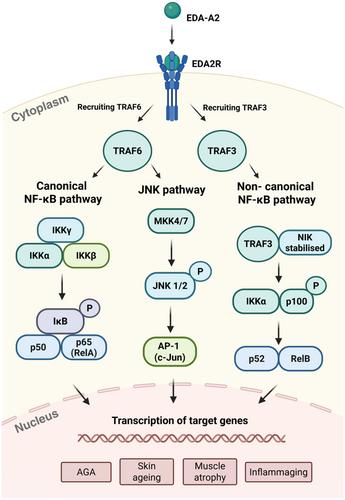 Fig. 1 EDA2R-mediated signalling pathways.1
EDA2R, encoded by the EDA2R gene, functions as a type III transmembrane receptor of the TNFR superfamily that mediates EDA-A2-induced signaling:
Creative Biolabs offers high-quality EDA2R membrane protein products produced using optimized expression systems. These include full-length type III transmembrane protein that retains the native extracellular cysteine-rich repeats, transmembrane domain, and cytoplasmic TRAF6-binding region, as well as isolated extracellular domain variants. The extracellular cysteine-rich repeats mediate EDA-A2 binding, and the cytoplasmic domain recruits TRAF3 and TRAF6 for downstream signaling, making these proteins suitable for studies of TNFR superfamily signaling, EDA-A2-receptor interactions, and NF-κB pathway characterization. All EDA2R proteins undergo strict quality control to support consistent performance across applicable research platforms.
Not finding the protein product you need? Contact us to start your one-stop custom service!
Creative Biolabs provides custom-engineered EDA2R stable cell lines, including overexpression and knockdown models. These cell lines are optimized for studies of EDA-A2-induced NF-κB activation, TRAF6 recruitment, inflammaging, and skeletal muscle atrophy signaling. Each cell line undergoes stringent validation to ensure stable expression profiles and consistent functional performance in diverse experimental contexts.
Not finding the stable cell line product you need? Contact us to start your one-stop custom service!
High-specificity recombinant antibodies targeting EDA2R are developed using antibody engineering technologies for research applications involving EDA2R expression and localization. These antibodies can be used in studies of EDA2R distribution in skeletal muscle and other tissues and may also support characterization of EDA2R-containing signaling complexes in combination with appropriate detection reagents.
Not finding the recombinant antibody product you need? Contact us to start your one-stop custom service!
Beyond catalog products, Creative Biolabs offers specialized custom services for EDA2R research:
EDA2R is the specific receptor for EDA-A2 that activates NF-κB and JNK signaling through TRAF6, regulating aging-related inflammatory responses and skeletal muscle homeostasis.
EDA2R is a ubiquitous hallmark of aging and mediates parainflammatory responses linked to muscle atrophy and insulin resistance, making it important for studies of inflammaging and skeletal muscle pathophysiology.
No, all EDA2R products and services are strictly for research use only, not intended for clinical diagnosis or treatment.
Offerings include full-length EDA2R membrane proteins, extracellular domain variants, specific detection antibodies, and custom stable cell lines for NF-κB signaling and aging research.
EDA2R proteins may support studies of EDA-A2 binding and TRAF6 interaction, depending on protein format and experimental context.