
Creative Biolabs is offering the most comprehensive services for antibody development projects. With strict regulation and effective execution, we are dedicated to providing the most valuable solutions to complete your projects.
HighlightsCreative Biolabs is offering the most comprehensive services for antibody development projects. With strict regulation and effective execution, we are dedicated to providing the most valuable solutions to complete your projects.
HighlightsCreative Biolabs has established a broad range of platforms for developing novel antibodies or equivalents. These cutting-edge technologies enable our scientists to meet your demands from different aspects and tailor the most appropriate solution that contributes to the success of your projects.
HighlightsWith deep understanding in antibody-related realms and extensive project experience, Creative Biolabs offers a variety of references to help you learn more about our capacities and achievements, including infographic, flyer, case study, peer-reviewed publications, and all kinds of knowledge that can assist your projects. You are also welcome to contact us directly for more specific solutions.
HighlightsGet a real taste of Creative Biolabs, one of the most professional custom service providers in the world. We are committed to providing highly customized comprehensive solutions with the best quality to advance your projects.
Highlights Loading...
All listed services and products are For Research Use Only. Do Not use in any diagnostic or therapeutic applications.
The FCAR gene is located in the 19q13.4 region of the human chromosome and encodes the Fcα receptor (FcαRI), which is the specific receptor for the Fc segment of immunoglobulin A (IgA), belonging to the immunoglobulin superfamily. The FCAR protein is a transmembrane glycoprotein consisting of an extracellular region, a transmembrane region, and a cytoplasmic tail. It is mainly expressed on the surface of myeloid immune cells such as neutrophils, macrophages, and eosinophils, playing a crucial role in mucosal immune defense. As an important regulatory molecule for IgA-mediated immune responses, FCAR triggers intracellular signal cascades by recognizing and binding to IgA immune complexes, participating in inflammation regulation, pathogen clearance, and immune homeostasis maintenance. This gene has significant single nucleotide polymorphisms, and certain functional variations can affect the receptor expression level or ligand binding affinity, thereby altering the intensity of the immune response and the susceptibility to inflammation in the body. Moreover, the expression and dysfunction of FCAR have been found to be related to the occurrence and development of various immune-related diseases. Therefore, FCAR is regarded as an important target in immune regulation and translational medical research, and its variant analysis provides a powerful tool for understanding the mechanism of receptor-ligand interaction and the molecular basis of individual immune response differences.
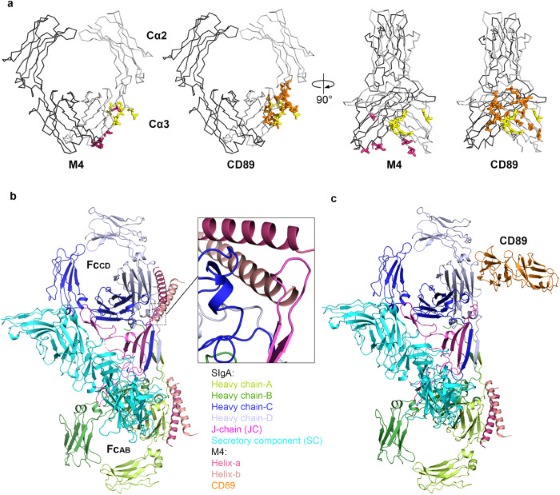 Fig. 1 M4 and CD89(FCAR)-binding site comparison and modeling.1
The functional spectrum of FCAR is quite extensive, and its regulatory network is still being further analyzed in depth:
Creative Biolabs offers a series of high-quality FCAR membrane protein products, suitable for structural and functional research. Leveraging our proprietary MemDX™ recombinant membrane protein technology platform, FCAR proteins can be produced in various expression systems, including virus-like particles (VLP) and in vitro prokaryotic expression systems. These rigorously validated protein products, such as MemDX™ recombinant human FCAR membrane protein (in virus-like particle form) and human FCAR protein expressed in mammalian or insect cell-derived expression systems, are applicable for ELISA, antibody production and screening, binding assays, and functional studies, etc. They provide reliable tools for researchers to analyze the molecular recognition properties and signaling mechanisms of FCAR.
Not finding the membrane protein product you need? Contact us to start your one-stop custom service!
Constructing stable and reliable cell models is of vital importance for the study of immune recognition and signal transduction mediated by FCAR. As an IgA Fc segment-specific receptor, the function of FCAR not only depends on its ligand binding ability, but is also closely related to its expression density on the cell membrane, its aggregation state, and the recruitment efficiency of downstream signaling molecules. Different genetic variants show significant differences in the intensity of the immune complex-triggered response. Creative Biolabs offers customized stable cell lines of FCAR membrane proteins, covering wild-type and various natural variants. These cell lines can stably express the target protein on the membrane structure and are suitable for studies such as ligand binding affinity determination, receptor aggregation and internalization kinetics analysis, assessment of signal pathway activation, and comparison of immune response intensity. Our technology ensures the integrity of the cell membrane and the correct localization of the protein, thus more realistically reflecting the behavioral characteristics of the receptor in its natural state, and facilitating your research work.
Not finding the stable cell line product you need? Contact us to start your one-stop custom service!
Creative Biolabs offers highly specific recombinant antibodies targeting FCAR, produced using advanced recombinant antibody technology. Compared to traditional polyclonal antibodies, these recombinant antibodies demonstrate superior performance in terms of specificity, sensitivity, and batch-to-batch consistency. They can effectively identify different domains and natural variants of FCAR. Our FCAR recombinant antibodies support various application scenarios, including Western Blot (WB), Enzyme-Linked Immunosorbent Assay (ELISA), Flow Cytometry (FCM), Immunofluorescence (IF), Immunocytochemistry (ICC), Immunohistochemistry (IHC), and Immunoprecipitation (IP), and can be used for detecting the expression distribution of FCAR in various cells, analyzing the membrane localization status of the receptor, evaluating the expression level differences of different variants, and conducting protein-interaction studies. These antibodies provide reliable detection tools for the structural analysis of FCAR, the exploration of its functional mechanism, and the analysis of functional differences in polymorphisms.
Not finding the recombinant antibody product you need? Contact us to start your one-stop custom service!
In addition to the listed products, Creative Biolabs also offers customized professional services specifically for FCAR. FCAR has multiple naturally occurring variants with significant functional differences. These variants have specific requirements for protein expression systems, antigen design strategies, and functional validation protocols. Leveraging our technology platform, we can assist you in completing the following customized content:
FCAR mainly mediates the recognition and binding of IgA immune complexes, and participates in the initiation of immune cell activation signals and the regulation of inflammatory responses. The function of this receptor is significantly influenced by genetic polymorphisms. Different variants have differences in ligand affinity and signal transduction efficiency, making it an important model for studying membrane protein recognition mechanisms and immune regulation.
FCAR has multiple natural genetic variations that can lead to changes in receptor expression levels, ligand binding capabilities, or the intensity of downstream signal activation. Studying the polymorphisms of FCAR helps to deeply understand the relationship between membrane protein structure and function, the molecular basis of individual differences in immune responses, and the receptor-mediated immune regulatory mechanisms.
No. All FCAR products and services of Creative Biolabs are intended solely for scientific research purposes and cannot be used for any clinical diagnosis, prevention, treatment or cure of any disease.
We provide a variety of products, including recombinant FCAR membrane proteins, stable cell lines expressing FCAR, high-quality recombinant FCAR antibodies, and comprehensive customized services.








