
Creative Biolabs is offering the most comprehensive services for antibody development projects. With strict regulation and effective execution, we are dedicated to providing the most valuable solutions to complete your projects.
HighlightsCreative Biolabs is offering the most comprehensive services for antibody development projects. With strict regulation and effective execution, we are dedicated to providing the most valuable solutions to complete your projects.
HighlightsCreative Biolabs has established a broad range of platforms for developing novel antibodies or equivalents. These cutting-edge technologies enable our scientists to meet your demands from different aspects and tailor the most appropriate solution that contributes to the success of your projects.
HighlightsWith deep understanding in antibody-related realms and extensive project experience, Creative Biolabs offers a variety of references to help you learn more about our capacities and achievements, including infographic, flyer, case study, peer-reviewed publications, and all kinds of knowledge that can assist your projects. You are also welcome to contact us directly for more specific solutions.
HighlightsGet a real taste of Creative Biolabs, one of the most professional custom service providers in the world. We are committed to providing highly customized comprehensive solutions with the best quality to advance your projects.
Highlights Loading...
All listed services and products are For Research Use Only. Do Not use in any diagnostic or therapeutic applications.
Fc fragment of IgE receptor Ia (FCER1A), this gene is responsible for encoding the α subunit of the High-affinity IgE receptor — that is, the core protein that grows on the membrane of immune cells. With this subunit, immune cells can accurately detect IgE antibodies in the body, and its sensitivity far exceeds that of ordinary receptors. This α subunit itself belongs to the type I membrane protein with single-pass transmembrane property. After it is synthesized inside the cell, it will fold into a specific shape. The part that extends outside the cell has two small regions with structures similar to immunoglobulins. When combined, these two regions just form a pair of binding sites that can capture IgE, firmly anchoring IgE antibodies to the cell surface. The dissociation constant after the two bind is below the nanomolar level, and they almost never separate easily. The biological role of FCER1A goes far beyond the classic allergic reaction. In addition to the effector cells mentioned earlier, immune cells such as antigen-presenting cells also express the α subunit encoded by this gene. It is this expression that allows the receptor to not only trigger allergies, but also participate in the monitoring and regulation of immune responses in the body; and the receptor density on the surface of effector cells — that is, how many of these receptors are present on the cell surface — directly determines how intense the subsequent immune response triggered by IgE will be: the more receptors there are, the stronger the reaction usually is. In preclinical studies before entering human trials, FCER1A is the core for analyzing the immune regulation mechanism mediated by IgE. When and how much its gene is expressed, that is, expression regulation; whether the entire receptor can assemble correctly; whether IgE can stabilize all receptors on the cell surface to prevent them from being lost arbitrarily; and whether the receptor will shed from the cell surface — all these processes combined together determine the threshold for the initiation of the inflammatory cascade, that is, under what conditions inflammation will break out.
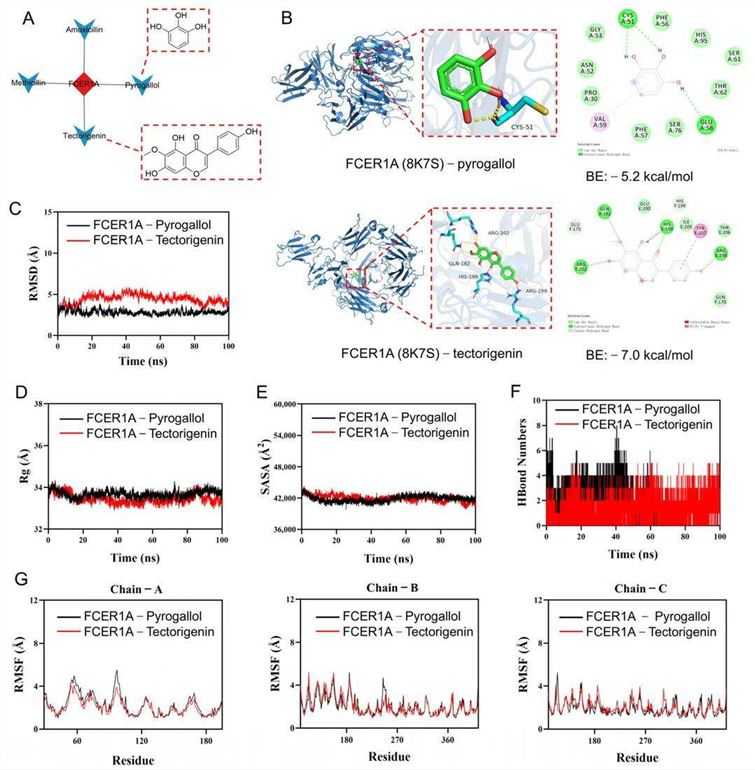 Fig.1 Screening of active compounds via reverse network pharmacology, coupled with molecular docking and molecular dynamics simulation.1
Research targeting FCER1A continues to advance along several interconnected directions:
Our FCER1A membrane protein product line has anchored itself to one core fact from the very start: to create an anchoring structure capable of binding IgE, its binding space conformation must be precise, otherwise it will be entirely unreliable. FCER1A is a protein expressed on the cell membrane, which inherently carries two immunoglobulin-like domains, that is, two structural blocks with a morphology similar to that of immunoglobulins. These two structural blocks must fold into a state completely consistent with the naturally occurring native protein, and the contact surface between the two domains must be fully exposed in its native physiological conformation, to firmly bind IgE; meanwhile, the part responsible for anchoring the entire protein to the cell membrane must prop up the whole protein to maintain the correct orientation, and finally assemble with other components to form a fully functional receptor complex. It cannot work properly if any of these conditions are missing.To meet these stringent requirements, all the products we provide are full-length FCER1A preparations, that is, finished protein products with no truncated segments and all functional structures fully retained, all produced in an optimized eukaryotic expression system. This production system has been specifically calibrated to fully preserve all the aforementioned key requirements for conformation and function, without damaging these delicate structural characteristics during the manufacturing process. Every batch of manufactured products undergoes full testing of a set of quality indicators, and is only released after all indicators are confirmed to be qualified.
Not finding the membrane protein product you need? Contact us to start your one-stop custom service!
Cell platforms conducting FCER1A-related research must be able to precisely control the expression level of the receptor, ensure the receptor correctly appears on the cell surface, and possess normal assembly capabilities—for an IgE receptor to function, the core requirement is that it can endow cells with the corresponding functions. Higher expression levels are by no means better; simply piling up quantity while ignoring conformation cannot support research to produce reliable results. We can provide customized stable cell lines that can stably and highly express FCER1A. These cell lines are constructed using gene stable integration technology with sequence optimization, that is, the optimized FCER1A gene is stably integrated into the cell's genome, eliminating the problem of gene loss or decreased expression after several passages. They can ensure that standardized receptors are continuously and consistently presented on the cell surface in a reproducible cellular background. Our cell line bank includes multiple types: there are strains that can stably overexpress wild-type FCER1A, that is, strains that enable cells to express the native, unmodified natural FCER1A, with a higher expression level than ordinary cells; there are also variant strains with artificially engineered mutations, which can adapt to research needs in different directions and meet the design requirements of various experiments. Every single cell clone undergoes comprehensive phenotypic verification, with all its growth and expression characteristics thoroughly inspected, and is only delivered for use after confirmation of eligibility.
Not finding the stable cell line product you need? Contact us to start your one-stop custom service!
If you are advancing an FCER1A-related research project, you can pair our products with our complete set of verified recombinant antibodies. These antibodies are specially designed to guarantee binding specificity and quantitative accuracy in all analytical and functional experimental workflows required for Fc receptor research, so that research progress will not be delayed due to antibody-related issues. These high-affinity monoclonal and recombinant antibody clones are all prepared specifically against the epitopes of FCER1A, only binding to specific sites on FCER1A, and only specifically binding to the FCER1A subunit, with no off-target non-specific binding to other proteins. Every antibody clone has undergone gene sequence verification and is produced as a defined recombinant construct, that is, every batch of antibodies is prepared with an identical recombinant gene structure, completely eliminating batch-to-batch variation. Even for long-term research spanning several years, you can ensure that antibodies used in all stages are of the same quality, and the consistency of all experimental results will not be affected by reagent fluctuations. Our antibody verification covers all the most commonly used application scenarios for FCER1A researchers, and reliability across all experimental scenarios has been tested, so they can be used with confidence.
Not finding the recombinant antibody product you need? Contact us to start your one-stop custom service!
Extending well beyond our standard catalog, we deliver fully customizable discovery and manufacturing solutions meticulously tailored to the sophisticated demands of FCER1A-targeted research and precompound development:
Yes. Membrane-mimetic preparations preserve the two-domain binding geometry, and each lot is characterized for IgE engagement prior to release so binding work can begin immediately upon arrival.
We do. Custom constructs carrying substitutions in the IgE-binding domains, membrane anchor, or adjacent regions can be produced and purified under the same quality framework as wild-type material.
Both constitutive and inducible formats are available. Each clone ships with measured surface-density data, so receptor expression tier can be matched precisely to your experimental design.
All FCER1A products and services are provided strictly for preclinical research. They are not designed, validated, or authorized for any use involving human subjects.









