
Creative Biolabs is offering the most comprehensive services for antibody development projects. With strict regulation and effective execution, we are dedicated to providing the most valuable solutions to complete your projects.
HighlightsCreative Biolabs is offering the most comprehensive services for antibody development projects. With strict regulation and effective execution, we are dedicated to providing the most valuable solutions to complete your projects.
HighlightsCreative Biolabs has established a broad range of platforms for developing novel antibodies or equivalents. These cutting-edge technologies enable our scientists to meet your demands from different aspects and tailor the most appropriate solution that contributes to the success of your projects.
HighlightsWith deep understanding in antibody-related realms and extensive project experience, Creative Biolabs offers a variety of references to help you learn more about our capacities and achievements, including infographic, flyer, case study, peer-reviewed publications, and all kinds of knowledge that can assist your projects. You are also welcome to contact us directly for more specific solutions.
HighlightsGet a real taste of Creative Biolabs, one of the most professional custom service providers in the world. We are committed to providing highly customized comprehensive solutions with the best quality to advance your projects.
Highlights Loading...
All listed services and products are For Research Use Only. Do Not use in any diagnostic or therapeutic applications.
The γ-aminobutyric acid type B receptor subunit 1 (GABABR1)—also known as GB1, GABABR1, or GPRC3A—is encoded by the GABABR1 gene located on chromosome 6p22.1. This gene comprises 24 exons and generates multiple alternatively spliced transcripts, including the GABABR1a and GABABR1b variants, which differ in their N-terminal sequences. The GABABR1 protein is a 961-amino acid polypeptide featuring an N-terminal signal peptide, a large extracellular domain structurally similar to bacterial amino acid-binding proteins, and seven closely spaced putative transmembrane domains characteristic of G protein-coupled receptors (GPCRs). The extracellular region adopts a bilobed "Venus flytrap" domain (VFTD) structure that contains the orthosteric ligand-binding pocket. GABABR1 is widely expressed in the central nervous system—with particularly high levels in the brain—and is present at lower levels in peripheral tissues, including the small intestine and uterus.
GABBR1 is the ligand-binding subunit of the metabotropic GABA-B receptor, a heterodimeric GPCR complex formed by GABBR1 and GABBR2. Within this heterodimer, only GABBR1 binds agonists such as GABA and baclofen, while GABBR2 mediates coupling to G proteins. The receptor is retained in the endoplasmic reticulum until GABBR1 heterodimerizes with GABBR2, after which the complex traffics to the cell surface. GABA-B receptors regulate neuronal excitability and synaptic transmission by decreasing cAMP levels and modulating Ca²⁺ and K⁺ channels. At presynaptic sites, receptor activation inhibits neurotransmitter release; at postsynaptic sites, it contributes to the late phase of inhibitory postsynaptic potentials. Pathogenic de novo variants in GABBR1 cause a rare autosomal dominant neurodevelopmental disorder with language delay and variable cognitive abnormalities, and have also been linked to epilepsy, autism spectrum disorder, and intellectual disability.
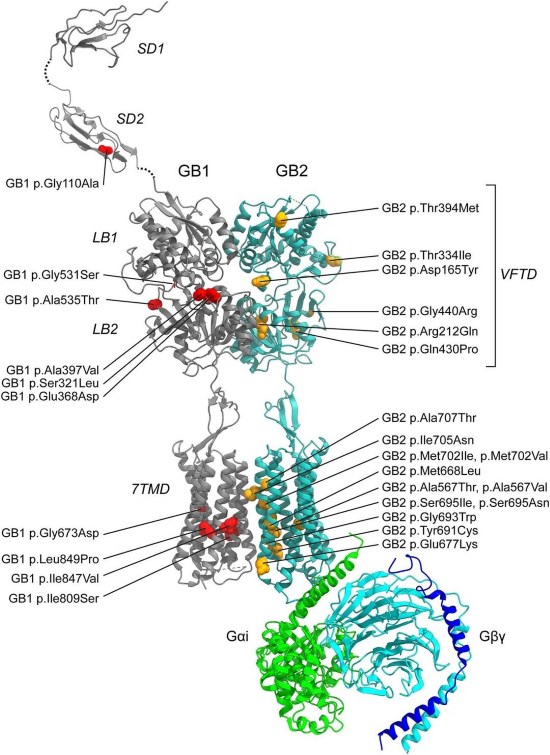 Fig. 1 Pathogenic GBR missense variants.1
GABBR1, encoded by the GABBR1 gene, functions as the ligand-binding subunit of the heterodimeric GABA-B receptor that mediates inhibitory neurotransmission:
Creative Biolabs offers high-quality GABBR1 membrane protein products produced using optimized expression systems. These include full-length multi-pass transmembrane protein that retains the native extracellular Venus flytrap domain, seven-transmembrane domain, and C-terminal intracellular region, as well as isolated extracellular domain variants containing the ligand-binding VFTD. The Venus flytrap domain mediates GABA and baclofen binding, while the transmembrane region enables heterodimerization with GABBR2, making these proteins suitable for studies of GABA-B receptor pharmacology, ligand-receptor interactions, and GPCR assembly characterization. All GABBR1 proteins undergo strict quality control to support consistent performance across applicable research platforms.
Not finding the protein product you need? Contact us to start your one-stop custom service!
Creative Biolabs provides custom-engineered GABBR1 stable cell lines, including overexpression and knockdown models. These cell lines support studies of GABBR1 expression, ligand binding and receptor assembly; functional Gi/o signaling requires coexpression of GABBR2 or a verified endogenous GABBR2 background. Each cell line undergoes stringent validation to ensure stable expression profiles and consistent functional performance in diverse experimental contexts.
Not finding the stable cell line product you need? Contact us to start your one-stop custom service!
High-specificity recombinant antibodies targeting GABBR1 are developed using antibody engineering technologies for research applications involving GABBR1 expression and localization. These antibodies can be used in studies of GABBR1 distribution in neuronal and peripheral tissues and may also support characterization of GABBR1-containing heterodimeric receptor complexes in combination with appropriate detection reagents.
Not finding the recombinant antibody product you need? Contact us to start your one-stop custom service!
Beyond catalog products, Creative Biolabs offers specialized custom services for GABBR1 research:
GABBR1 is the ligand-binding subunit of the heterodimeric GABA-B receptor that binds GABA and baclofen, forming a complex with GABBR2 to mediate inhibitory neurotransmission and regulate neuronal excitability.
GABBR1 is essential for GABA-B receptor function, and its pathogenic variants cause neurodevelopmental disorders with language delay and epilepsy, making it important for studies of inhibitory neurotransmission and GPCR signaling.
No, all GABBR1 products and services are strictly for research use only, not intended for clinical diagnosis or treatment.
Offerings include full-length GABBR1 membrane proteins, Venus flytrap domain variants, specific detection antibodies, and custom stable cell lines for GABA-B receptor and GPCR signaling research.
GABBR1 proteins may support studies of ligand binding and heterodimer assembly, depending on protein format and experimental context.









