
Creative Biolabs is offering the most comprehensive services for antibody development projects. With strict regulation and effective execution, we are dedicated to providing the most valuable solutions to complete your projects.
HighlightsCreative Biolabs is offering the most comprehensive services for antibody development projects. With strict regulation and effective execution, we are dedicated to providing the most valuable solutions to complete your projects.
HighlightsCreative Biolabs has established a broad range of platforms for developing novel antibodies or equivalents. These cutting-edge technologies enable our scientists to meet your demands from different aspects and tailor the most appropriate solution that contributes to the success of your projects.
HighlightsWith deep understanding in antibody-related realms and extensive project experience, Creative Biolabs offers a variety of references to help you learn more about our capacities and achievements, including infographic, flyer, case study, peer-reviewed publications, and all kinds of knowledge that can assist your projects. You are also welcome to contact us directly for more specific solutions.
HighlightsGet a real taste of Creative Biolabs, one of the most professional custom service providers in the world. We are committed to providing highly customized comprehensive solutions with the best quality to advance your projects.
Highlights Loading...
All listed services and products are For Research Use Only. Do Not use in any diagnostic or therapeutic applications.
Prominin 1 (PROM1), better known by its widely recognized name CD133, is a highly glycosylated pentaspanning transmembrane glycoprotein. Its core molecular weight is estimated to be approximately 97 kDa, which increases substantially after undergoing extensive N-linked and O-linked glycosylation modifications. Its structure is unique among all membrane proteins: PROM1 passes through the lipid bilayer that encloses cells via five transmembrane domains, and the topological arrangement of these five regions does not conform to the conventional distribution rules of membrane proteins. Its N-terminus faces the extracellular space, whereas its C-terminal tail is located on the cytoplasmic side, and the protein contains two large glycosylated extracellular loops. It is precisely this distinctive structure that causes PROM1 to only accumulate in small regions of the cell membrane with high cholesterol content, and it appears in specific locations on three types of cells: the first is the apical surface of polarized epithelial cells, the second is the protruding portion of the outer segment of photoreceptor cells, and the third is the vesicles formed by budding from progenitor cells. Functionally, PROM1 is responsible for regulating the arrangement and dynamic changes of the cell membrane topology, and it modulates three core physiological processes: the first is the formation and shedding of cell membrane vesicles, the second is the intracellular transport of lipid and protein cargoes, and the third is the maintenance of the cell membrane microenvironment related to stem cells. In basic oncology research, PROM1 is a widely used universal surface marker for identifying undifferentiated cell subpopulations in solid tumors and hematological malignancies. In these tumors, any cell that expresses PROM1 is associated with two high-risk characteristics: first, the cell's self-renewal capacity is enhanced, meaning the tumor's proliferative capacity is strengthened; second, it develops resistance to conventional chemotherapeutic cytotoxic treatments, making ordinary therapeutic interventions difficult to exert effects.
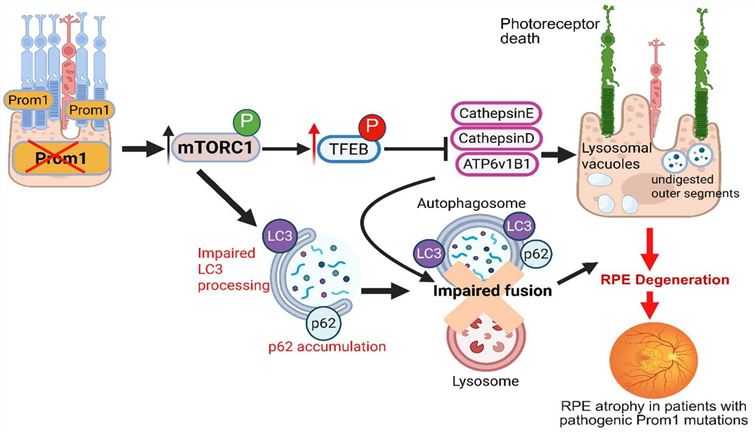 Fig.1 Prom1 regulates mTORC1-TFEB signaling to coordinate autophagy-lysosome function in the RPE.1
PROM1 can coordinate a variety of cellular programs, and its role far exceeds its initial positioning as a stem cell surface marker:
We engineer an exceptional collection of full-length, topologically authentic PROM1 membrane proteins designed to address the inherent complexities of pentaspanin biochemistry. Because correct insertion of all five transmembrane helices, preservation of the dual extracellular termini, and native glycosylation of the large loops are non-negotiable prerequisites for membrane microdomain association and antibody epitope presentation, our manufacturing pipeline integrates advanced membrane protein expression technologies that lock the receptor in its native membrane architecture. These integrated platforms support quantitative binding assays, structural elucidation of the extracellular domains, and high-throughput screening of compounds that interact with the PROM1 surface. Each preparation undergoes extensive quality control, encompassing glycosylation pattern profiling, thermal stability assessments, and functional validation through membrane microdomain fractionation and conformation-specific antibody binding assays. We have specially developed a set of qualified full-length PROM1 membrane proteins, whose topological structures are all completely consistent with their natural state, and are exclusively designed to address the various complex challenges inherent in the biochemical study of five-transmembrane proteins. After all, for this type of transmembrane protein to restore its natural working state in vitro, there are many technical barriers that are difficult to bypass, and this batch of our proteins is created to help researchers overcome these barriers. Our production process integrates advanced membrane protein expression technologies, which can firmly anchor this receptor within its native cell membrane structure, safeguarding the basis of the protein's activity right from the production source.
Not finding the membrane protein product you need? Contact us to start your one-stop custom service!
Beyond proteins, we have also built a real-cell research platform that can fully restore the native cell membrane topology and transport dynamics of PROM1, which is a core foundation for stem cell biology and ophthalmology research. After all, if PROM1 in cells cannot reproduce its real in vivo state, all subsequent research conclusions may be untenable, and such a cell platform is an essential basic tool that many related studies cannot do without. To develop this reliable tool, we have integrated cutting-edge technologies and stable experimental methods, and launched high-performance PROM1 stable cell lines. In these cells, PROM1 can be correctly expressed on the cell membrane, with accurate localization that always keeps it in its proper position. Every cell line undergoes strict validation before its release to ensure that no abnormalities in the cells themselves interfere with experimental results. These batch-amplifiable cell resources are indispensable experimental materials for studying the mechanism of the PROM1 pathway and optimizing research reagents targeting this pathway. Whether conducting mechanism exploration or reagent development, researchers can use these cells as a reliable experimental basis.
Not finding the stable cell line product you need? Contact us to start your one-stop custom service!
In addition to proteins and cell lines, you can also advance your PROM1 research projects with the monoclonal antibodies we have meticulously developed. These antibodies have clear sequences and high affinity, and are specifically designed to adapt to the complex structure of this multi-transmembrane protein, having been repeatedly refined from development to validation. They can not only detect the full-length PROM1 embedded in the cell membrane, but also recognize its other naturally occurring isoforms. Furthermore, through unique antigen-binding sites, they can distinguish homologous PROM1 from different model organisms, adapting to the vast majority of commonly used research models. These antibody reagents have all completed comprehensive applicability verification in advance, confirming that they can be used in various commonly used scientific research experiments, specifically including. Such broad experimental applicability helps researchers analyze the expression of PROM1 in various biological scenarios, and no matter what experiment you plan to conduct or what biological samples you intend to observe, you can obtain reliable detection results using these antibodies..
Not finding the recombinant antibody product you need? Contact us to start your one-stop custom service!
Beyond our catalog offerings, we provide comprehensive, end-to-end protein design and engineering services tailored specifically for challenging membrane-associated enzymes like PROM1:
Absolutely. We have created disease-associated mutants and other variants. These are provided as either recombinant membrane proteins or as stable cell lines.
Yes. Our monoclonal antibodies have been raised against unique epitopes within the PROM1 extracellular loops. Extensive cross-reactivity testing confirms exquisite specificity.
Yes. We distribute stable expression systems in which the target is concentrated at apical membrane protrusions. These models are verified for consistent topological display and spatial distribution across routine serial propagation.
Yes. The antibody panel has been validated for specific recognition of the mature, surface-resident glycoform population, showing minimal cross-reactivity with unrelated membrane glycoproteins or incompletely processed intracellular species.









