Creative Biolabs is offering the most comprehensive services for antibody development projects. With strict regulation and effective execution, we are dedicated to providing the most valuable solutions to complete your projects.
HighlightsCreative Biolabs is offering the most comprehensive services for antibody development projects. With strict regulation and effective execution, we are dedicated to providing the most valuable solutions to complete your projects.
HighlightsCreative Biolabs has established a broad range of platforms for developing novel antibodies or equivalents. These cutting-edge technologies enable our scientists to meet your demands from different aspects and tailor the most appropriate solution that contributes to the success of your projects.
HighlightsWith deep understanding in antibody-related realms and extensive project experience, Creative Biolabs offers a variety of references to help you learn more about our capacities and achievements, including infographic, flyer, case study, peer-reviewed publications, and all kinds of knowledge that can assist your projects. You are also welcome to contact us directly for more specific solutions.
HighlightsGet a real taste of Creative Biolabs, one of the most professional custom service providers in the world. We are committed to providing highly customized comprehensive solutions with the best quality to advance your projects.
Highlights Loading...
All listed services and products are For Research Use Only. Do Not use in any diagnostic or therapeutic applications.
SLC25A5 (also called ANT2) is the protein that carries the cell's energy source across the mitochondrial inner membrane. This transport mechanism is easy to describe but incredibly important for all cellular functions. Specifically, SLC25A5 transports ATP (the "energy" form of ATP) produced by the respiratory chain turbine located on the matrix side of the inner membrane out of the mitochondria. Simultaneously, it transports ADP (the "spent" form of ATP) used during energy-consuming activities in the cytosol into the mitochondria so that it can be converted back into ATP. Thus, the transport process occurs in a one-for-one ratio, is electrogenic because ADP and ATP carry different net charges, and is continuous. It takes place at every heartbeat, each thought, every burst of biosynthesis and continues throughout life. SLC25A5 is a small protein consisting of six transmembrane helices and was formed from a common structural motif found among many mitochondrial carriers called the "mitochondrial carrier signature fold." The mitochondrial carrier signature fold consists of three repeating units (domains) which each contain two transmembrane helices arranged around a central cavity. Each repeating unit can alternate opening its cavity to either side of the mitochondrial inner membrane as the protein undergoes conformational changes between two different states. Energy metabolism research has followed suit with bioenergetics researchers studying how the exchange cycle affects respiration output. Cancer metabolism researchers have investigated the involvement of SLC25A5 in the proliferative metabolic phenotype. Cell death researchers have studied its role in permeability transition biology. Additionally, researchers studying the mitochondrial carrier fold—which is considered one of the most versatile transport architecture types in the cell—have benefited from a well-characterized example (SLC25A5) whose structure and mechanism are experimentally accessible. Like other exchange carriers, SLC25A5 requires functional alternating-access machinery to conduct exchange assays. It also requires the correct assembly of its six transmembrane helices. When reconstituted into liposomes, SLC25A5 needs to retain its ability to exchange nucleotides in a measurable manner. Finally, antibody development must distinguish SLC25A5 from its three ANT relatives, who share a similar fold making generic antibodies ineffective.
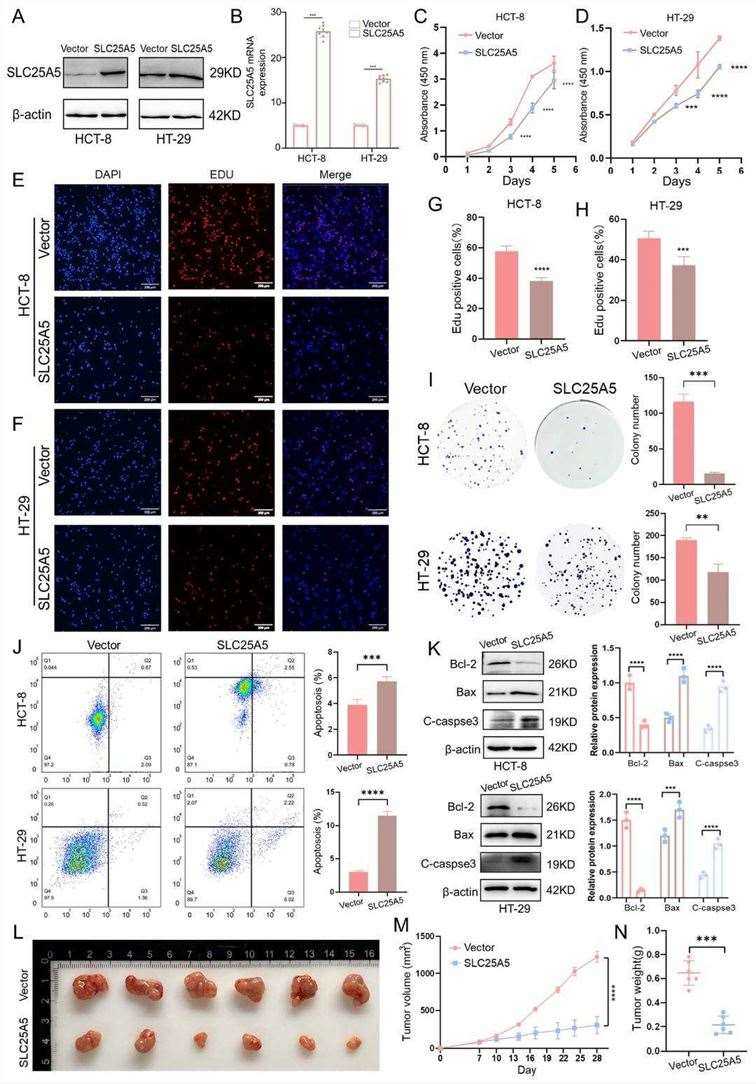 Fig.1 SLC25A5 inhibits CRC progression by suppressing proliferation and promoting apoptosis.1
SLC25A5 coordinates diverse cellular programs that extend considerably beyond its designation as a simple nucleotide transporter:
We produce a comprehensive set of complete-length, structurally identical SLC25A5 membrane proteins to overcome the specific biochemical limitations of the inner membrane of mitochondria. Since each of the six transmembrane helices must be properly embedded in the membrane, both the matrix-facing and inter-membrane-facing gating mechanisms must remain intact, and the nucleotide-binding pocket must fold as it would in its natural state in order to allow for ADP/ATP exchange, our production process utilizes cutting edge membrane protein expression systems which will maintain the native conformation of the SLC25A5 protein. Our production systems also enable us to perform multiple different types of tests to evaluate how the SLC25A5 protein functions.
Not finding the membrane protein product you need? Contact us to start your one-stop custom service!
The creation of an authentic cellular platform that truly reflects the biological characteristics of native SLC25A5 is essential for metabolic research and for evaluating potential pre-compounds. Through the use of cutting edge genomic integration techniques and reliable gene delivery methods, we have developed a series of robust SLC25A5 stable cell lines which provide accurate inner mitochondrial membrane localization and function. In addition to providing wild type expressing cell lines (constitutive), we also provide several types of mutant cell lines (transport deficient) as well as some naturally occurring variants. These types of cell lines allow us to monitor the expression of SLC25A5 in real time. We have verified each cell line by utilizing large scale cellular resources that provide the necessary substrates to study mechanisms within mitochondria, screen for modulators, and optimize research reagents that target the SLC25A5 axis.
Not finding the stable cell line product you need? Contact us to start your one-stop custom service!
Recombinant antibodies targeting SLC25A5 can be developed and characterized for target specificity and compatibility with research applications. Antibody formats, sample requirements, and cross-reactivity considerations can be evaluated according to project needs; application-specific performance should be supported by relevant validation data.
Not finding the recombinant antibody product you need? Contact us to start your one-stop custom service!
Beyond our catalog offerings, we provide comprehensive, end-to-end protein design and engineering services tailored specifically for challenging membrane-associated enzymes like SLC25A5:
Absolutely. We have created diverse mutants, which are provided as either recombinant membrane proteins or as stable cell lines.
No. All SLC25A5-related proteins, stable expression systems, and affinity reagents are designated exclusively for preclinical investigation. They have not been evaluated for application to biological specimens collected with the aim of determining source metabolic status or energetic profile.
Yes. We distribute stable expression systems in which the carrier is directed to the inner mitochondrial membrane with confirmed proper orientation and membrane integration.
Our integrated platform spans three principal material classes: recombinant SLC25A5 proteins in multiple biochemical presentations, stable expression systems with validated mitochondrial membrane integration, and sequence-defined antibodies mapping to distinct topological regions of the carrier.