Creative Biolabs is offering the most comprehensive services for antibody development projects. With strict regulation and effective execution, we are dedicated to providing the most valuable solutions to complete your projects.
HighlightsCreative Biolabs is offering the most comprehensive services for antibody development projects. With strict regulation and effective execution, we are dedicated to providing the most valuable solutions to complete your projects.
HighlightsCreative Biolabs has established a broad range of platforms for developing novel antibodies or equivalents. These cutting-edge technologies enable our scientists to meet your demands from different aspects and tailor the most appropriate solution that contributes to the success of your projects.
HighlightsWith deep understanding in antibody-related realms and extensive project experience, Creative Biolabs offers a variety of references to help you learn more about our capacities and achievements, including infographic, flyer, case study, peer-reviewed publications, and all kinds of knowledge that can assist your projects. You are also welcome to contact us directly for more specific solutions.
HighlightsGet a real taste of Creative Biolabs, one of the most professional custom service providers in the world. We are committed to providing highly customized comprehensive solutions with the best quality to advance your projects.
Highlights Loading...
All listed services and products are For Research Use Only. Do Not use in any diagnostic or therapeutic applications.
Steroid 5 alpha reductase 2 (SRD5A2) is the enzyme responsible for increasing the androgenicity of androgens. Despite its deceptively simple chemistry – a single double bond in the steroid A-ring is reduced by a hydride delivered from NADPH, turning a planar carbon-carbon bond into a bent one – this one geometric change converts a substrate into a product that has five-to-ten times higher affinity for the androgen receptor than its precursor. Thus, this single enzyme in a single membrane compartment produces a five-to-ten fold increase in hormonal potency. In tissues where SRD5A2 is present — such as prostate, genital skin, and several additional steroid-metabolizing organs — this conversion is the rate-limiting step determining how much amplified androgen signal will ultimately be received by the tissue. The enzyme exists within the endoplasmic reticulum as a compact membrane protein of approximately 250 amino acid residues, with seven transmembrane helices forming a compact catalytic architecture. Steroid substrate and the NADPH cofactor interact with the membrane-embedded catalytic site, while the precise access and release pathways are informed by structural and biochemical studies. Because SRD5A2 is expressed primarily in prostate and genital skin — and only limited quantities elsewhere — it exerts an extremely large biological influence: it controls androgen action specifically in those areas of the body where androgen action is crucial for development and for research related to proliferative diseases. For many years researchers studying prostate cancer have included SRD5A2 as a key parameter, and due to the fact that SRD5A2 plays a critical role in controlling androgen-dependent growth processes, it remains at the forefront of studies examining hormone metabolism.
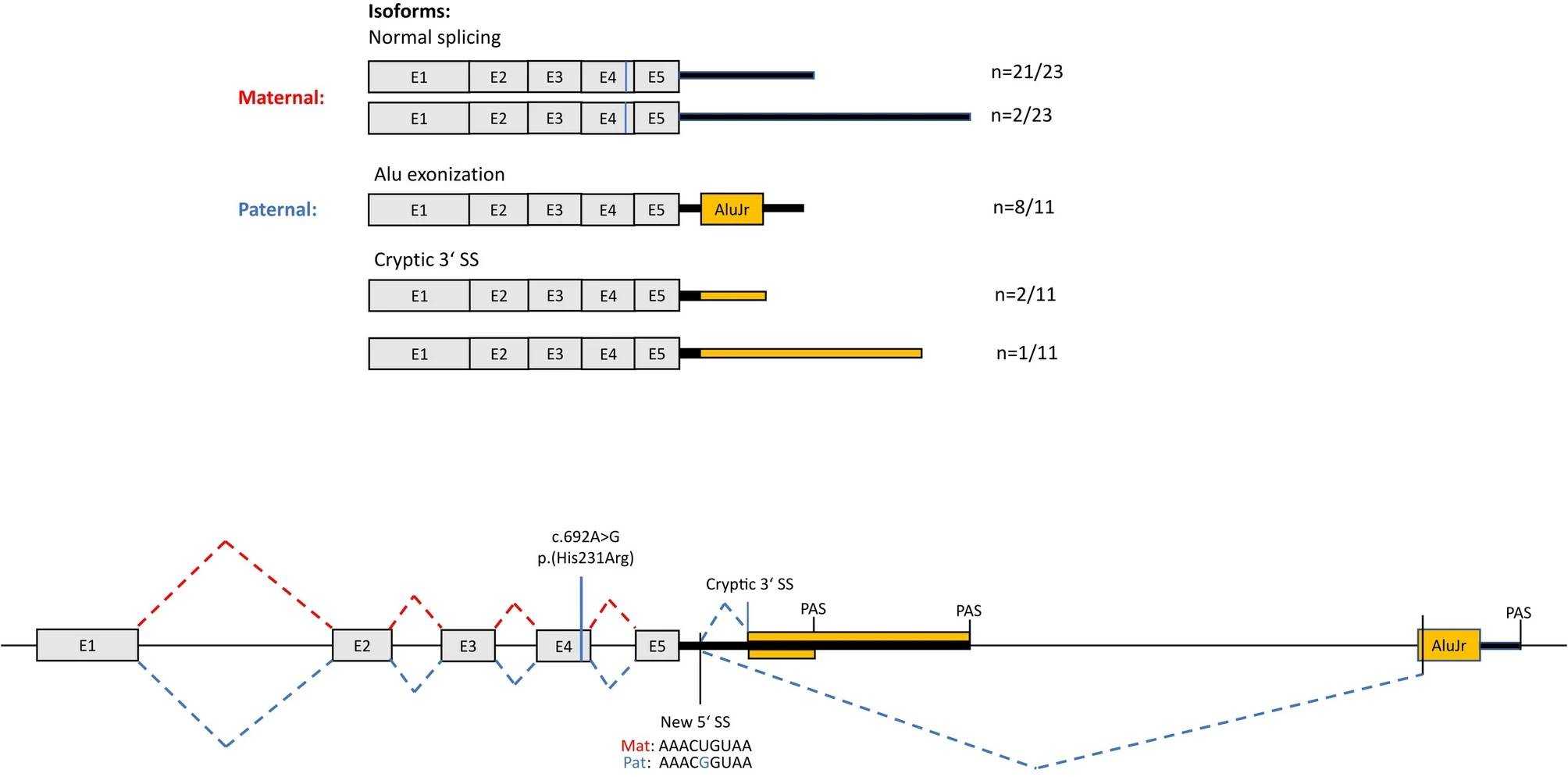 Fig.1 Full-length non-chimeric SRD5A2 isoforms revealed by PacBio Isoform sequencing.1
Several research currents keep converging on this enzyme:
The ability to create high quality preparations of SRD5A2 which can be used to assess the enzymatic activity of the enzyme requires the presence of the membrane. The enzymatic activity of SRD5A2 relies heavily on the lipid environment. While a preparation created without the membrane may properly fold, the enzymatic activity of the enzyme will be significantly reduced, resulting in incorrect data. Using our optimized expression systems, we are able to produce full length SRD5A2 in a form where the protein remains associated with the membrane. In addition to our use of optimized expression systems, we also utilize cofactor coupled handling to ensure that all of the NADPH-related components are preserved throughout the purification and storage processes. After producing each batch of SRD5A2, release testing includes; SDS-PAGE (for determination of purity), analytical size-exclusion chromatography (for assessment of monodispersity) and light scattering analysis (for identification of aggregates). Depending on the nature of your experiment, the preparation can be modified to meet your requirements. For example, if you require a specific variant background, a particular membrane composition or a presentation compatible with a particular catalytic assay, the preparation can be modified accordingly – the development of each preparation is contingent on your experimental design.
Not finding the membrane protein product you need? Contact us to start your one-stop custom service!
Cellular models of SRD5A2 require both an appropriate level of expression and a proper localization within the cell (e.g. microsome) in order to function as an enzyme that contributes to steroid metabolism. Overexpression lines of the wild type can provide a consistent amount of enzyme for study of catalysis and response to inhibitors, while variant lines can mimic many of the common inactivity-inducing backgrounds that are used in mechanistic studies. All clones used in these studies are characterized prior to being released for use, thus allowing researchers to know what to expect from each clone when conducting their experiments. If you need a specific variant background, a certain amount of expression, or a schedule of expression based upon your protocol for testing substrates against the cells, the system can be adapted to accommodate those needs; the cells are developed specifically to support the experiment that they will ultimately be used for.
Not finding the stable cell line product you need? Contact us to start your one-stop custom service!
Recombinant antibodies targeting SRD5A2 can be developed and characterized for target specificity and compatibility with research applications. Antibody formats, sample requirements, and cross-reactivity considerations can be evaluated according to project needs; application-specific performance should be supported by relevant validation data.
Not finding the recombinant antibody product you need? Contact us to start your one-stop custom service!
Extending well beyond our standard catalog, we deliver fully customizable discovery and manufacturing solutions meticulously tailored to the sophisticated demands of SRD5A2-targeted research and compound development:
It depends on the question. Activity-reducing variants suit graded-function experiments, while active-site substitutions suit mechanistic mapping. Describing the biological question usually clarifies which background earns its place in the design.
Yes. Custom formats and integrated multi-component engagements are routine, with unified quality frameworks keeping specifications aligned across components.
All SRD5A2 products and services are provided strictly for preclinical research. They are not designed, validated, or authorized for any use involving human subjects.
Reactivity is validated against the antigen source species, and performance in other species depends on sequence conservation. Checking reactivity documentation against the sample origin is the fastest way to confirm fit.