
Creative Biolabs is offering the most comprehensive services for antibody development projects. With strict regulation and effective execution, we are dedicated to providing the most valuable solutions to complete your projects.
HighlightsCreative Biolabs is offering the most comprehensive services for antibody development projects. With strict regulation and effective execution, we are dedicated to providing the most valuable solutions to complete your projects.
HighlightsCreative Biolabs has established a broad range of platforms for developing novel antibodies or equivalents. These cutting-edge technologies enable our scientists to meet your demands from different aspects and tailor the most appropriate solution that contributes to the success of your projects.
HighlightsWith deep understanding in antibody-related realms and extensive project experience, Creative Biolabs offers a variety of references to help you learn more about our capacities and achievements, including infographic, flyer, case study, peer-reviewed publications, and all kinds of knowledge that can assist your projects. You are also welcome to contact us directly for more specific solutions.
HighlightsGet a real taste of Creative Biolabs, one of the most professional custom service providers in the world. We are committed to providing highly customized comprehensive solutions with the best quality to advance your projects.
Highlights Loading...
All listed services and products are For Research Use Only. Do Not use in any diagnostic or therapeutic applications.
The transient receptor potential cation channel subfamily M member 7 (TRPM7) has broken all rules of membrane proteins. It isn't just an ion channel, and it isn't just a kinase — it is both, fused together as one continuous polypeptide that crosses the cell membrane with the six-helix TRP fold, and also extends a kinase domain from its C-terminus into the cytosol. Together with TRPM6, TRPM7 belongs to a rare channel-kinase subgroup that combines a divalent-cation-conducting pore with a C-terminal alpha-kinase domain, making it valuable for studying magnesium homeostasis and kinase signaling. As such, the functional effects of this fusion have placed TRPM7 in the forefront of channel research for over 20 years. When the TRPM7 gene was knocked out in cells, the cells died; this experiment showed clearly how important TRPM7 is. The channel portion of TRPM7 allows a variety of divalent cations to cross the cell membrane. These include magnesium, calcium, zinc and other trace metals. The opening of the pore is controlled by the concentration of magnesium bound to nucleotides in the cell. If magnesium-bound nucleotide concentrations drop due to metabolic stress or magnesium deficiency, the channel opens allowing metal to enter the cell and replace what was lost. Therefore, TRPM7 serves as the main controller of magnesium levels in the cell. Magnesium is required for many hundreds of enzyme-catalyzed reactions and its availability influences many aspects of cell biology including ATP chemistry and genome stability. The kinase portion of TRPM7 phosphorylates a specific group of cytosolic substrate molecules. Thus, ion flow across the membrane is linked to downstream signaling pathways through kinase activity. However, exactly how the two portions of TRPM7 communicate with each other — whether the kinase regulates channel function or whether channel function affects kinase activity — remains an unanswered question.
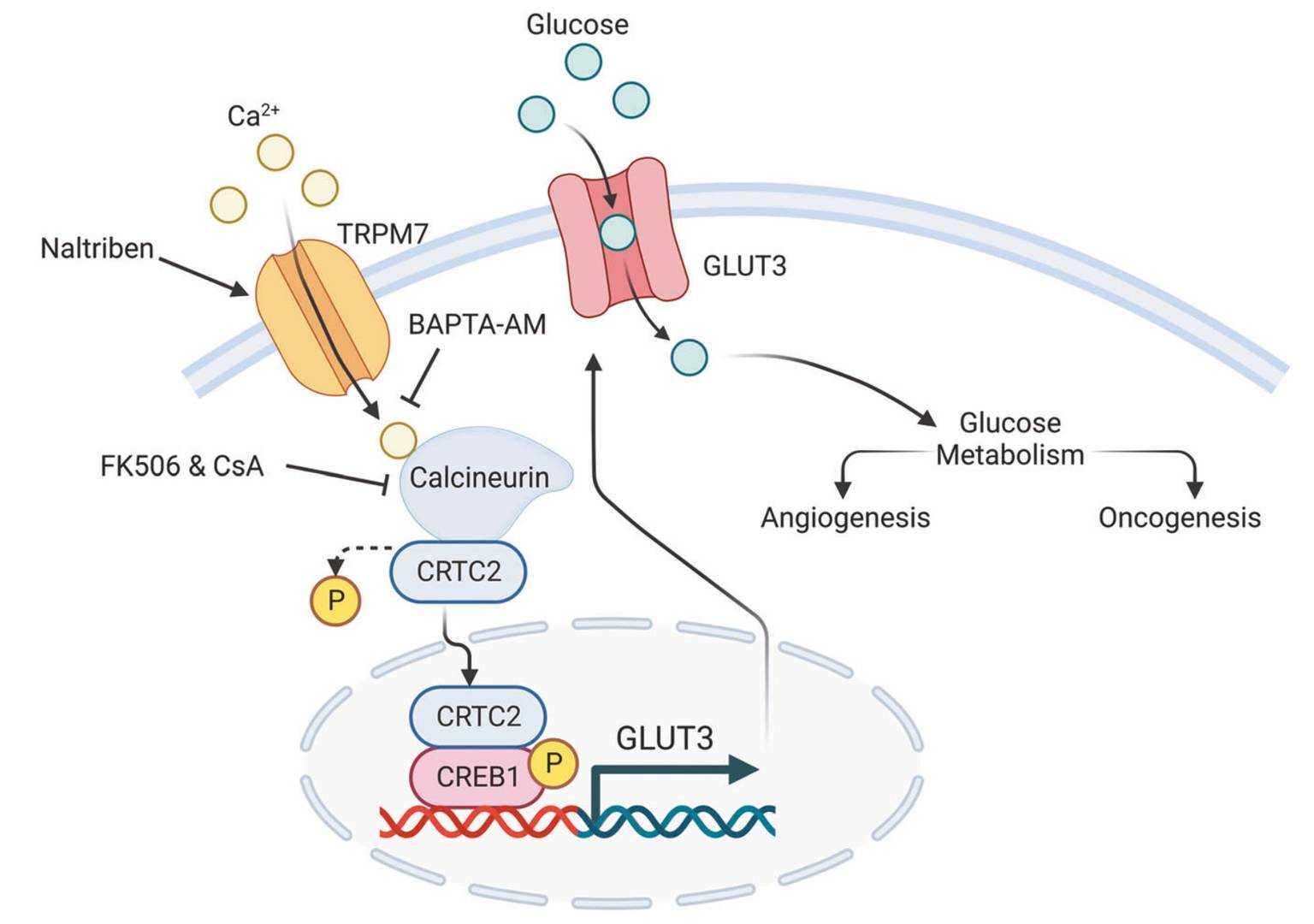 Fig.1 TRPM7-SLC2A3 axis is conserved across cancer and endothelial cells.1
Several research currents keep converging on this fusion protein:
To demonstrate that you have generated TRPM7 accurately, you need to validate both parts of the fusion. The entire TRPM7 protein is produced using our optimized eukaryotic expression system and folding supports that are tailored to the exceptionally large structure. Purity tests include SDS-PAGE, while monodispersity tests include analytical size exclusion chromatography. If your research needs a kinase-dead background, specific magnesium conditions, or a presentation compatible with a specific dual functional assay; we can adjust the format based on your protocol—the preparation will follow the experimental design.
Not finding the membrane protein product you need? Contact us to start your one-stop custom service!
In order to study how TRPM7 works in cell culture systems, each cell line has a critical characteristic which defines TRPM7, i.e., changes in expression alter cell viability. Therefore, cell lines need to be developed and characterized with caution. Overexpression lines of wild-type and various TRPM7 mutant lines provide the means to study mechanisms of action. Prior to being released, each clone is characterized. This establishes the characteristics of the cell line prior to experimental procedures. If your research requires a functional-dead background, a specific cell density level, or an expression regimen based on your cell viability monitoring schedule, the system can be customized to meet these specifications.
Not finding the stable cell line product you need? Contact us to start your one-stop custom service!
Antibody work on TRPM7 suffers from the sibling problem in its most severe form: the closest relative, TRPM6, has the same channel-kinase architecture and a great deal of sequence identity across both domains, and generic clones drift into cross-reactivity which distorts quantitation in samples containing both proteins. We have screened our recombinant panel for true TRPM7 discrimination. Sequence-defined production ensures consistency of performance among lots, and if your project requires a different conjugate, validation against a specific sample type, or a modification of the clone format to accommodate your workflow, we are able to provide such services upon request; the panel can be modified as needed to suit the experimental design it supports.
Not finding the recombinant antibody product you need? Contact us to start your one-stop custom service!
Extending well beyond our standard catalog, we deliver fully customizable discovery and manufacturing solutions meticulously tailored to the sophisticated demands of TRPM7-targeted research and precompound development:
Yes. Identity confirmation is part of standard release testing, and the corresponding data are included with every shipment.
In most cases, yes. Tag position preferences can be specified when the order is placed, and constructs are configured accordingly where the protein's function permits.
Standard concentration tiers cover common workflows, and adjustments can be made where a protocol calls for a different working concentration.
Yes. Pilot quantities are a practical way to confirm fit between material and protocol before scaling to full production volumes.









