"Creative Biolabs is committed to providing highly customized comprehensive solutions with the best quality to advance our global clients’ projects."
Advanced Peptide Repertoire Analysis Services
Background Service Platform Workflow Application Advantage Related Service FAQ Online Inquiry
The exploration of the immunopeptidome—the vast array of peptides presented by Major Histocompatibility Complex (MHC) molecules—is the cornerstone of modern precision immunotherapy. At Creative Biolabs, we leverage over two decades of biotechnology expertise to offer a comprehensive Peptide Repertoire Analysis platform. By integrating ultra-high-resolution mass spectrometry with advanced bioinformatics, we provide a definitive Peptide Repertoire Solution for researchers targeting cancer neoantigens, autoimmune epitopes, and infectious disease vaccine candidates.
Discuss Your Project Today
The Significance of the Immunopeptidome in Drug Discovery
The peptide repertoire, or immunopeptidome, consists of thousands of endogenous peptides bound to MHC (HLA in humans) complexes on the cell surface. These peptides serve as the "molecular window" through which the immune system monitors cellular health. Accurate Peptide Repertoire Profiling is essential for:
-
Neoantigen Identification: Discovering tumor-specific mutations presented to T cells.
-
Vaccine Development: Mapping conserved epitopes across viral or bacterial strains.
-
Autoimmunity Research: Identifying self-peptides that trigger aberrant immune responses.
-
Pharmacokinetics: Understanding how biologics influence peptide presentation.
Our Comprehensive Peptide Repertoire Analysis Services
Creative Biolabs offers an end-to-end pipeline for the isolation, identification, and validation of peptide–MHC complexes. Our services are designed to overcome the inherent challenges of low abundance and high polymorphism in peptide repertoires.
Peptide Repertoire Sequencing via LC-MS/MS
Utilizing state-of-the-art systems, we perform deep Peptide Repertoire Sequencing. This allows for the unbiased identification of the entire peptidome from tissue samples, cell lines, or biological fluids.
-
Sensitivity: Detection of peptides at sub-femtomole levels.
-
Accuracy: High-resolution mass measurements.
Peptide Identification via Spectral Sequencing
Traditional database searching often fails to identify non-canonical peptides or novel neoantigens. Our Peptide Identification via Spectral Sequencing employs de novo sequencing algorithms and proteogenomic integration to uncover:
-
Post-translational modifications (PTMs).
-
Spliced peptides.
-
Non-coding region-derived epitopes.
MHC Class I & II Specific Profiling
We provide specialized protocols for the isolation of MHC-I (HLA-A, B, C) and MHC-II (HLA-DR, DQ, DP) bound peptides. Through immunoaffinity purification using allele-specific antibodies, we ensure the purity and relevance of the extracted peptide repertoire.
Advanced Strategy & Technology Platform
Our platform utilizes a multi-dimensional approach to ensure no peptide is missed. The workflow integrates:
Immunoaffinity Purification (IP) Excellence
We utilize a proprietary library of high-affinity monoclonal antibodies to capture peptide–MHC complexes. Our optimized acid elution protocols minimize salt interference and maximize peptide recovery, which is critical for endogenous peptides bound to MHC.
High-Dimensional Chromatography
Before mass spectrometry, peptides are fractionated using liquid chromatography to reduce sample complexity. This increases the dynamic range and allows for the identification of rare, low-copy-number peptides that are often biologically significant.
AI-Driven Bioinformatics Pipeline
Raw MS/MS data is processed through our customized suite, which includes:
-
Feature Detection: Identifying all peptide-like signals.
-
Spectral Library Matching: Comparing spectra against vast known databases.
-
MHC Binding Motif Analysis: Validating identified peptides against known HLA-binding motifs to reduce false positives.
Workflow of Peptide Repertoire Profiling
-
Sample Preparation: Lysis of cells or tissues under mild conditions to preserve MHC integrity.
-
MHC Capture: Immunoaffinity purification with highly specific anti-MHC antibodies.
-
Peptide Elution: Dissociation of peptides from the MHC groove using mild acid.
-
Clean-up & Fractionation: Desalting and enrichment.
-
LC-MS/MS Analysis: High-resolution data acquisition.
-
Data Analysis: Peptide Identification via Spectral Sequencing and motif validation.
-
Final Report: Comprehensive list of sequences, binding scores, and biological insights.
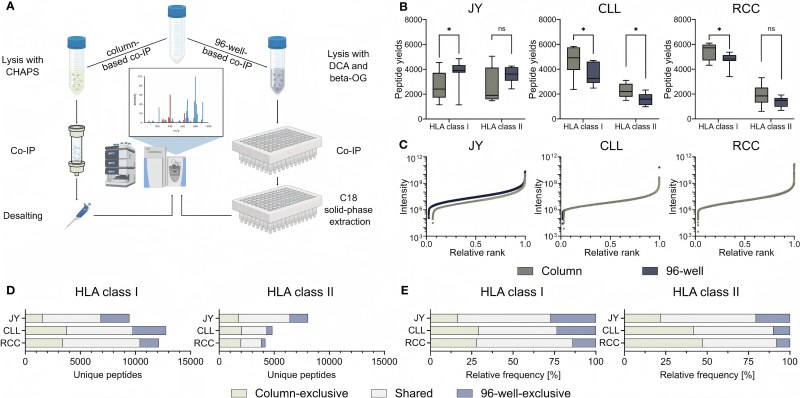 Fig. 1 Comparison of 96-well- and column-based immunoprecipitation methods.1
Key Applications of Peptide Repertoire Analysis
Cancer Neoantigen Discovery
The most impactful application of Peptide Repertoire sequencing is the direct identification of neoantigens. While genomic sequencing (WES) predicts potential mutations, only immunopeptidomics proves which mutated peptides are actually presented on the tumor cell surface.
Viral Repertoire Profiling
For pandemic preparedness and chronic viral infection research, we map the viral peptides presented by infected cells, facilitating the design of T-cell-inducing vaccines.
Therapeutic Protein Immunogenicity
We analyze whether biologic drugs (like monoclonal antibodies) are processed and presented as "foreign" peptides by MHC molecules, potentially leading to Anti-Drug Antibodies (ADA).
Why Choose Creative Biolabs?
With over 20 years in the biotech industry, Creative Biolabs is not just a service provider; we are your scientific partner. Our expertise in protein engineering and immunology allows us to interpret Peptide Repertoire Analysis data within the context of your specific therapeutic goals.
-
Expertise: Over 2000+ successful immunopeptidomics projects completed.
-
Innovation: Implementation of the latest MS acquisition strategies for superior reproducibility.
-
Customization: Tailored protocols for rare HLA alleles and challenging tissue types (e.g., FFPE samples).
Explore Our Comprehensive Services
Creative Biolabs offers a modular suite of repertoire analysis services tailored to address diverse research questions:
Ready to decode the immunopeptidome? Contact our team of experts to discuss your Peptide Repertoire Analysis project. We provide free initial consultations to help you design the most effective experimental strategy.
Contact Us Today for a Free Quote!
Frequently Asked Questions (FAQs)
-
Q: What is the minimum sample size required for Peptide Repertoire Analysis?
A: While we typically recommend 1 x 10⁷ to 1 x 10⁸ cells, our optimized micro-scale protocols can handle as few as 5 x 10⁶ cells or 20-50mg of tissue, depending on the MHC expression levels.
-
Q: Can you distinguish between MHC Class I and Class II bound peptides?
A: Yes. By using specific antibodies, we can sequentially or parallelly isolate peptides specific to each class.
-
Q: How do you handle "dark" peptides that are not in the reference proteome?
A: Our Peptide Identification via Spectral Sequencing employs de novo sequencing, allowing us to identify peptides from non-coding regions, alternative splicing, or frame-shifted translations.
-
Q: How do you ensure the peptides identified are actually MHC-bound?
A: We use negative control pulldowns (using isotype-matched antibodies) and perform motif analysis. Peptides that do not match the predicted binding motif of the host's HLA alleles are flagged for further verification.
-
Q: Is this service suitable for clinical diagnosis?
A: No, our Peptide Repertoire Analysis is for research use only (RUO) and is not intended for clinical diagnostic procedures.
-
Q: Can you analyze PTMs in the peptide repertoire?
A: Absolutely. Our MS platform is highly sensitive to modifications like phosphorylation, glycosylation, and cysteinylation, which can play critical roles in immune recognition.
-
Q: Do you provide help with the interpretation of the data?
A: Yes, our expert biostatisticians and immunologists provide a detailed summary, including biological pathway analysis and ranking of the most promising epitope candidates.
-
Q: What types of MHC alleles can you support?
A: We support all major human HLA-A, B, C, and DR/DQ/DP alleles, as well as murine H-2 alleles. Custom antibody conjugation is available for rare or non-human species.
-
Q: Can you work with FFPE (Formalin-Fixed Paraffin-Embedded) samples?
A: Yes, we have developed specialized extraction protocols to recover MHC complexes from fixed tissues, though yield may vary compared to fresh-frozen samples.
Reference
-
Wacker, Marcel, et al. "Immunoprecipitation methods impact the peptide repertoire in immunopeptidomics." Frontiers in Immunology 14 (2023): 1219720. Distributed under Open Access license CC BY 4.0, without modification. https://doi.org/10.3389/fimmu.2023.1219720