Creative Biolabs is offering the most comprehensive services for antibody development projects. With strict regulation and effective execution, we are dedicated to providing the most valuable solutions to complete your projects.
HighlightsCreative Biolabs is offering the most comprehensive services for antibody development projects. With strict regulation and effective execution, we are dedicated to providing the most valuable solutions to complete your projects.
HighlightsCreative Biolabs has established a broad range of platforms for developing novel antibodies or equivalents. These cutting-edge technologies enable our scientists to meet your demands from different aspects and tailor the most appropriate solution that contributes to the success of your projects.
HighlightsWith deep understanding in antibody-related realms and extensive project experience, Creative Biolabs offers a variety of references to help you learn more about our capacities and achievements, including infographic, flyer, case study, peer-reviewed publications, and all kinds of knowledge that can assist your projects. You are also welcome to contact us directly for more specific solutions.
HighlightsGet a real taste of Creative Biolabs, one of the most professional custom service providers in the world. We are committed to providing highly customized comprehensive solutions with the best quality to advance your projects.
HighlightsAt Creative Biolabs, we are pioneers in decoding the intricate web of protein-protein interactions (PPIs) that govern cellular life. With over two decades of dedicated expertise in biotechnology, we provide a comprehensive suite of Two-Hybrid Assay Services, meticulously designed to identify, validate, and characterize PPIs with unparalleled accuracy and depth. Creative Biolabs has refined and expanded upon the classic two-hybrid model, offering a versatile portfolio of services tailored to meet the unique demands of your research, whether you are working with nuclear, cytoplasmic, or membrane-bound proteins, or exploring interactions within yeast, mammalian, or bacterial systems.
Creative Biolabs provides an end-to-end solution for your PPI studies. From initial consultation and experimental design to library screening, data analysis, and bioinformatics, our expert team is your dedicated partner in discovery.
The Yeast Two-Hybrid (Y2H) system remains one of the most powerful and widely used genetic methods for detecting binary protein interactions in vivo. The principle is elegantly simple: a transcription factor is split into two separate domains—a DNA-binding domain (BD) and a transcriptional activation domain (AD). The "bait" protein is fused to the BD, and the "prey" protein (or a library of potential partners) is fused to the AD. If the bait and prey proteins interact, the BD and AD are brought into close proximity, reconstituting a functional transcription factor. This drives the expression of reporter genes, leading to a selectable phenotype (e.g., growth on selective media) or a colorimetric signal.
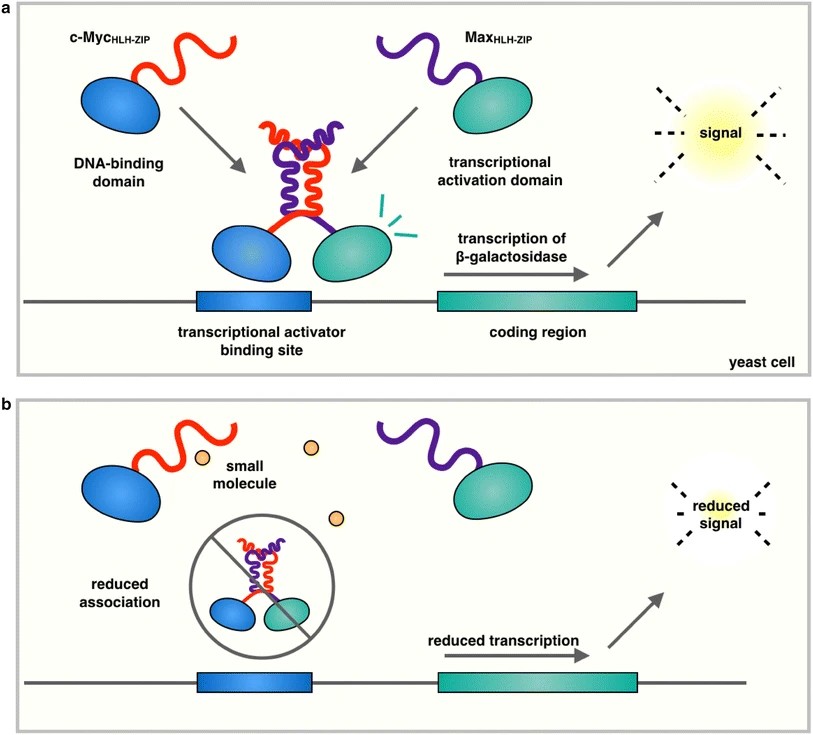 Fig. 1 Schematic representation of the yeast two-hybrid system.1
To overcome the limitations of traditional Y2H, such as false positives and the inability to study membrane proteins, Creative Biolabs has adopted cutting-edge Y2H technologies:
While Y2H is a powerful discovery tool, certain PPIs are regulated by post-translational modifications (PTMs) like phosphorylation, glycosylation, or ubiquitination that do not occur in yeast. The Mammalian Two-Hybrid (M2H) system addresses this by transposing the two-hybrid principle into cultured mammalian cells. This provides the most physiologically relevant context for studying the interactions of mammalian proteins.
Creative Biolabs utilizes advanced M2H systems, including inducible platforms (iM2H), that offer up to 100-fold increased sensitivity compared to standard M2H. This allows for the reliable detection of even weak or transient interactions.
The Bacterial Two-Hybrid (B2H) system offers a powerful alternative for studying PPIs in a prokaryotic host (E. coli). This system is exceptionally fast, scalable, and cost-effective, making it an excellent choice for certain applications. The principle relies on the reconstitution of bacterial adenylate cyclase from two separate fragments. Interaction between the bait and prey proteins brings the fragments together, leading to cAMP synthesis, which in turn activates a reporter gene cassette.
We employ advanced B2H platforms, including systems that allow for All-versus-All Sequencing (AVA-Seq) and Next-Generation Bacterial Two-Hybrid (NGB2H) analysis. These next-generation approaches enable rapid, quantitative, and high-throughput exploration of protein interaction networks.
Instead of identifying interactions, the Reverse Yeast Two-Hybrid (rY2H) system is brilliantly engineered to detect their disruption. This system is a cornerstone of modern drug discovery and functional genomics. In an rY2H screen, a known protein interaction activates a counter-selectable marker gene (e.g., URA3). Cells expressing this gene cannot survive on media containing a specific compound (e.g., 5-FOA). Therefore, only cells in which the protein interaction is disrupted—either by a mutation or a small molecule inhibitor from a screening library—will survive.
Let's illuminate the path of your research together. Explore the protein interactions that drive your biological system with the industry-leading expertise of Creative Biolabs. Contact us today to discuss your project with one of our specialists and receive a complimentary, customized proposal.
Q: What is the difference between Yeast Two-Hybrid (Y2H) and Mammalian Two-Hybrid (M2H), and which one should I choose?
A: The primary difference lies in the host system used. Y2H uses yeast as a host, while M2H uses cultured mammalian cells. The choice depends on your specific research question. Our experts can help you decide the most appropriate system after discussing your specific protein of interest and research goals.
Q: My protein is a membrane-bound receptor. Can I still use a two-hybrid system?
A: Absolutely. While traditional Y2H systems are not suitable for integral membrane proteins because the protein interaction must occur in the nucleus, we offer a specialized solution: the Split-Ubiquitin Y2H (DUALmembrane) system. This advanced platform is specifically designed to detect interactions between full-length membrane proteins directly within the cellular membrane. It has been successfully used to study a wide range of membrane proteins, including multi-pass transmembrane receptors, ion channels, and transporters, providing a powerful tool to explore this critical class of proteins.
Q: What kind of libraries can I screen against my "bait" protein?
A: Creative Biolabs offers a wide range of high-quality, high-complexity prey libraries to maximize the chance of identifying physiologically relevant interactors. We provide:
Using a high-quality, complex library is critical for the success of a two-hybrid screen, and we ensure our libraries meet the highest standards.
Q: I want to find a drug that breaks up a specific protein-protein interaction. Which service should I use?
A: For this application, our Reverse Yeast Two-Hybrid (rY2H) service is the ideal choice. This powerful system is specifically designed to screen for molecules or mutations that disrupt a known PPI. In the rY2H system, the interaction between your two proteins of interest activates a toxic reporter gene. Therefore, only yeast cells in which the interaction is broken by a compound from a chemical library can survive. This provides a direct and high-throughput method for identifying potential therapeutic inhibitors, making it an invaluable tool for the early stages of drug discovery.
All listed services and products are For Research Use Only. Do Not use in any diagnostic or therapeutic applications.