Creative Biolabs is offering the most comprehensive services for antibody development projects. With strict regulation and effective execution, we are dedicated to providing the most valuable solutions to complete your projects.
HighlightsCreative Biolabs is offering the most comprehensive services for antibody development projects. With strict regulation and effective execution, we are dedicated to providing the most valuable solutions to complete your projects.
HighlightsCreative Biolabs has established a broad range of platforms for developing novel antibodies or equivalents. These cutting-edge technologies enable our scientists to meet your demands from different aspects and tailor the most appropriate solution that contributes to the success of your projects.
HighlightsWith deep understanding in antibody-related realms and extensive project experience, Creative Biolabs offers a variety of references to help you learn more about our capacities and achievements, including infographic, flyer, case study, peer-reviewed publications, and all kinds of knowledge that can assist your projects. You are also welcome to contact us directly for more specific solutions.
HighlightsGet a real taste of Creative Biolabs, one of the most professional custom service providers in the world. We are committed to providing highly customized comprehensive solutions with the best quality to advance your projects.
HighlightsThe Bacterial Two-Hybrid (B2H or BTH) system is a powerful, genetically-based method for detecting and screening these crucial interactions in vivo. As pioneers in the field, Creative Biolabs has refined the B2H system into a robust, high-throughput platform. Our services are designed to provide you with clear, reliable, and actionable data, accelerating your research from discovery to validation. We combine state-of-the-art technology with deep expertise to deliver customized solutions for even the most challenging PPI studies, including those involving membrane proteins and transcriptionally active proteins.
The B2H system is an ingenious method that leverages the modular nature of transcription factors within a prokaryotic host, typically E. coli. The core principle relies on the reconstitution of a functional transcription factor, which in turn activates the expression of a reporter gene, signaling a direct interaction between two proteins of interest.
Our primary system is based on the well-validated adenylate cyclase (CyaA) from Bordetella pertussis. Here's how it works:
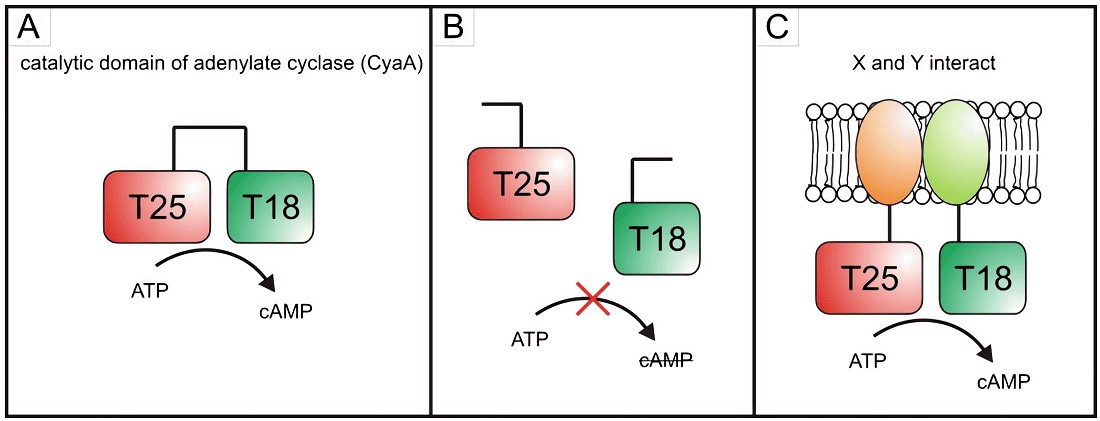 Fig. 1 The bacterial adenylate cyclase two-hybrid assay (BACTH).1
While the Yeast Two-Hybrid (Y2H) system is well-known, the B2H system offers distinct and powerful advantages, making it the superior choice for many research applications.
| Feature | Bacterial Two-Hybrid (B2H) | Yeast Two-Hybrid (Y2H) | Why It Matters for Your Research |
| Growth Rate & Speed | Very Fast (E. coli doubles ~20-30 min) | Slower (Yeast doubles ~90-120 min) | Faster library screening, quicker turnaround times, and reduced project timelines. |
| Transformation Efficiency | Extremely High | Moderate | Enables the screening of larger, more complex libraries, increasing the chance of discovering rare interactors. |
| Library Complexity | Superior representation of library clones | Prone to biases and loss of clones | Ensures a more comprehensive and unbiased screen. |
| Prokaryotic Proteins | Native Environment | Heterologous environment | Ideal for studying proteins from bacteria, archaea, or bacteriophages in their natural context. |
| Nuclear Localization | Not required; interactions occur in the cytoplasm | Proteins must be imported into the nucleus | Allows screening of proteins that are toxic or cannot be localized to the yeast nucleus, including many membrane proteins and transcription factors. |
| False Positives | Lower rate due to fewer endogenous transcription factors interfering with the assay. | Higher rate of false positives. | More reliable, higher-quality primary hits, reducing the downstream validation workload. |
| Membrane Proteins | Specialized systems available (e.g., BACTH) | Challenging | A key advantage for studying integral membrane proteins, receptors, and channels. |
At Creative Biolabs, we don't offer a one-size-fits-all solution. We provide a tailored suite of B2H services to meet your specific research goals, from one-on-one interaction analysis to large-scale library screening. Our Step-by-Step Service Workflow:
The B2H system is a powerful discovery tool. We offer a comprehensive range of services to validate and further characterize your findings. Bacterial two-hybrid selection system from Creative Biolabs can not only study interactions of different proteins from both prokaryotes and eukaryotes but also apply successfully in the protein-DNA analysis, and identify antigen-specific single domain antibodies.
Other optional two-Hybrid systems:
Ready to uncover the critical protein interactions driving your research forward? Let the experts at Creative Biolabs accelerate your path to discovery.
All listed services and products are For Research Use Only. Do Not use in any diagnostic or therapeutic applications.