Creative Biolabs is offering the most comprehensive services for antibody development projects. With strict regulation and effective execution, we are dedicated to providing the most valuable solutions to complete your projects.
HighlightsCreative Biolabs is offering the most comprehensive services for antibody development projects. With strict regulation and effective execution, we are dedicated to providing the most valuable solutions to complete your projects.
HighlightsCreative Biolabs has established a broad range of platforms for developing novel antibodies or equivalents. These cutting-edge technologies enable our scientists to meet your demands from different aspects and tailor the most appropriate solution that contributes to the success of your projects.
HighlightsWith deep understanding in antibody-related realms and extensive project experience, Creative Biolabs offers a variety of references to help you learn more about our capacities and achievements, including infographic, flyer, case study, peer-reviewed publications, and all kinds of knowledge that can assist your projects. You are also welcome to contact us directly for more specific solutions.
HighlightsGet a real taste of Creative Biolabs, one of the most professional custom service providers in the world. We are committed to providing highly customized comprehensive solutions with the best quality to advance your projects.
HighlightsCreative Biolabs provides a specialized antibody discovery service, focusing on generating high-quality antibodies specifically validated for both enzyme-linked immunosorbent assay (ELISA) and lateral flow immunoassay (LFIA) applications. We leverage our advanced hybridoma platform and extensive expertise to deliver a function-guaranteed antibody package. With our service, clients can obtain effective and stable antibodies, crucial for successful assay development, thus accelerating their research and development timelines.
ELISA stands as a cornerstone technique in biological research, widely employed for detecting and quantifying target substances. This versatile assay relies on the specific binding of antibodies to antigens. Several formats exist, including direct, indirect, competitive, and sandwich assays. Among these, sandwich ELISA often proves most effective, using either monoclonal or polyclonal antibodies. Monoclonal antibodies offer high specificity for individual epitopes, enabling precise detection. Polyclonal antibodies, often used as capture antibodies, can be paired with monoclonal antibodies for enhanced specificity. Furthermore, recombinant monoclonal antibodies provide consistency, minimizing cell line drift and batch-to-batch variation. ELISA serves as a powerful tool in antibody discovery, establishing a correlation between signal strength and antibody affinity.
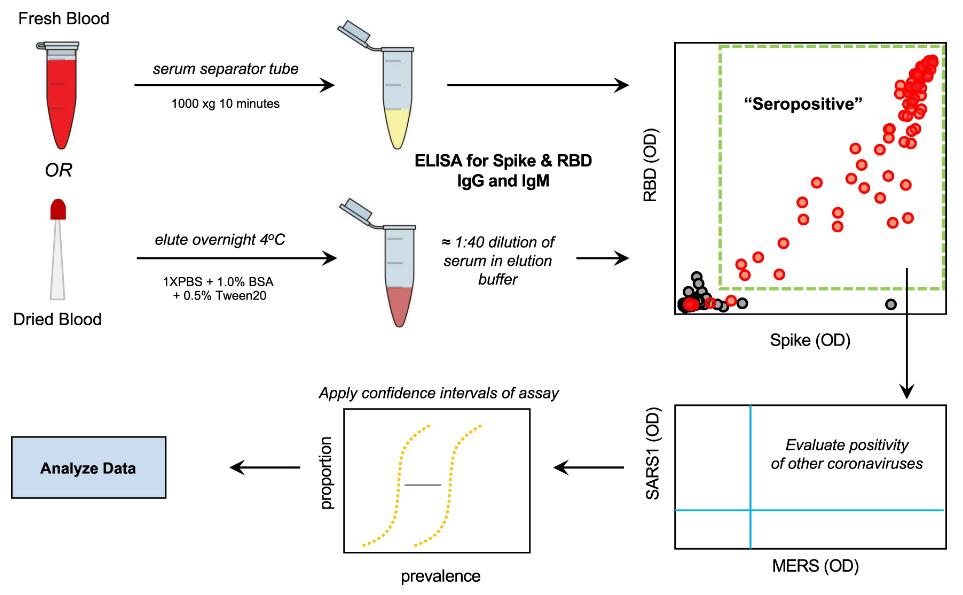 Fig.1 Serology testing protocol.1
LFIA, also known as lateral flow assay (LFA) or lateral flow test (LFT), represents another important immunoassay technique. This technique enables quick detection by leveraging the precise interaction between antigens and antibodies. Due to its low cost, simplicity, rapidity, and portability, LFIA finds extensive use in diverse fields, spanning biomedical, agricultural, food, and environmental science. The effectiveness of an LFIA is strongly influenced by the quality of the antibodies employed. Therefore, antibodies intended for LFIA must undergo careful design and purification. This ensures a stable supply of antibodies with high affinity and specificity. Monoclonal antibodies, particularly those derived from mouse hybridomas, are frequently preferred for large-scale production of antibodies suitable for LFIA.
Our service specializes in the generation of antibodies that are rigorously screened and validated to perform optimally in both ELISA and LFIA applications. We utilize hybridoma technology, a well-established method for producing monoclonal antibodies. Our approach ensures that the antibodies we deliver meet the stringent requirements of these assays.
The first step in our process involves the careful design of the antigen, the substance that will elicit an immune response. We work closely with our clients to determine the optimal antigen format, which may include proteins, peptides, or other molecules.
We then use this antigen to immunize animals, typically mice, to stimulate the production of antibody-secreting B cells. Our immunization protocols are optimized to maximize the immune response and generate a diverse pool of antigen-specific B cells.
The process of generating hybridomas involves fusing antibody-producing B cells with myeloma cells. This creates hybrid cells (hybridomas) that can produce specific antibodies indefinitely. We employ optimized fusion protocols to maximize the yield of hybridoma cells. Following fusion, the hybridoma cells are cultured, and the crucial step of screening begins.
ELISA serves as a primary screening method to identify hybridoma clones that produce antibodies specific to the target antigen. We employ various ELISA formats, including sandwich ELISA, to identify clones with superior affinity and specificity. This process involves testing the binding of antibodies produced by different hybridoma clones to the antigen of interest. Clones that demonstrate strong and specific binding are advanced to the next stage of screening.
In addition to ELISA, we also perform LFIA screening to ensure that the selected antibodies function effectively in lateral flow assays. This involves testing the antibodies in LFIA formats to assess their ability to capture and detect the target antigen in a rapid, point-of-care setting. We often incorporate a preliminary Western blot (WB) step. Clones that show positive results in both ELISA and WB are prioritized for LFIA screening, as this approach increases the likelihood of identifying LFIA-compatible antibodies.
Once hybridoma clones that meet both ELISA and LFIA criteria are identified, we proceed with antibody production. This can be done using in vitro cell culture methods. We then purify the antibodies to a high degree, ensuring that they are free from contaminants. Finally, we deliver the purified antibodies to our clients, along with comprehensive data from the screening and validation processes.
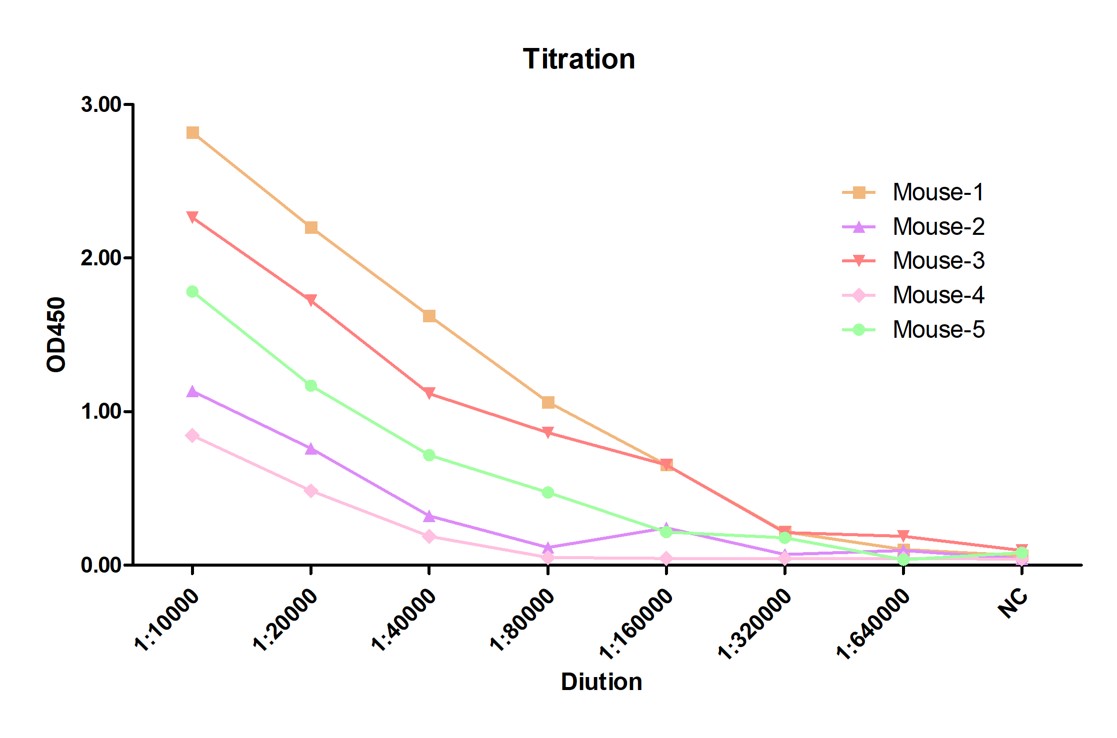
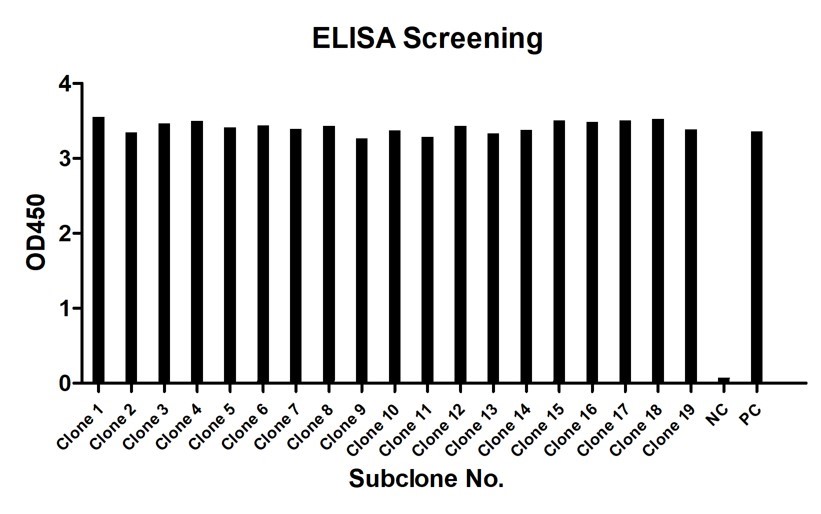
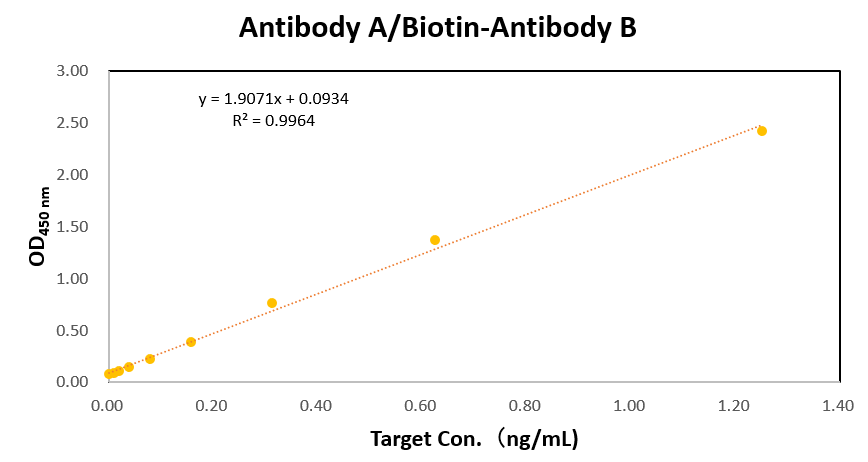
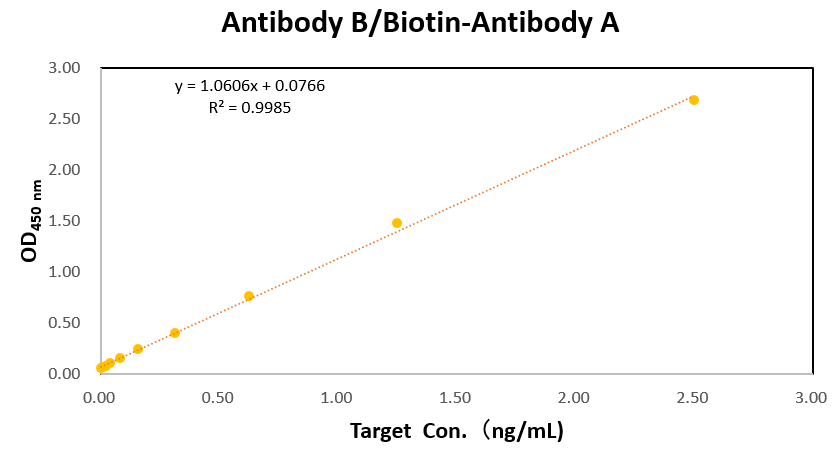
Antibodies that perform well in ELISA may not always be optimal for LFIA, and vice-versa. ELISA is a plate-based assay with multiple wash steps, while LFIA is a rapid, flow-through assay. Screening for both ensures that the selected antibodies possess the necessary characteristics, such as appropriate affinity and kinetics, to function effectively in both assay formats, guaranteeing their versatility.
For LFIA, antibodies need to exhibit high affinity and fast binding kinetics. This is because the interaction between the antibody and antigen occurs rapidly on the LFIA strip. Additionally, antibodies should have high specificity to minimize cross-reactivity and ensure accurate results in the rapid test format.
We primarily produce monoclonal antibodies. Monoclonal antibodies offer high specificity, recognizing a single epitope on the antigen. This specificity leads to more precise and reproducible results in both ELISA and LFIA. While we focus on monoclonal antibodies, we can also generate polyclonal antibodies if needed for a client's specific application.
We follow strong quality control procedures at each phase of the antibody development process. This includes careful immunogen design, optimized immunization protocols, and extensive screening using both ELISA and LFIA. We also perform antibody characterization assays, such as Western blotting and other binding assays, to verify the specificity and affinity of the antibodies.
We can work with a variety of sample types for LFIA validation, depending on the specific application. Common sample types include serum, plasma, and purified antigen solutions. We can also adapt our protocols to accommodate other sample types, but additional optimization and validation may be required. We collaborate closely with our clients to ensure that the validation process accurately reflects their intended LFIA application.
We have extensive experience with various ELISA formats, including direct, indirect, competitive, and sandwich ELISA. We can tailor our antibody development and screening process to ensure that the generated antibodies are optimized for the specific ELISA format that our clients intend to use. Sandwich ELISA is a very common format, and we have significant expertise in generating antibody pairs for this assay type.
Creative Biolabs offers a diverse portfolio of antibodies with guaranteed results for ELISA and LFIA testing. Creative Biolabs also provides fully equipped manufacturing platforms for the industrial production of antibodies. If you are interested in our hybrid antibody production and functional verification services, please contact our team of antibody R&D experts for professional advice.
All listed services and products are For Research Use Only. Do Not use in any diagnostic or therapeutic applications.